 Whalesbook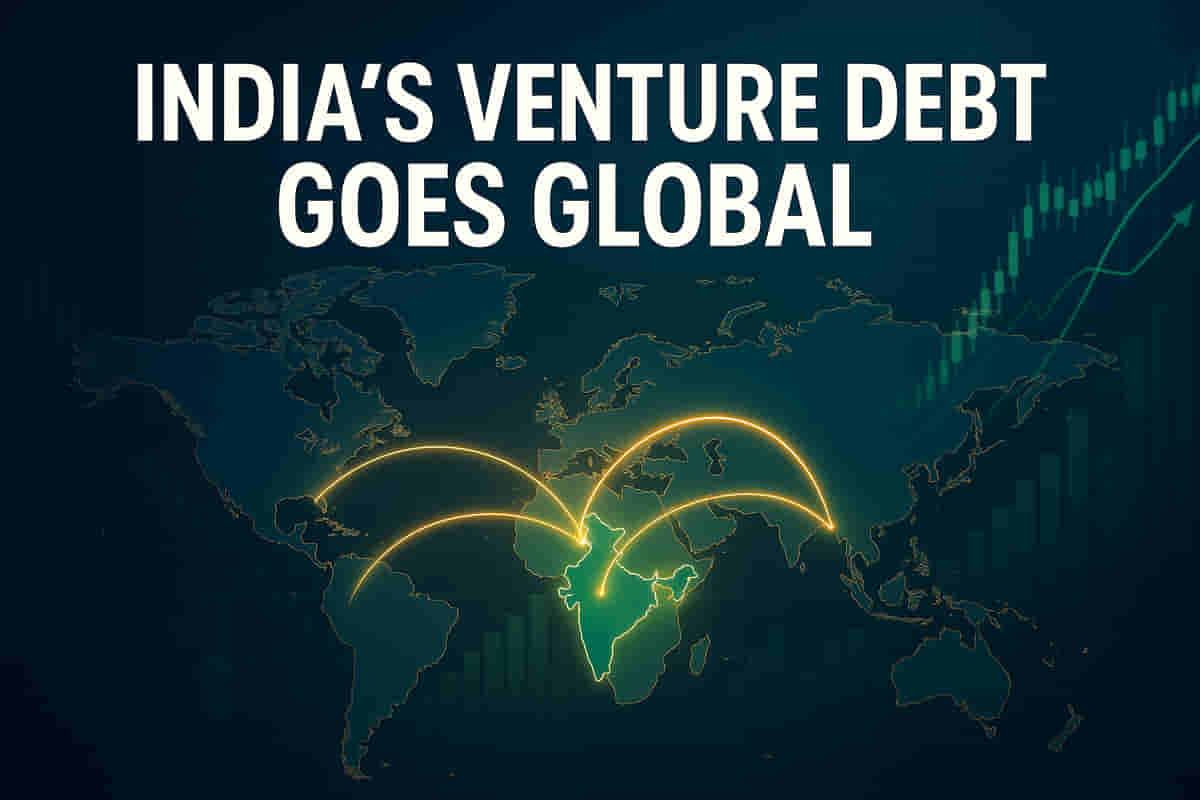


India's venture debt ecosystem is embarking on a significant global expansion. Firms such as EvolutionX Debt Capital, Stride Ventures, and BlackSoil Group, which have historically focused on lending to India's burgeoning new-age companies, are now actively increasing their presence in international markets including West Asia, South-East Asia, and Europe. The primary drivers for this overseas push include diversifying investment risk, fulfilling rising expectations from Limited Partners (LPs) for broader geographical exposure, and tapping into a larger pipeline of high-quality companies across diverse emerging markets.
BlackSoil Group, for instance, sees "untapped potential" in these new regions, citing strong growth prospects, diverse revenue streams, and strategic footholds in rapidly evolving economies as key attractions. Chirag Shah, Executive Director at BlackSoil, emphasized that this global expansion aligns with the firm's long-term return strategy and leverages its experience in navigating varied market environments. He clarified that while these international markets operate independently, India remains the core focus, with global expansion serving to diversify capital and provide LPs with balanced portfolios for risk-adjusted returns.
This trend emerges amidst increasing credit demand from startups and heightened LP expectations regarding governance, liquidity, and risk transparency. According to Shah, these elevated expectations are pushing venture debt firms towards more disciplined and scalable approaches, designing structures with clearer risk-return visibility and robust oversight.
Stride Ventures, another prominent player, has significantly boosted its global ambitions, securing approximately $300 million in commitments over the last six months from a diverse set of investors across the GCC, India, and the UK. The firm aims for a $600 million final close across its three regional funds. Since its inception in 2019, Stride has committed over $1.6 billion to more than 200 companies across sectors like fintech, consumer tech, mobility, healthtech, and SaaS. Its international footprint includes local teams in India, the GCC, and the UK, actively engaging with regulatory ecosystems to support founders' market expansion.
Ishpreet Singh Gandhi, Founder and Managing Partner at Stride Ventures, stated, "Growth travels at the speed of trust, and that is the blueprint we are scaling globally." The fund's commitment to the global Principles for Responsible Investment (PRI) further highlights its adherence to international ESG and governance norms.
Despite expanding geographically, Indian venture debt firms are maintaining their stringent underwriting discipline abroad. The focus remains on recurring revenues, strong unit economics, and cash-flow visibility, regardless of the market. As global LPs show increasing engagement with Indian managers and startups seek more diversified funding sources, this international pivot is expected to deepen, enhancing the reach of domestic funds and raising global standards for governance and execution.
Impact:
This development signifies the growing maturity and global competitiveness of India's venture debt industry. It opens new avenues for capital infusion for startups in India and emerging markets, potentially accelerating innovation and growth. For investors (LPs), it offers diversified opportunities for risk-adjusted returns. While not directly impacting listed stock prices, it strengthens the foundational ecosystem that supports many listed tech companies and indicates a positive trend in financial innovation originating from India.
Rating: 7/10
Difficult Terms Explained:
Venture Debt: A type of loan provided to early-stage, high-growth companies (often startups) that have already raised equity financing. It complements equity funding by offering capital without diluting ownership significantly, typically used for growth initiatives or working capital.
Limited Partners (LPs): These are the investors in investment funds, such as venture capital funds, private equity funds, or hedge funds. LPs can include pension funds, endowments, insurance companies, wealthy individuals, and sovereign wealth funds.
West Asia: A region typically encompassing countries in the Middle East, including nations in the Persian Gulf and surrounding areas.
South-East Asia: A subregion of Asia, consisting of the countries geographically east of India, south of China, and west of Papua New Guinea. Key countries include Singapore, Indonesia, Malaysia, Vietnam, etc.
Governance: Refers to the system of rules, practices, and processes by which a company is directed and controlled. Good governance ensures transparency, accountability, and fairness.
Liquidity: The ability of an asset to be quickly converted into cash without affecting its market price. In the context of LPs, it refers to their ability to withdraw their invested capital.
Risk Transparency: The clarity and openness with which potential risks associated with an investment are communicated to investors.
Unit Economics: The revenue and costs associated directly with producing and selling one unit of a product or service. It helps understand a company's profitability at a granular level.
Cash-flow Visibility: The predictability and reliability of a company's future cash inflows and outflows. Strong visibility indicates a stable financial future.
ESG (Environmental, Social, and Governance): A set of standards for a company's operations that socially conscious investors use to screen potential investments. It considers environmental impact, social responsibility, and corporate governance.
Principles for Responsible Investment (PRI): UN-supported principles that provide a framework for investors to incorporate ESG issues into their investment and ownership decisions.