

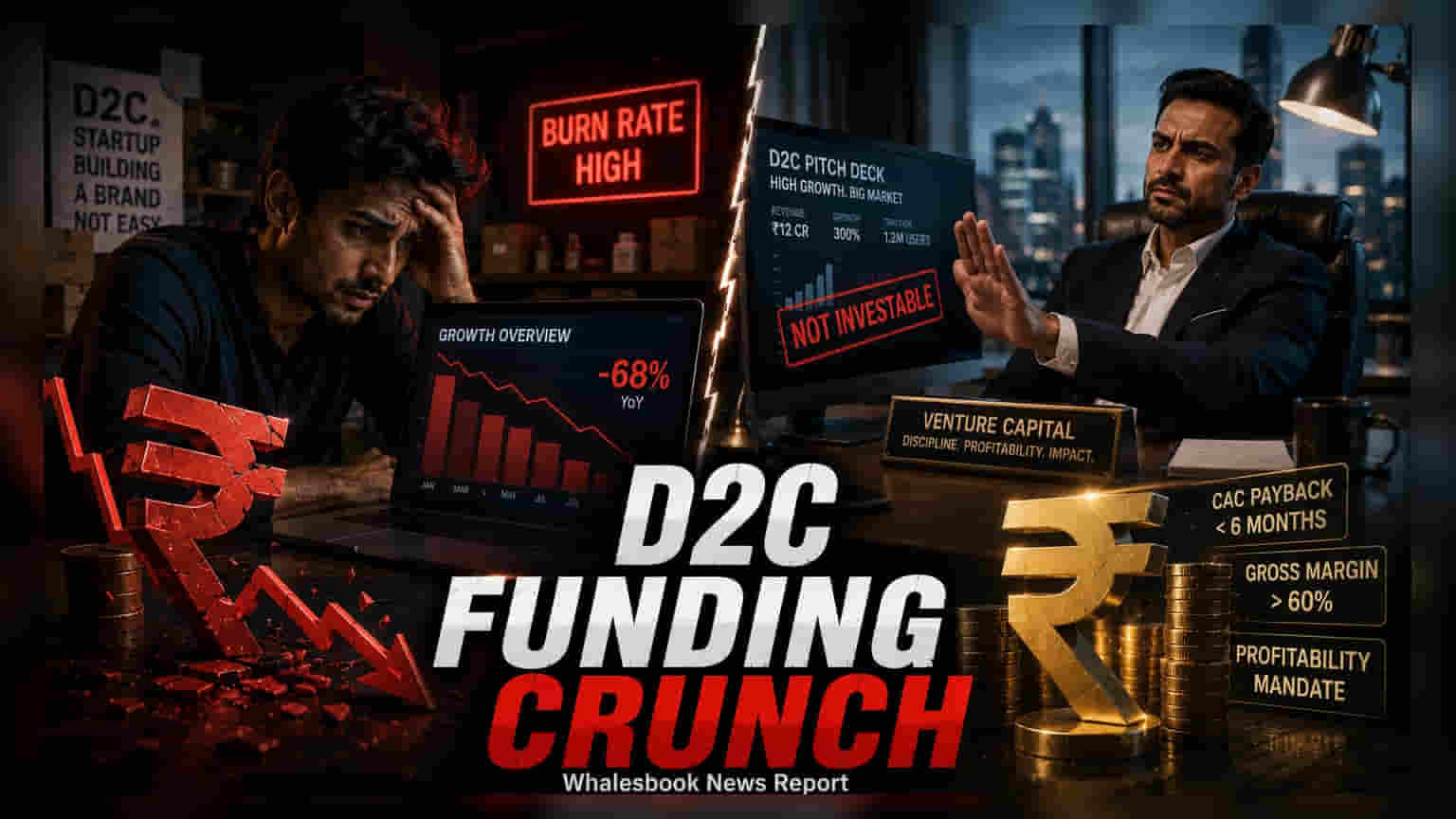
Indian direct-to-consumer (D2C) brands face higher revenue benchmarks as investors shift focus from rapid topline growth to sustainable unit economics. With lower barriers to entry, simple expansion is no longer enough to secure funding. Investors are now prioritizing profitability, clear customer retention, and healthy margins over growth-at-all-costs models.
The landscape for Indian direct-to-consumer (D2C) startups is undergoing a significant shift as venture capital investors tighten their requirements. The era of securing funding based solely on rapid revenue expansion is fading, replaced by a mandate for disciplined unit economics and clear paths to profitability. This change is driven by the fact that launching a brand has become easier than ever, making simple sales volume a less reliable indicator of a company’s long-term business advantage.
Higher Revenue Thresholds for New Brands
Investors are now applying much stricter filters to companies seeking capital. At the seed stage, the expectation for annual revenue has effectively tripled in some segments, moving from a previous benchmark of ₹1 crore to a requirement of ₹2–3 crore. This trend continues into later funding rounds, where Series A and Series B investors are demanding more substantial proof of market fit. For a brand to be considered investable, it is no longer enough to simply show high traffic; investors want to see consistent repeat purchases and evidence that the company can grow organically rather than just burning cash to acquire new customers.
Unit Economics and Profitability Challenges
The pivot away from growth-at-all-costs has led to a compression in startup valuations. Where companies once commanded revenue multiples of 10–15x, many are now seeing those figures drop to 2–4x. Investors are closely scrutinizing metrics like Customer Acquisition Cost (CAC) payback periods—often demanding a return on spending within six months—and gross margins, which many now expect to exceed 60% depending on the category. This focus has forced many startups to prioritize 'default alive' business models, which aim to reach profitability sooner to reduce dependence on external funding cycles.
Competitive Risks in the Quick Commerce Era
While channels like quick commerce, Amazon, and social media platforms have made it easier for brands to reach customers across India, this accessibility brings a new set of risks. The ease of entry means market saturation is high, making it harder for new brands to defend their market position. Investors are particularly cautious about brands that rely too heavily on platforms like Swiggy Instamart, Zepto, or Blinkit. These platforms are increasingly launching their own private labels, which can directly compete with the brands selling on their apps. This creates a strategic risk for D2C companies that lack a strong, loyal customer base outside of these third-party platforms.
As the funding environment remains selective, more startups are exploring alternative funding routes, such as revenue-based financing, to avoid equity dilution. For stakeholders, the primary monitorable in the coming months will be the ability of D2C brands to maintain margins while navigating the growing dominance of quick commerce platforms and rising competitive pressure in the consumer goods space.