

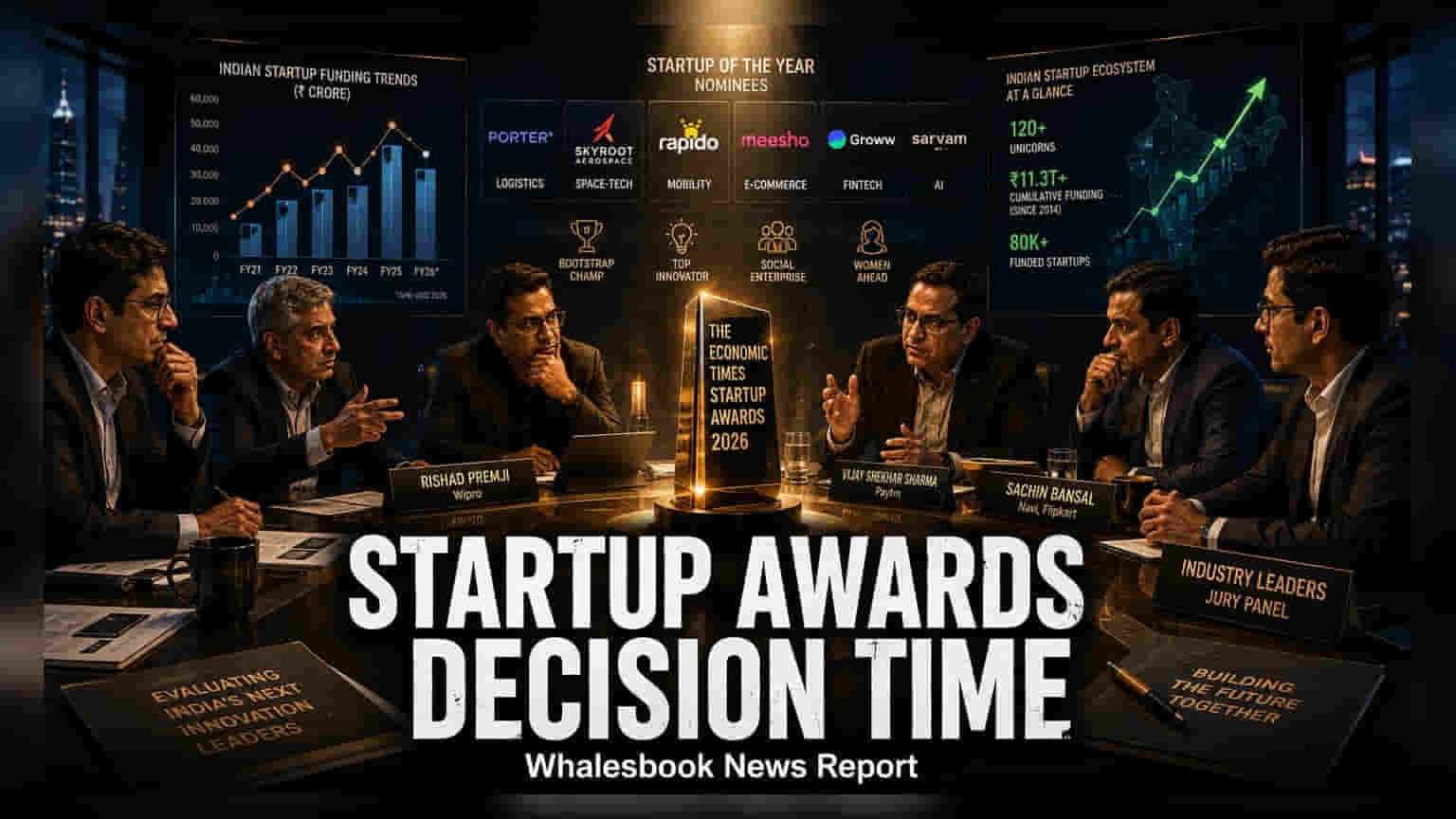
The 12th Economic Times Startup Awards jury, chaired by Wipro’s Rishad Premji, met on August 25, 2026, to finalize winners. The selection process highlights key players in the Indian entrepreneurial space, including companies like Porter, Skyroot Aerospace, and Meesho, offering insights into emerging industry trends and ecosystem health.
The 12th annual Economic Times Startup Awards (ETSA) reached a key milestone on August 25, 2026, as an elite jury convened to evaluate the most impactful players in India’s startup landscape. The panel, led by Wipro Executive Chairman Rishad Premji, gathered in Bengaluru to assess nominees across various categories, including the marquee 'Startup of the Year' award.
Notable Contenders and Categories
The nomination list reflects the current diversity of the Indian startup sector, spanning from logistics to space technology. Prominent companies under consideration for the 'Startup of the Year' title include logistics platform Porter, space-tech innovator Skyroot Aerospace, ride-hailing and delivery service Rapido, e-commerce major Meesho, financial services platform Groww, and AI-focused venture Sarvam. Beyond the flagship category, the awards also recognize performance in areas such as 'Bootstrap Champ,' 'Top Innovator,' 'Social Enterprise,' and 'Women Ahead,' highlighting the breadth of the current entrepreneurial environment.
The jury included several seasoned industry leaders, such as Paytm founder Vijay Shekhar Sharma, Myntra and Curefit co-founder Mukesh Bansal, and Navi/Flipkart co-founder Sachin Bansal. Their evaluation serves as an industry barometer, reflecting which business models and innovations are gaining traction among experienced investors and operators.
Ecosystem Context and Investor Significance
While the companies nominated for these awards are primarily private entities, the event provides important signals for the broader Indian economy and the venture capital ecosystem. The progress of these startups can indicate shifting consumer demand and technological adoption trends that eventually influence the listed market. For instance, the presence of AI ventures like Sarvam among nominees underscores the growing local focus on artificial intelligence, even as the industry faces challenges in matching the scale and development pace seen in global markets like the US and China.
Investors in listed tech and digital companies often watch these trends to gauge the long-term potential of the sector. However, the startup ecosystem itself remains subject to significant risks. Companies in this space frequently navigate hurdles related to high cash burn, evolving regulatory frameworks, and the difficulty of scaling operations profitably. Furthermore, external factors such as supply chain constraints and, in some cases, international restrictions on hardware or technology partnerships can impact growth trajectories.
As the industry matures, the focus has shifted from aggressive expansion at any cost to more sustainable, profitable growth. The winners of the 12th edition of these awards, which will be announced in due course, will likely offer a glimpse into which companies are successfully navigating these operational complexities. Stakeholders will track these outcomes not just as a mark of prestige, but as a reflection of which business models are proving resilient in a more cautious funding environment.