

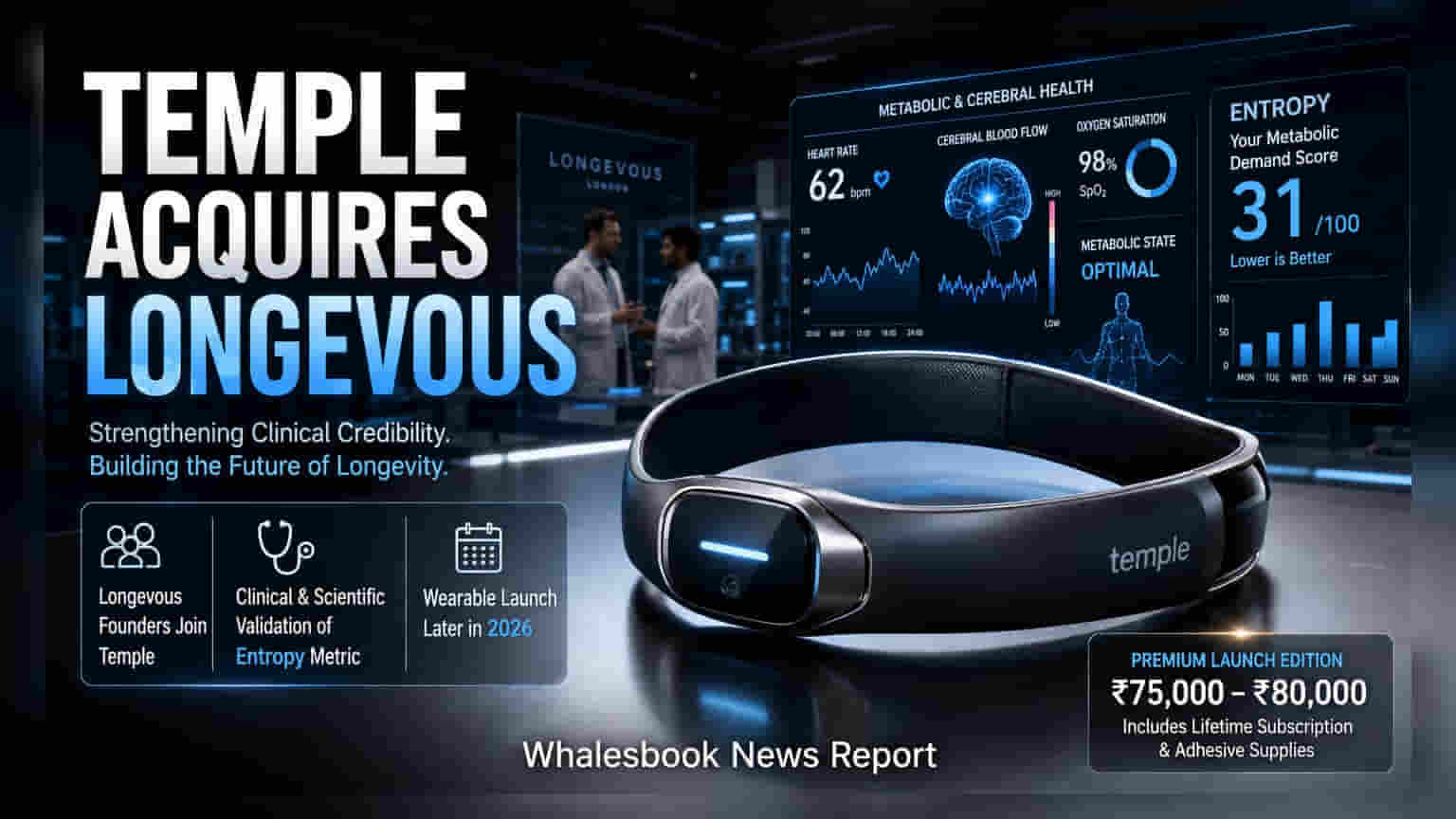
Zomato founder Deepinder Goyal’s health-tech startup, Temple, has acquired London-based longevity firm Longevous. The move adds clinical expertise to the company ahead of the planned 2026 launch of its forehead-worn wearable device. This acquisition aims to provide scientific validation for the startup's proprietary 'Entropy' metric as it targets the premium wellness market.
Temple, the private health-tech venture founded by Zomato’s Deepinder Goyal, has acquired the London-based longevity medicine practice Longevous. This move marks a strategic effort by the company to bolster the clinical credibility of its technology as it prepares for a commercial launch of its flagship wearable device later in 2026.
Integrating Clinical Expertise
As part of the deal, the founders of Longevous, Dr. Robert Mohr and Dr. Avi Roy, are joining Temple full-time. Dr. Mohr, a physician, and Dr. Roy, a biomedical scientist, are expected to lead the clinical and scientific validation of Temple’s proprietary health metric, known as 'Entropy'. The acquisition follows a period of collaboration where the Longevous team reportedly challenged and stress-tested the assumptions behind the company's metabolic demand tracking technology.
Temple’s upcoming hardware differs from standard wrist-worn trackers. It is designed to be worn on the forehead to monitor cerebral blood flow and oxygen levels. The company claims this positioning allows for higher precision in tracking metabolic states. With this acquisition, the firm is signaling an attempt to bridge the gap between consumer electronics and evidence-based longevity research.
Financial Context and Market Positioning
It is important for readers to note that Temple is a private startup, separate from the listed entity Zomato. The company has previously secured $54 million in funding, with reports suggesting it is preparing for a new round that could value the business at approximately $500 million.
Commercial momentum is currently building, with the startup planning to release a limited launch edition of its wearable by the end of 2026. The device is expected to carry a premium price tag, reportedly in the range of Rs 75,000 to Rs 80,000. This pricing includes a lifetime subscription to the accompanying software and necessary adhesive supplies, positioning it as a high-end product rather than a mass-market wearable.
Risks and Future Monitorables
While the company aims to move into the commercial phase, it faces several hurdles. The startup is currently operating in the wellness segment and has not secured medical device certifications, which limits the clinical claims it can legally make.
Furthermore, the scientific community has expressed skepticism regarding the validity and utility of the 'Entropy' metric, with some experts questioning whether the technology provides actionable health data beyond standard trackers. Additionally, the premium price point presents an execution risk, as the company must convince a niche audience that the device offers value significantly higher than existing, cheaper alternatives. Investors and industry observers will likely track whether the company can secure regulatory approvals or scientific peer reviews to substantiate its claims before the planned device rollout.