 Whalesbook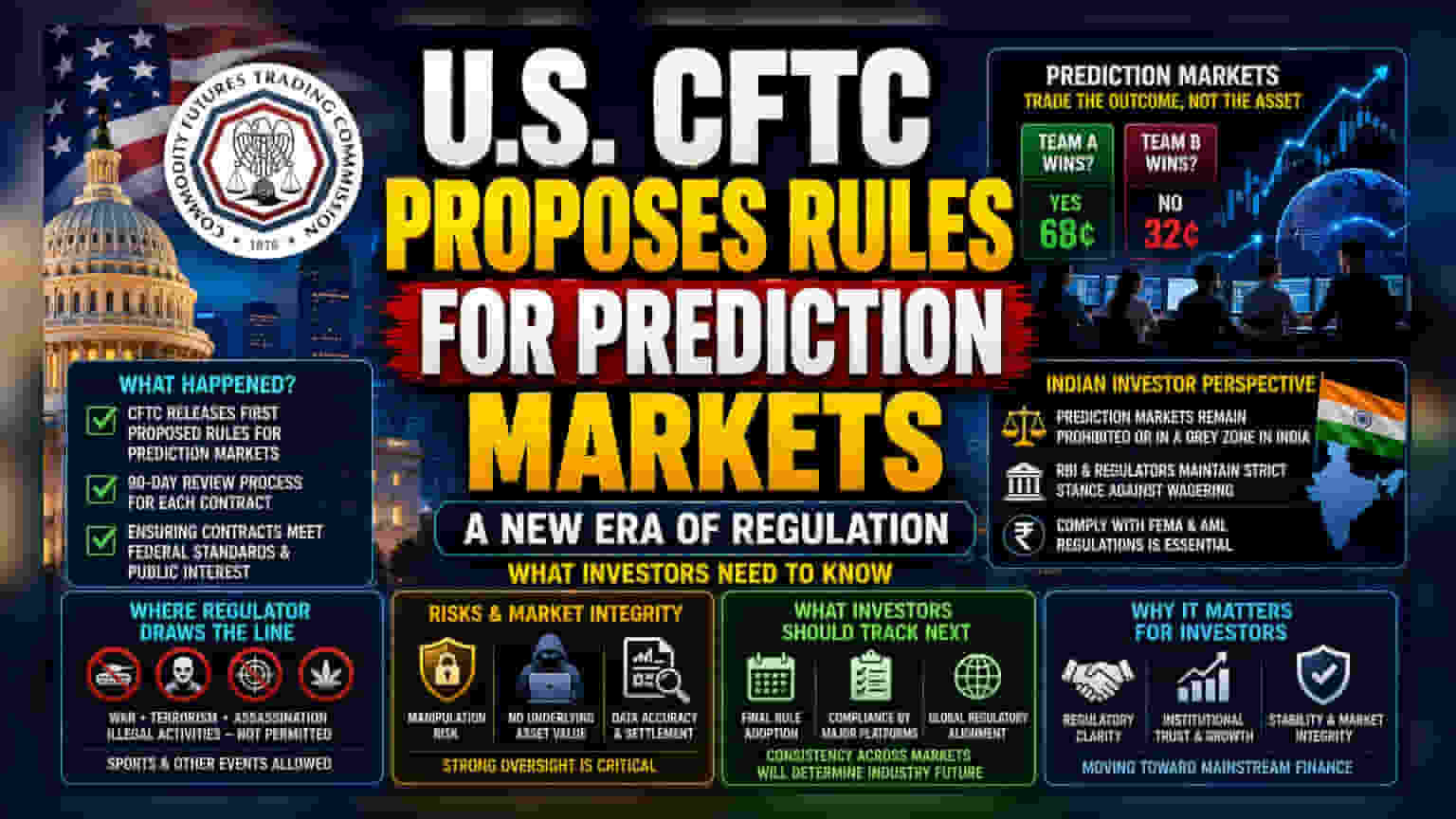


The U.S. Commodity Futures Trading Commission (CFTC) has launched its first regulatory framework for prediction markets. This move aims to establish a clear legal boundary between legitimate financial event contracts and prohibited activities like illegal gaming. For investors, the proposal highlights the growing legitimacy of this asset class while maintaining strict oversight to prevent market manipulation and protect public interest.
What Happened
The U.S. Commodity Futures Trading Commission (CFTC) has introduced its first set of proposed regulations to govern prediction markets. These platforms, which allow users to trade contracts based on the outcome of future events, have operated in a grey area for some time. The proposed rules aim to create a structured 90-day review process for individual contracts to determine if they meet federal standards for permissibility and public interest. This move is designed to distinguish between legitimate financial hedging and activities that the regulator deems contrary to the public good.
Why This Matters For Investors
The introduction of a formal regulatory framework is a significant milestone for the prediction market industry. By setting clear standards, the CFTC intends to move these platforms toward mainstream financial markets. For investors and market participants, this clarity reduces the uncertainty that often accompanies new, untested asset classes. Platforms that align with these standards may gain greater trust from institutional players, potentially increasing trading volumes and stability. The focus is on ensuring that these exchanges function like any other regulated derivatives market, with robust safeguards against manipulation.
The Indian Investor Perspective
While this development is centered in the United States, it provides important context for Indian investors observing global fintech trends. In India, the legal environment regarding prediction markets and similar platforms is very different. Activities involving wagering or betting on outcomes are generally prohibited or fall under a complex regulatory grey zone. Indian regulators, including the Reserve Bank of India and market watchdogs, maintain a strict stance against speculative activities that resemble gambling. Investors tracking these global developments should note that the regulatory acceptance seen in the US does not change the legal status of such platforms within India, where compliance with foreign exchange and anti-money laundering laws remains paramount.
Where The Regulator Draws The Line
The CFTC’s proposal includes explicit boundaries. The agency has signaled that contracts related to sensitive or harmful topics—such as war, terrorism, assassination, or illegal activities—will not be allowed. This distinction is vital for maintaining market integrity. By explicitly banning such contracts, the regulator aims to prevent these platforms from becoming venues for harmful speculation, while simultaneously supporting sports betting and other event-based contracts that are viewed as being in the public interest.
Risks And Market Integrity
A core risk inherent in prediction markets is the potential for manipulation and the lack of underlying asset value compared to traditional stocks or bonds. Because these contracts are based on event outcomes rather than corporate performance, they are highly sensitive to information flow. The CFTC’s emphasis on oversight is a direct response to concerns that unregulated platforms could be prone to abuse. Investors should monitor how these exchanges handle data security, potential conflicts of interest, and the accuracy of the settlement data used to verify outcomes.
What Investors Should Track Next
The next important phase is the public review and finalization of these rules. Investors should watch for the official adoption of the proposed 90-day review timeline and how major platforms adapt their contract offerings to comply with the new standards. Additionally, the broader market will be watching to see if other international regulators follow the CFTC’s lead in creating a dedicated framework for prediction markets, or if they adopt more restrictive policies. The consistency of these regulations across different jurisdictions will be a key factor in the long-term viability of this industry.