 Whalesbook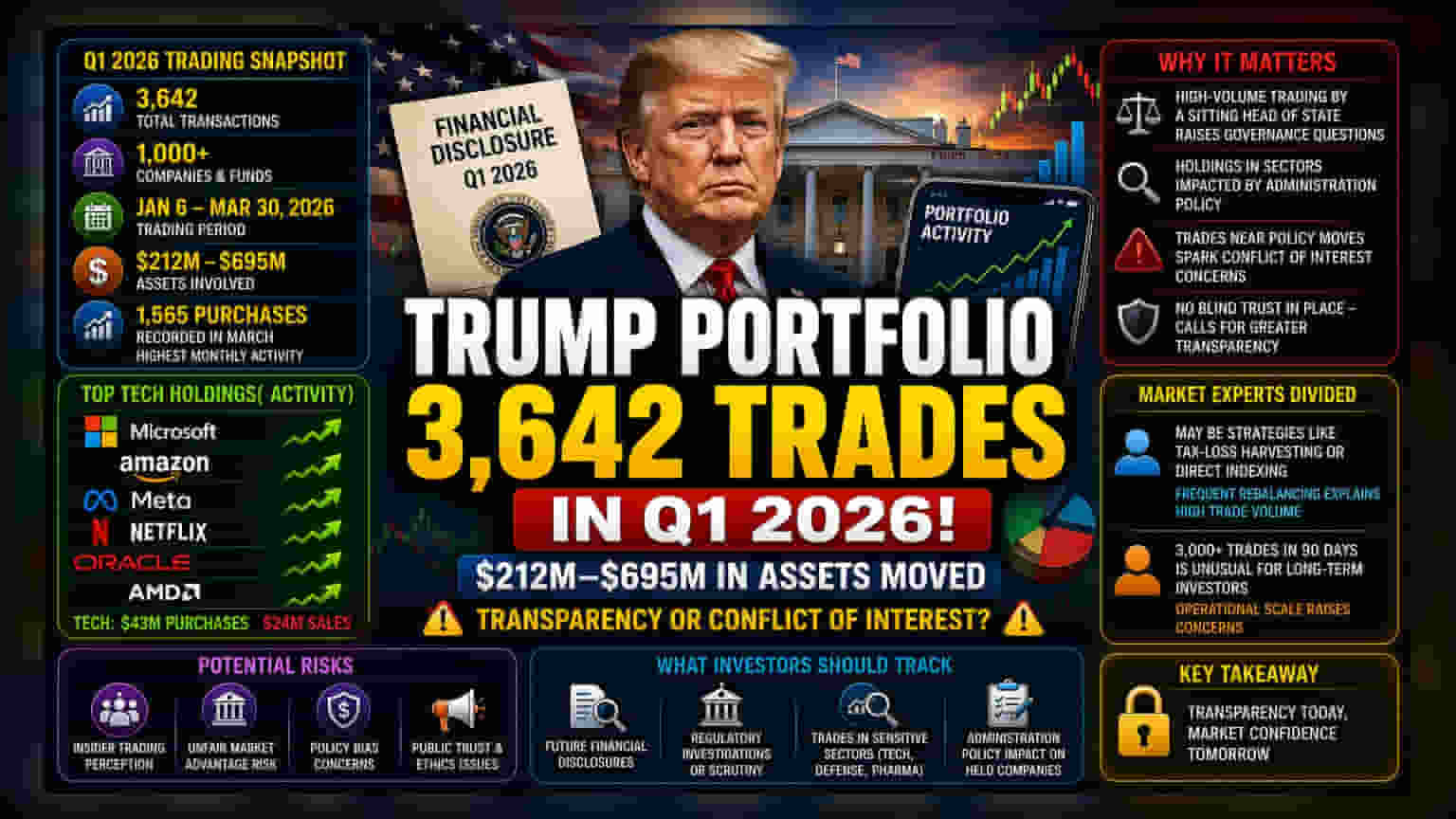


US President Donald Trump’s investment portfolio recorded over 3,600 trades in early 2026, sparking debate over potential conflicts of interest. With heavy activity in tech and pharmaceutical stocks, the high volume has drawn scrutiny from lawmakers and ethics experts. Here is what investors need to know about the transparency of the disclosures, the trading strategies involved, and why market participants are watching the potential impact on governance.
What Happened
US President Donald Trump’s investment portfolio reported significant trading activity during the first quarter of 2026. Financial disclosures reveal that between January 6 and March 30, 2026, the portfolio executed 3,642 transactions across more than 1,000 companies and funds. The assets involved in these trades were valued between $212 million and $695 million. Trading volume peaked in March, with 1,565 purchases recorded in that month alone, marking a notable increase compared to the start of the year.
Why This Matters For Investors
For investors, this level of portfolio activity by a sitting head of state raises important questions about transparency and governance. The portfolio showed a clear preference for technology stocks, with companies such as Microsoft, Amazon, Meta, Netflix, Oracle, and AMD appearing frequently in the transaction records. Technology assets accounted for approximately $43 million in purchases and $24 million in sales.
When a high-level government official’s portfolio holds assets in sectors that are directly impacted by administration policy, it draws attention to potential conflicts of interest. For example, reports have noted instances where stock purchases in companies like Nvidia and Palantir occurred shortly before administrative actions or public statements that could influence market sentiment for those firms. Similarly, investments in Eli Lilly were highlighted during a period when the pharmaceutical sector faced significant regulatory decisions regarding drug approvals and pricing.
How Investors May Read This
Market experts have differing views on the nature of this trading activity. Some industry observers have suggested that the high volume could be attributed to sophisticated investment strategies such as tax-loss harvesting or direct indexing, which often require frequent rebalancing to manage tax liabilities and track specific market indices. However, other wealth management professionals have questioned the sheer frequency of trades, noting that managing over 3,000 transactions in 90 days requires a significant operational setup and is unusual for typical long-term investment portfolios.
Potential Risks and Governance Concerns
The lack of a traditional blind trust for the President’s assets has been a point of debate. Critics and some lawmakers, including Senator Elizabeth Warren, have questioned the arrangement, calling for investigations into whether such active trading creates risks for potential insider trading or unfair market advantages. The Trump Organization and Treasury Secretary Scott Bessent have stated that the portfolio is managed by external managers without direct input from the President, emphasizing an independent process.
What Investors Should Track
Investors may want to monitor future financial disclosures for any changes in the trading patterns or portfolio composition. Key areas to watch include whether further regulatory scrutiny or investigations arise regarding the timing of trades in sensitive sectors like technology, defense, or pharmaceuticals. Additionally, the administration's policy decisions regarding companies held in the portfolio will remain a monitorable factor for those assessing political and market risk. Transparency remains the primary lens through which the market will likely view future developments related to these financial activities.