

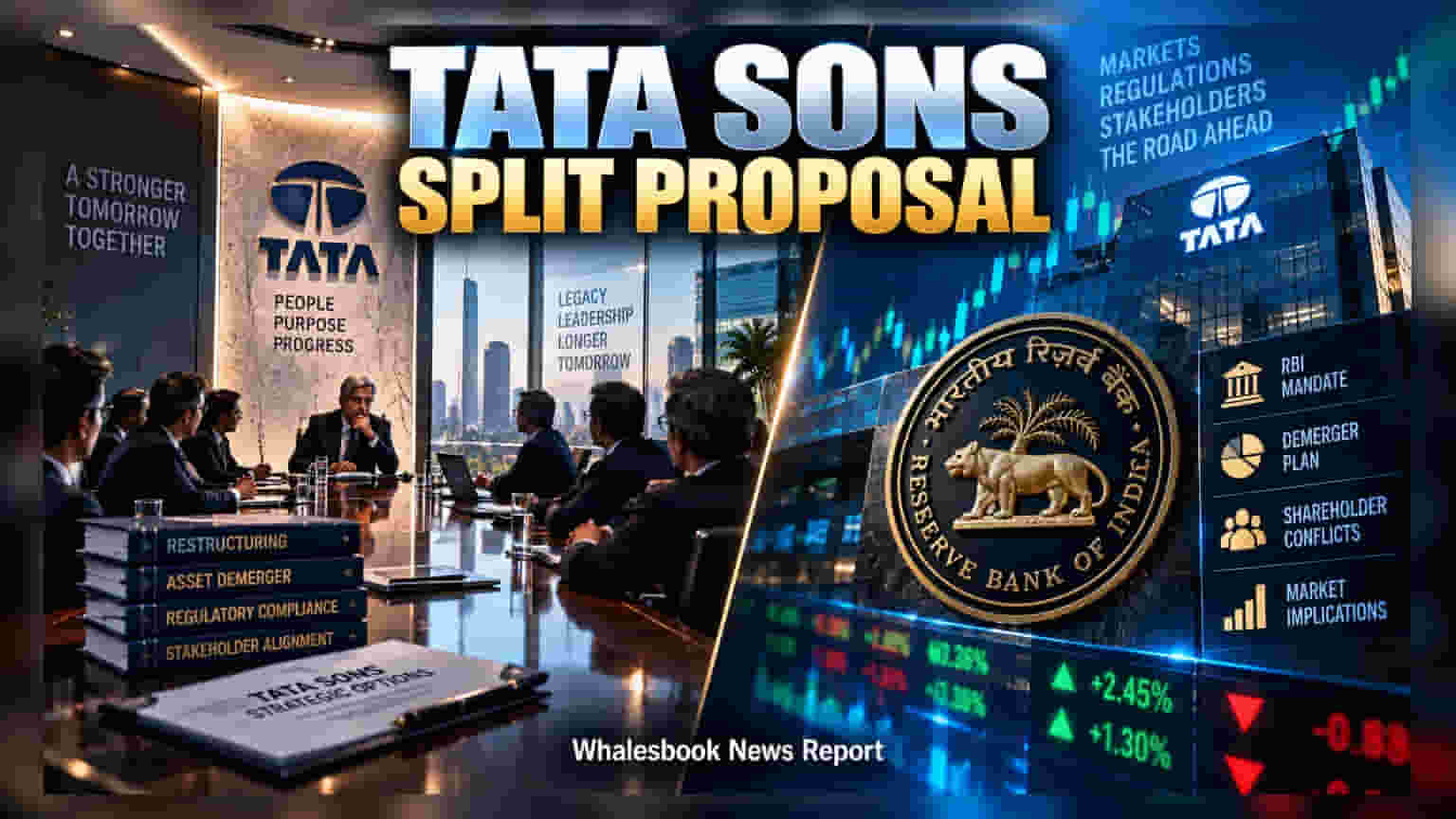
Tata Sons is exploring a plan to restructure its business to avoid a mandatory stock market listing imposed by the Reserve Bank of India. The proposal aims to drop the company's classification as an upper-layer non-banking financial company, though it faces resistance from major shareholders. Investors are tracking how this potential split might impact the group’s internal capital allocation and ongoing legal friction with the Shapoorji Pallonji Group.
Tata Sons, the principal holding company of the Tata Group, is navigating a complex regulatory situation as it seeks to bypass a mandate from the Reserve Bank of India (RBI) requiring it to go public. Under the central bank’s scale-based regulations, the company was classified as an upper-layer non-banking financial company (NBFC), which triggered a requirement to list on stock exchanges by September 2025. With that timeline passed, the firm is exploring structural changes to address the regulator's demands.
Proposal to Restructure Operations
Noel Tata, Chairman of Tata Trusts, has reportedly proposed a strategy to demerge or transfer assets, effectively breaking the massive holding company into smaller, independent entities. By separating these business units, the group aims to fall below the asset size threshold that categorizes it as an upper-layer NBFC. This move is designed to allow the company to maintain its private status, a structure that the Tata Trusts, which holds the majority of equity, has long preferred to avoid public oversight.
Stakeholder Friction and Capital Risks
This strategy faces significant opposition from the Shapoorji Pallonji Group, which holds an 18.37% stake in Tata Sons. For the SP Group, a public listing of Tata Sons serves as a critical opportunity to monetize their investment and manage debt obligations. Any restructuring that circumvents a public float could trap this capital, potentially fueling further legal and commercial disputes between the two major shareholder factions.
Beyond shareholder conflicts, the restructuring plan poses risks to the group’s internal financial model. Currently, Tata Sons operates by channeling massive dividend inflows from Tata Consultancy Services (TCS) to subsidize capital-heavy ventures such as Air India, Tata Digital, and Tata Electronics. Isolating these businesses through a split could complicate this capital allocation model and potentially trigger a re-evaluation by credit rating agencies, who currently assess the group based on the collective strength of all its entities. Any plan to alter the company’s regulatory status requires explicit approval from the Reserve Bank of India, which has historically been firm regarding its classification rules for large financial entities. The company’s ability to execute this, while managing tax complexities and stakeholder demands, remains the most important factor for investors to monitor in the coming months.