

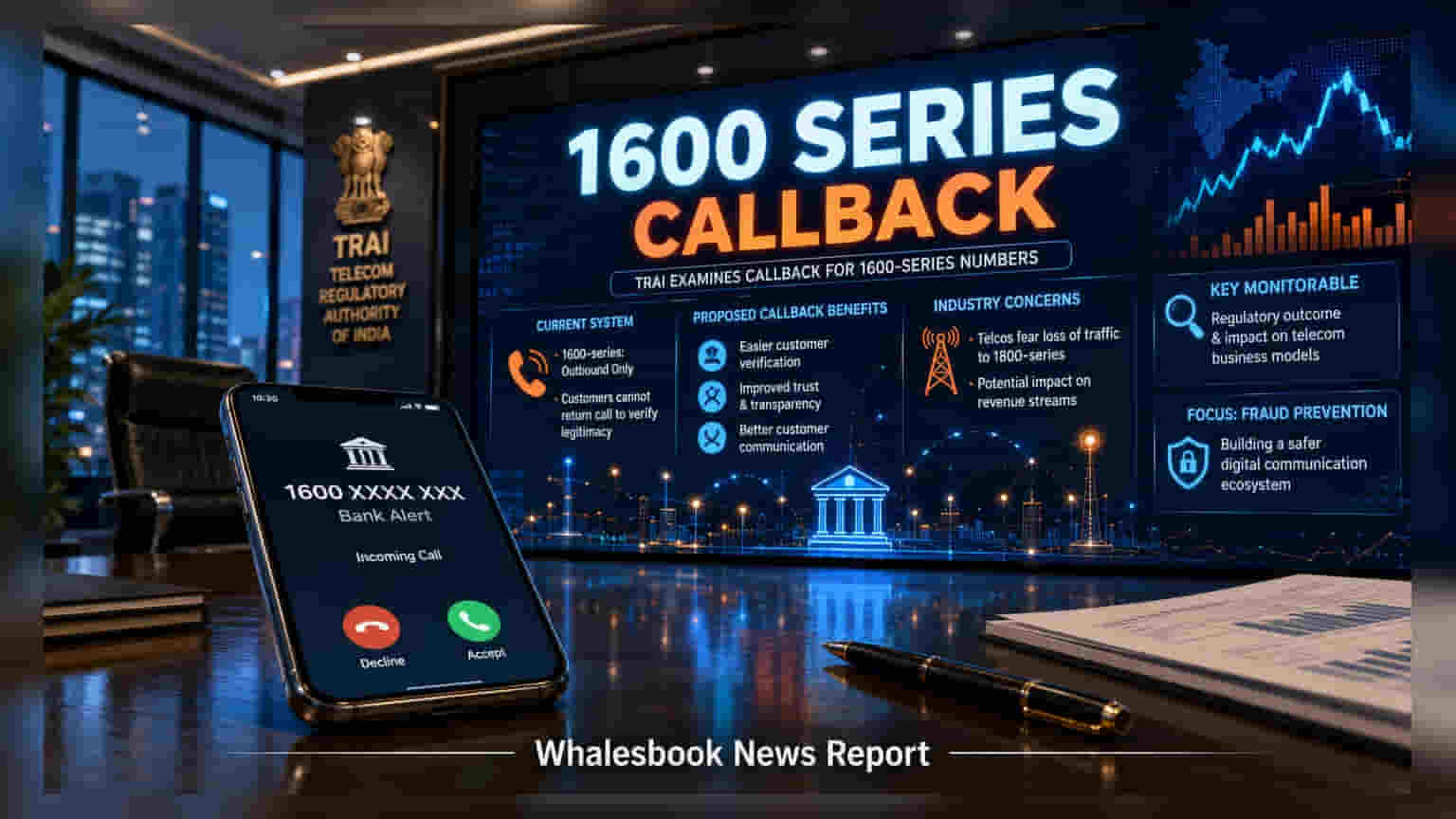
The Telecom Regulatory Authority of India is evaluating a proposal to allow callback functionality on 1600-series numbers used by financial institutions. While this move aims to increase customer trust by letting users verify legitimate calls, telecom operators are concerned about potential revenue loss from existing 1800-series toll-free services. This regulatory debate balances consumer safety against telco commercial interests.
The Telecom Regulatory Authority of India (TRAI) is examining whether to enable a callback feature for 1600-series phone numbers. Currently, these numbers are strictly reserved for banks and government agencies to send transactional alerts or service updates. Because these numbers are designed for outbound-only communication, customers often cannot return a call to verify if an incoming message is legitimate. This technical limitation has long been a source of confusion, making it difficult for the public to distinguish between official communication and potential spam.
Balancing Consumer Trust and Business Models
From the perspective of banks and fintech firms, the callback feature would significantly reduce friction. Allowing users to reconnect with financial institutions would likely improve customer service and reduce the skepticism that often follows automated calls. However, the proposal has faced resistance from telecom operators, represented by the Cellular Operators Association of India (COAI). The industry’s primary concern is that a callback-enabled 1600-series might draw traffic away from the established 1800-series toll-free numbers. Telcos rely on the 1800-series as a consistent revenue stream, and operators are wary that the new feature could replace this income without a regulatory framework to protect their earnings.
Regulatory Outlook and Monitoring
This debate is set against the backdrop of ongoing efforts by the government to clean up the digital communication ecosystem and curb financial fraud. While the migration of financial institutions to the 1600-series was made mandatory earlier this year to organize and secure banking communications, the inability to verify inbound calls has remained an unresolved gap. To address this, TRAI has requested telecom providers to submit technical network diagrams and impact assessments.
For investors, the outcome of this discussion is a regulatory development to watch, specifically regarding how it impacts the pricing models for business-to-consumer communication. If the final decision introduces a structure that alters how telcos monetize service-related calls, it could have implications for their enterprise revenue segments. The key monitorable for the industry will be whether the regulator can find a middle ground that improves consumer trust without creating a significant financial burden or revenue cannibalization for telecom providers. There have been no exchange filings or official financial impact statements from major telecom players regarding this proposal as of August 26, 2026.