

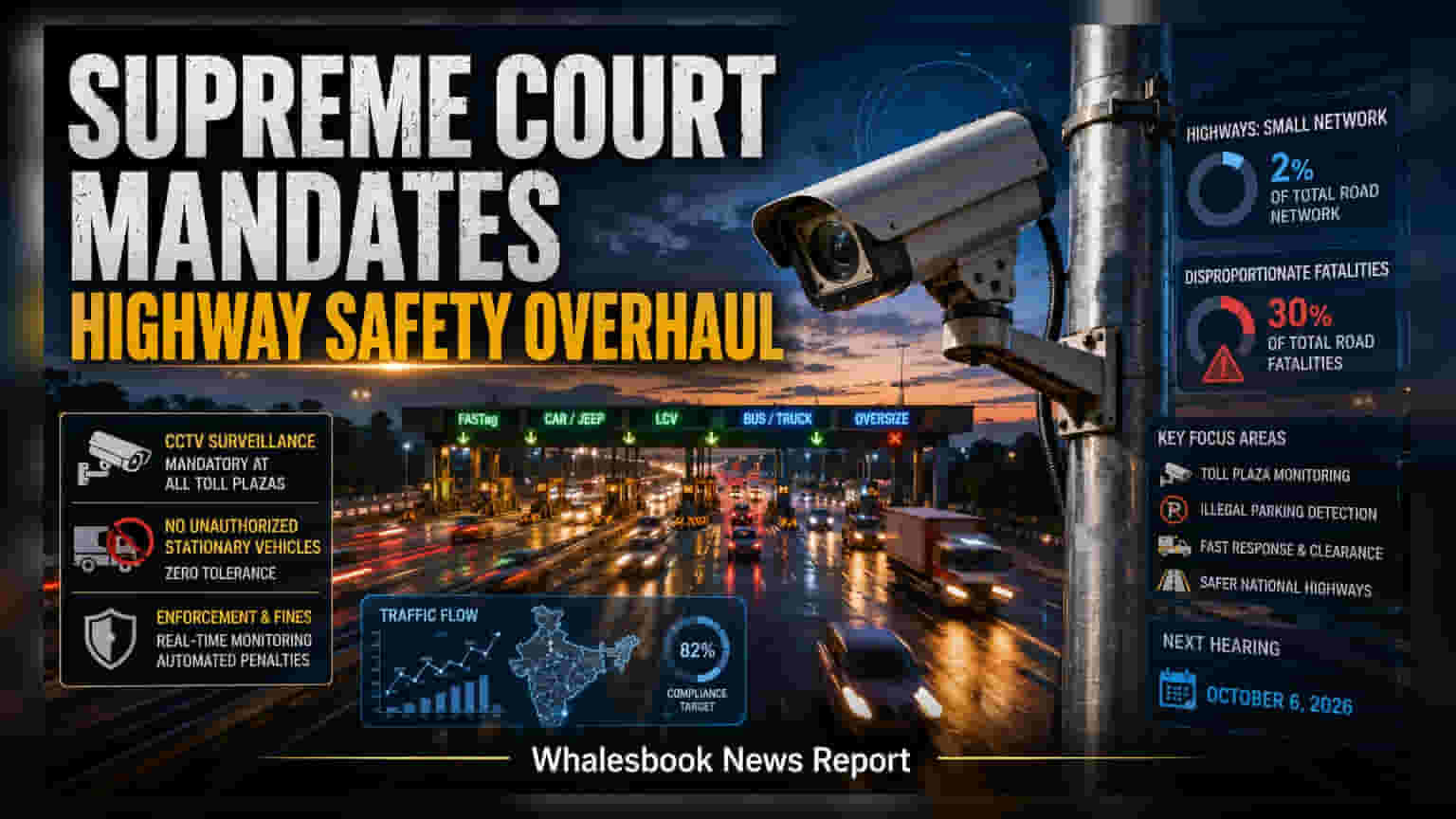
The Supreme Court of India has ordered the National Highways Authority of India (NHAI) to set up CCTV surveillance at toll plazas to curb illegal highway parking. The directive aims to reduce high fatality rates on national highways. This move may require road infrastructure operators to invest in new safety technology and monitoring systems to ensure compliance.
The Supreme Court of India has intensified its focus on national highway safety, directing the National Highways Authority of India (NHAI) to implement comprehensive CCTV surveillance and monitoring systems at toll plazas. The directive aims to address the issue of unauthorized stationary vehicles, which the court identified as a major contributor to fatal accidents on high-speed corridors.
The bench, led by Justices Vikram Nath and Sandeep Mehta, emphasized that national highways represent only 2% of India’s total road network yet account for nearly 30% of total road fatalities. This legal intervention follows a suo motu case initiated after a fatal collision in Rajasthan’s Phalodi region in November 2023, where a vehicle struck a stationary trailer truck. The court has now demanded compliance affidavits from the Ministry of Road Transport and Highways, the Ministry of Home Affairs, and the Tamil Nadu government, granting them two weeks to respond before the next hearing on October 6, 2026.
Impact on Highway Infrastructure Operators
For road infrastructure companies and toll concessionaires, this judicial push could lead to increased operational requirements. Many highway operators are already in the process of upgrading their Advanced Traffic Management Systems (ATMS) to meet government safety mandates. The requirement to install surveillance cameras specifically to monitor and penalize illegal parking suggests that developers may need to allocate further capital toward surveillance technology and staff for monitoring rooms.
While this initiative aims to improve road safety, it also introduces potential financial and operational pressure. Companies responsible for highway maintenance may face tighter timelines for upgrading infrastructure to support automated surveillance and enforcement. If these systems are to be integrated with real-time penalty mechanisms, operators might need to coordinate closely with regulatory bodies to manage the data and enforcement processes efficiently.
Monitoring Regulatory Compliance
Investors in the road infrastructure sector may want to track how NHAI manages the implementation of these safety mandates. Previous judicial directives have already restricted commercial parking to designated areas and prohibited new commercial construction along highway right-of-way zones. The current focus on automated monitoring reflects a broader regulatory trend toward stricter enforcement of these existing safety norms.
The upcoming compliance submissions from government ministries will be an important update to watch. These filings are expected to outline the roadmap for deploying surveillance technology across the network. Market participants will likely monitor whether these changes are funded through additional maintenance budgets or if they result in new, large-scale tender opportunities for technology and security infrastructure providers.