

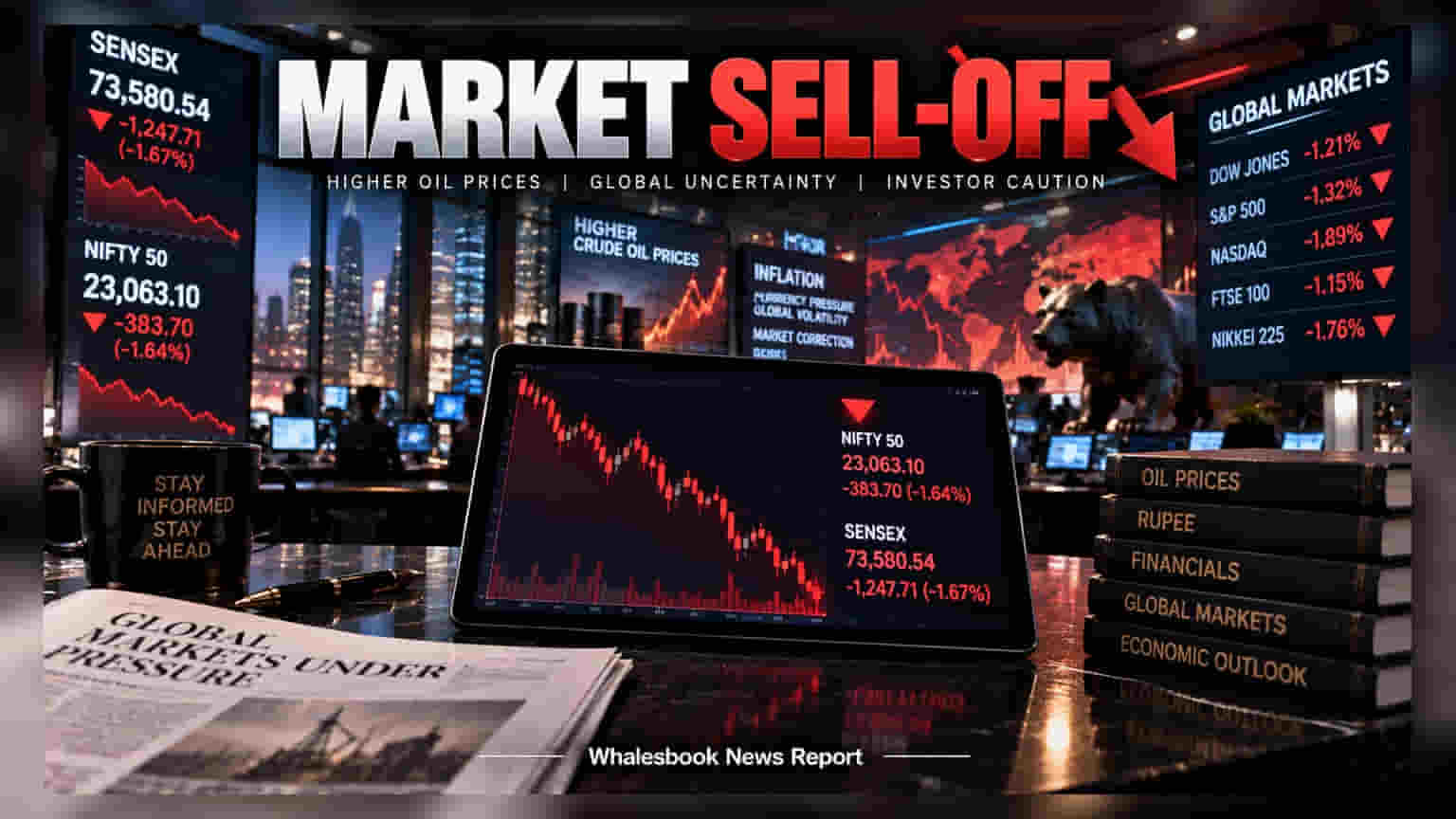
Indian benchmark indices posted their sharpest drop since July on Thursday as rising crude oil prices triggered selling. The Nifty fell below 23,100, while the Sensex shed over 1,200 points amid broad-based weakness in banking and auto stocks.
Indian stock markets faced a steep correction on Thursday, September 24, 2026, marking the most significant single-day decline in ten weeks. The BSE Sensex fell by 1,247.71 points to close at 73,580.54, while the Nifty 50 surrendered 383.70 points, ending the session at 23,063.10. This decline is the sharpest since July 8, 2026, reflecting a sharp shift in market sentiment.
The selling pressure was largely driven by a rise in global crude oil prices. For India, which imports a vast majority of its oil requirements, higher crude prices are generally viewed as a negative signal. Expensive oil increases the country's import bill and can weaken the rupee against the dollar, which in turn puts pressure on corporate earnings and leads to selling in equity markets. This macroeconomic concern likely prompted investors to reduce their exposure to riskier assets.
Financials and auto sectors were hit hardest during the session. Heavyweights like Bajaj Finance and HDFC Life were among the major laggards. Because banking and financial services hold a significant weight in the Nifty index, any weakness in these stocks has a direct and outsized impact on the overall index value. This sector-specific selling was compounded by a broader retreat in the market, as the Nifty Midcap 100 and Nifty Smallcap 100 indices also declined by 2.25 percent and 1.53 percent, respectively. This movement indicates that the selling was not limited to large, blue-chip companies but was widespread across different segments.
Technically, the Nifty is now testing the 23,000 support level, which market observers view as a critical point for stability. If the index manages to stay above this mark, it may offer some respite. However, a failure to hold this support could potentially push the index toward the 22,800 to 22,850 range, based on recent chart patterns. On the upside, the index faces immediate resistance at 23,200.
For investors, the near-term trend will likely be dictated by external factors, particularly global crude oil prices and any updates on geopolitical stability. As the market enters a period of higher volatility, the stability of these global inputs, rather than company-specific news, will likely be the primary driver for a potential recovery or further downside.