

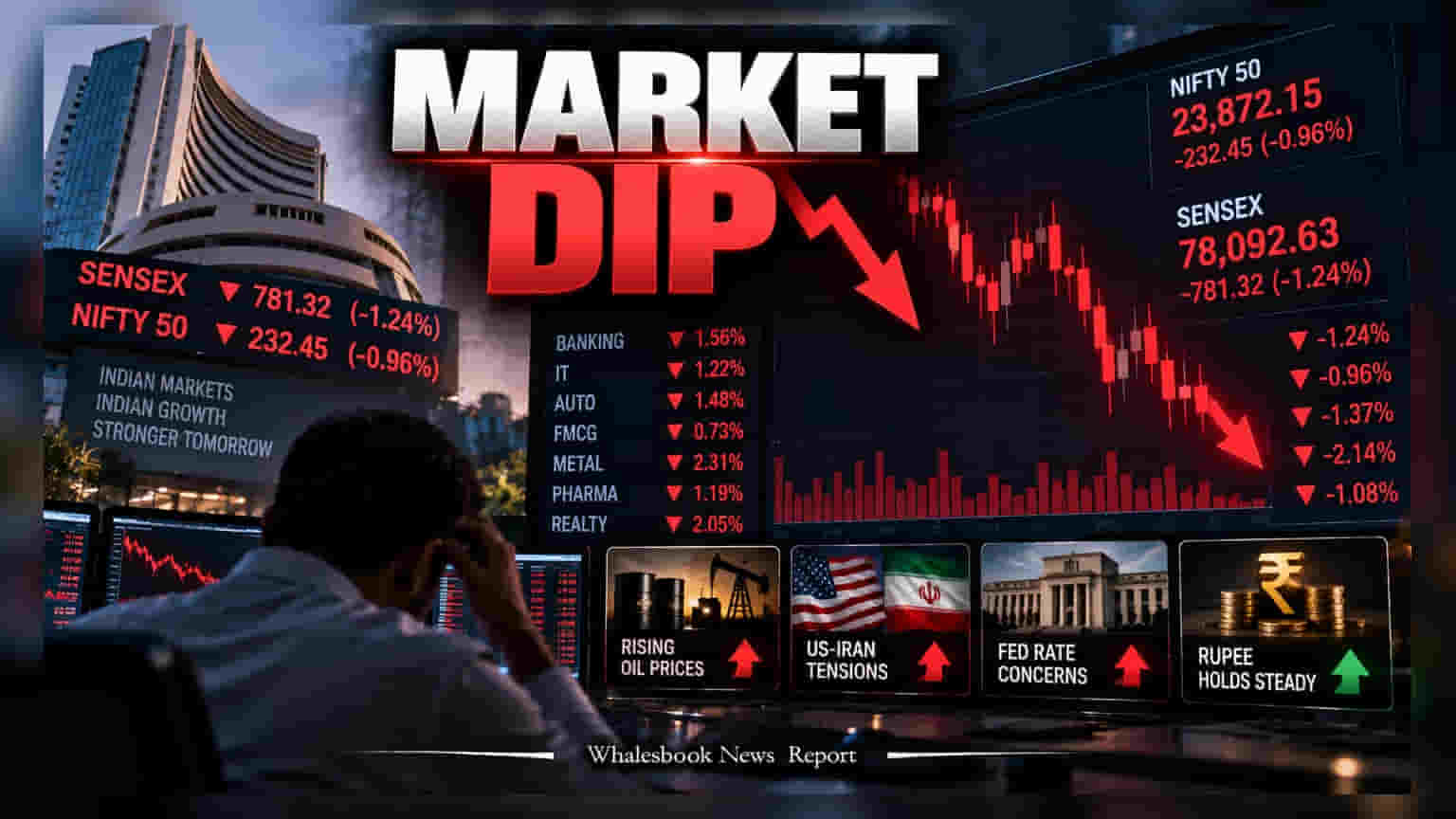
Indian benchmark indices opened lower on September 7, 2026, as geopolitical tensions between the US and Iran pushed crude oil prices higher. Investors are exercising caution amid renewed concerns about US interest rates. The Nifty 50 is trading below the 23,900 mark, with key technical support levels currently in focus.
On September 7, 2026, Indian equity markets began the trading session in the red. The BSE Sensex and NSE Nifty 50 faced immediate selling pressure as cautious sentiment spread across the broader market. The Nifty 50 index slipped below the 23,900 level early in the day, reflecting a risk-off mood among market participants who are currently prioritizing capital preservation over new positions.
Geopolitical Risks and Macro Pressures
The primary driver for the market downturn is the rising tension between the US and Iran. This geopolitical uncertainty has triggered a spike in crude oil prices, which typically creates inflationary pressure for a major energy-importing nation like India. Higher oil prices can impact corporate margins and increase the country's import bill, leading to uncertainty among investors.
Furthermore, recent US labor market data has reignited concerns that the Federal Reserve may maintain a hawkish stance on interest rates. Persistent inflation and strong labor data in the US often discourage the central bank from cutting rates, which in turn leads to volatility in global equities. Higher US interest rates generally attract capital toward dollar-denominated assets, putting pressure on emerging markets like India.
Technical Support and Market Liquidity
From a technical standpoint, the Nifty 50 is finding it difficult to sustain its recent gains, facing significant resistance in the 24,000 to 24,200 zone. Market observers are now focusing on the 23,600 to 23,800 range as a critical support level. If the index fails to hold these points, selling pressure could potentially intensify in the near term.
Additionally, sustained selling by Foreign Institutional Investors (FIIs) remains a persistent headwind, limiting liquidity and keeping the market range-bound. While the broader market shows signs of consolidation, the lack of strong follow-through buying from institutional players is making it harder for indices to break past their current barriers.
Interestingly, despite the weakness in equity indices, the Indian rupee showed slight resilience, opening 10 paise stronger against the US dollar at 94.40. Investors will be looking for further cues from global energy prices and upcoming macroeconomic data releases to determine if the indices can reclaim lost ground or if the current downtrend will continue.