

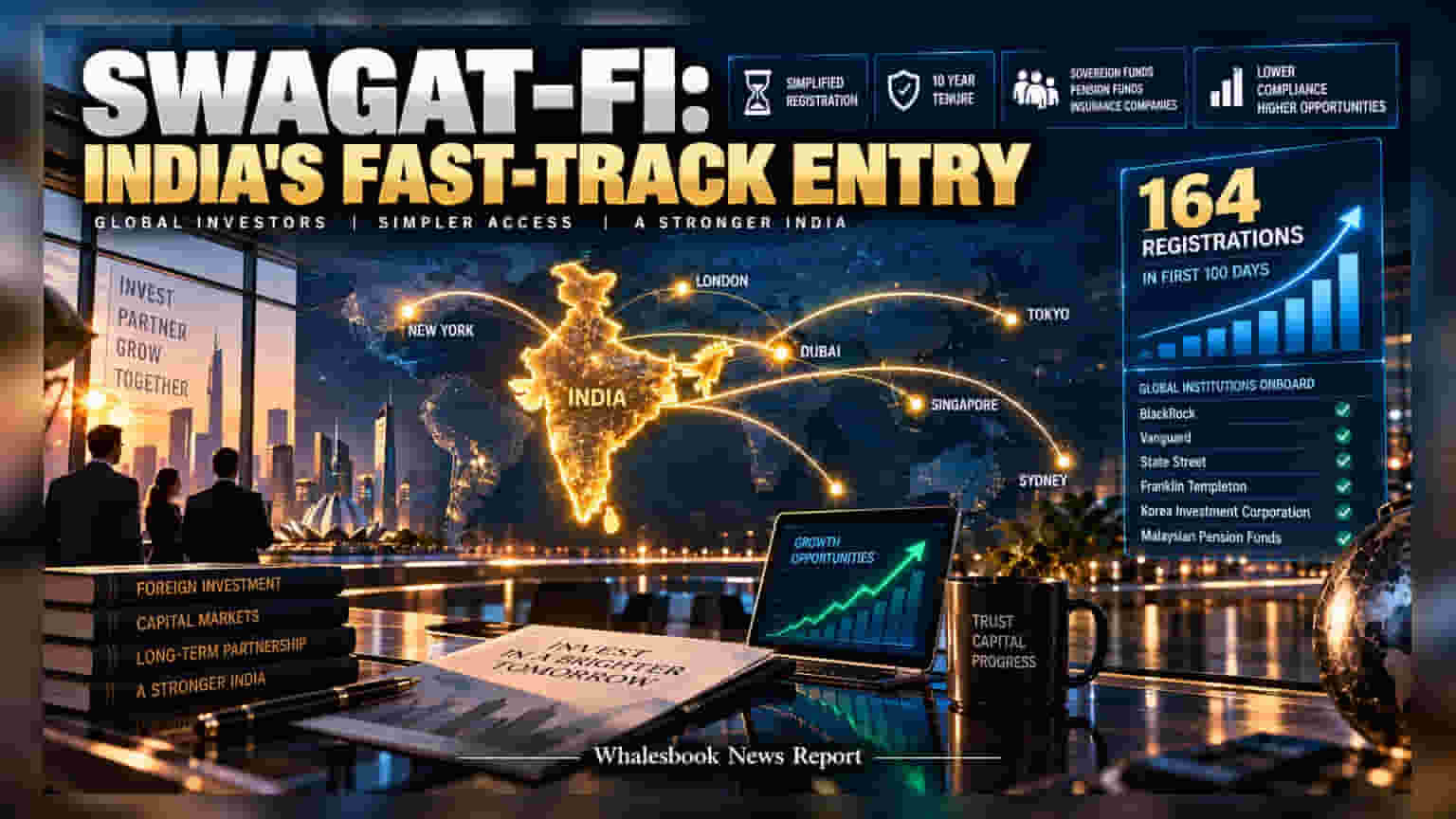
India’s SWAGAT-FI framework has onboarded 164 foreign investors since its June launch, aiming to simplify market entry for institutional giants. While the scheme reduces compliance hurdles and encourages long-term capital, the market continues to face volatility, with foreign investment flows showing both net inflows and recent outflows.
The SWAGAT-FI (Single Window Automatic and Generalised Access for Trusted Foreign Investors) framework has onboarded 164 global entities in its first 100 days of operation. Launched on June 1, this system is designed to replace traditional, cumbersome registration processes for low-risk foreign investors. By extending registration tenure to 10 years, the government aims to reduce the repetitive compliance costs that previously acted as a barrier for many institutional players.
The initiative specifically targets sovereign wealth funds, pension funds, and insurance companies, which historically represent a significant portion of foreign investment in India. Data from the National Securities Depository confirms that major global institutions, including BlackRock, Vanguard, State Street, and Franklin Templeton, have already utilized the platform. Other early participants include the Korea Investment Corporation and various pension funds from Malaysia.
This administrative shift arrives at a pivotal moment, with foreign ownership of Indian equities currently at a 17-year low. Policymakers hope that by simplifying entry for low-risk entities, the country can foster a more stable base of institutional capital. However, the recent market performance illustrates the underlying volatility that these investors face. While the market recorded net inflows of ₹70,200 crore between June and August, shifts in global sentiment resulted in a net outflow of ₹27,810 crore during September.
For investors, the success of SWAGAT-FI represents a long-term structural improvement in the ease of doing business. Lowering entry friction helps, but it does not remove the influence of broader macroeconomic factors, such as interest rate changes, currency fluctuations, and global risk appetite, which ultimately drive capital flows. The platform serves as a foundation for easier participation, but it cannot override the impact of changing market sentiment.
Investors may track how many of these newly registered entities begin deploying capital in the coming months. The most important metric to watch will be whether the simplified registration process leads to more consistent investment patterns, particularly during periods of market stress, or if capital remains sensitive to the global factors that have caused recent outflows.