

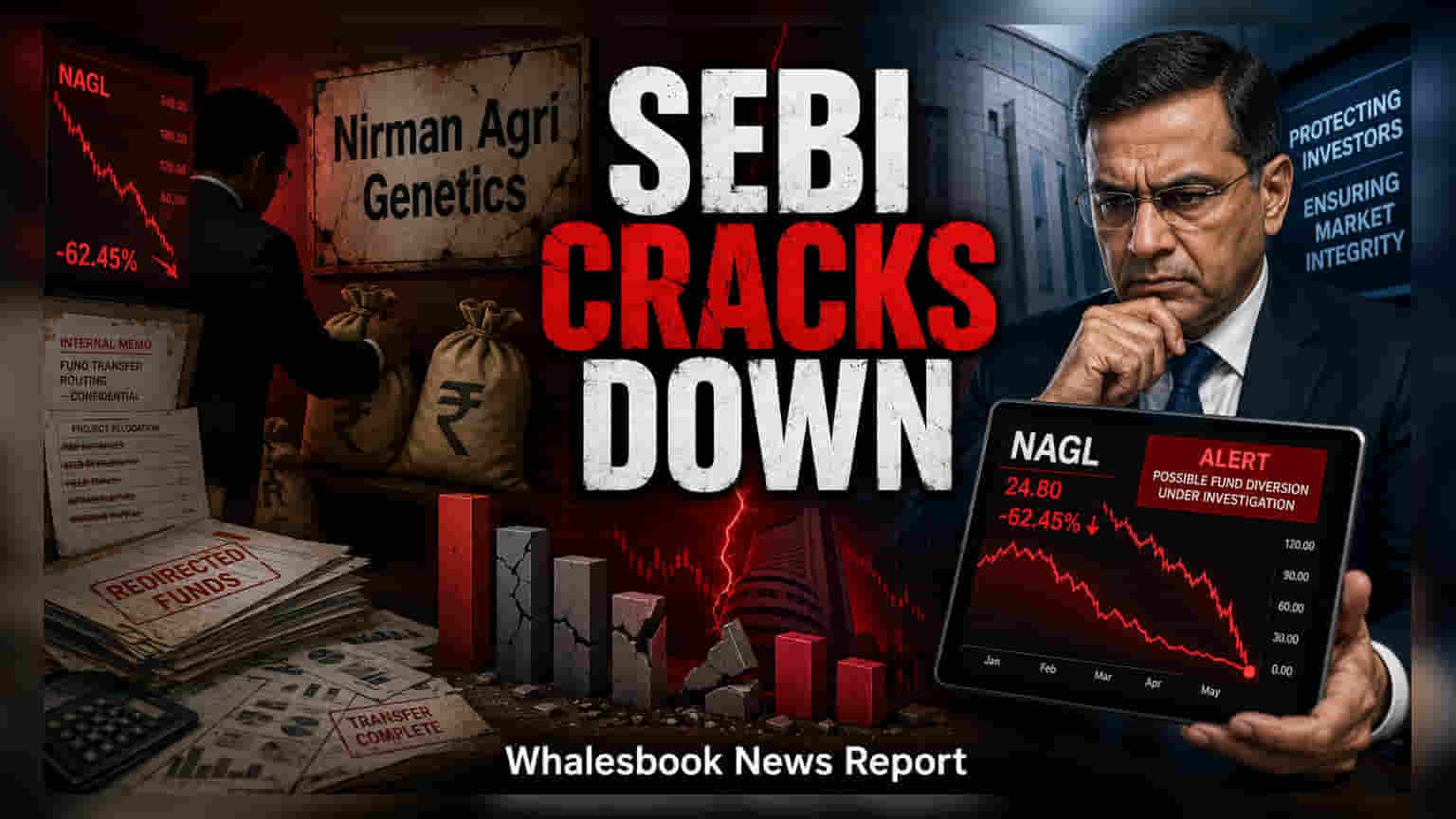
SEBI has maintained interim restrictions on Nirman Agri Genetics Limited and its promoter after failing to resolve concerns over the alleged diversion of 93% of its IPO funds. The regulator rejected the company’s request to proceed with corporate actions, including a bonus issue and stock split, citing investor protection. The stock has been under significant pressure, trading near its 52-week low as investigations into governance failures continue.
The Securities and Exchange Board of India (SEBI) on Monday upheld its interim restrictions on Nirman Agri Genetics Limited (NAGL) and its promoter, Pranav Kailas Bagal. This decision prevents the company from moving forward with planned corporate actions, such as a bonus issue, stock split, and a potential name change. The regulatory action keeps the company under close watch following investigations into how it used the money raised from its initial public offering (IPO).
The core of the regulator's concern centers on the handling of money raised during the company's IPO. SEBI's investigation found that approximately 93% of the Rs 20.30 crore raised—amounting to Rs 18.89 crore—was purportedly diverted through questionable transactions. The regulator noted that the funds were sent to entities that appeared to be non-existent or had suspicious vendor profiles, rather than being used for the company’s stated business objectives.
In a hearing held on July 16, 2026, the company and its promoter argued for the resumption of business activities, including the requested stock splits and bonus shares. They claimed that some of the disputed funds had been returned to the company. However, SEBI’s Whole Time Member, Kamlesh Chandra Varshney, rejected this request. The regulator stated that the company failed to provide credible documentary proof to support the claim that the funds were actually repaid or that the vendor transactions were legitimate.
For investors, this development highlights serious governance concerns. SEBI warned that allowing the company to proceed with corporate actions like bonus issues or name changes could be misleading. The regulator expressed concern that such moves might be designed to create a false sense of growth or liquidity, potentially inducing retail investors to put money into the stock while these serious fraud allegations remain unaddressed. Consequently, the company remains unable to access the securities market for these actions.
The stock has seen a sharp decline, trading significantly lower compared to previous levels and hovering near its 52-week low. As the investigation remains ongoing, the primary focus for market observers and shareholders will be on whether the company can provide verifiable evidence regarding the use of its IPO funds and how it plans to resolve the regulatory complaints. The current restriction keeps the company’s shares and corporate strategy in a state of uncertainty.