

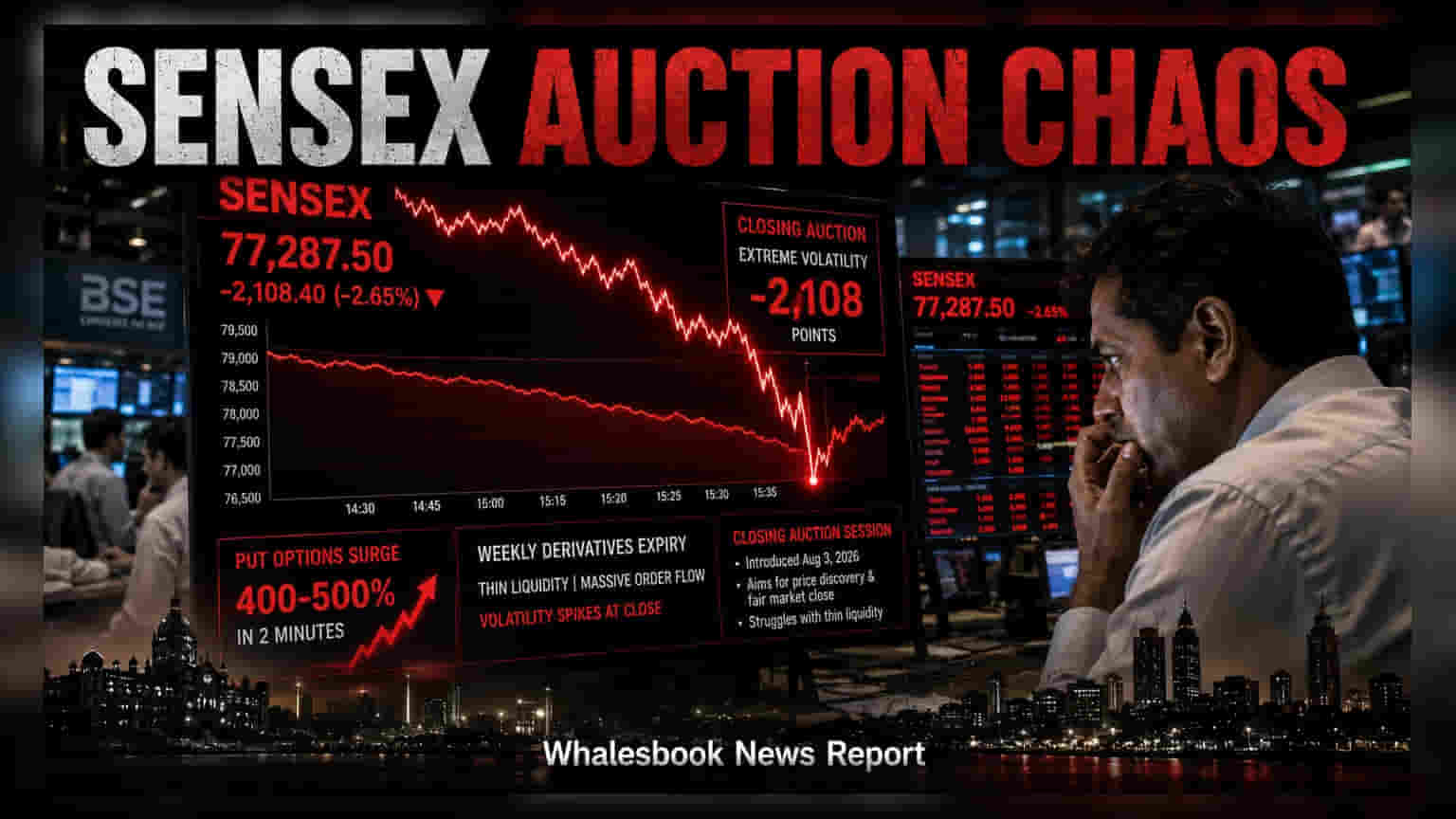
The Securities and Exchange Board of India has launched a review of the Sensex closing auction mechanism following a 2,100-point swing on September 3, 2026. This sudden volatility during the weekly derivatives expiry caused a sharp spike in option premiums, prompting regulatory concern over how final settlement prices are determined.
On Thursday, September 3, 2026, the BSE Sensex experienced extreme instability during its final trading minutes. The index briefly plunged over 2,100 points during the closing auction session, triggering a rapid and violent repricing of financial contracts. This erratic movement occurred during the weekly derivatives expiry, a time when traders often close out their open positions, leading to heightened sensitivity to price changes.
Volatility During Closing Auction
The Closing Auction Session, which was introduced on August 3, 2026, is intended to improve price discovery and provide a fair market close. However, the mechanism struggled during Thursday’s session as thin liquidity in the final minutes caused sudden price swings. This volatility led to a dramatic reaction in the derivatives market, where put option premiums surged by 400 to 500 percent within a two-minute window. While the index eventually recovered from its lows, the episode highlighted how a concentrated order flow during the auction can create significant risks for traders and market makers navigating the close.
Regulatory Review of Settlement Process
Following the incident, the Securities and Exchange Board of India announced a formal review of the methodology used to settle derivative contracts. The regulator is currently assessing whether the closing price determined by the auction session is the most appropriate or stable basis for these settlements. The regulator has indicated that a consultation paper regarding potential structural adjustments will be released within the next week.
For market participants, this event serves as a clear indicator of the risks associated with trading during the final minutes of a session, especially on days when derivative contracts expire. While the auction mechanism was designed to reduce market impact and improve transparency, the recent swings suggest that the system may need adjustment to prevent similar price distortions. The market is now waiting for the regulator’s proposed changes, which could significantly alter how orders are executed and settled in the future. The next important milestone for investors and traders will be the publication of the consultation paper, which will provide insight into how the regulator intends to balance price discovery with market stability.