

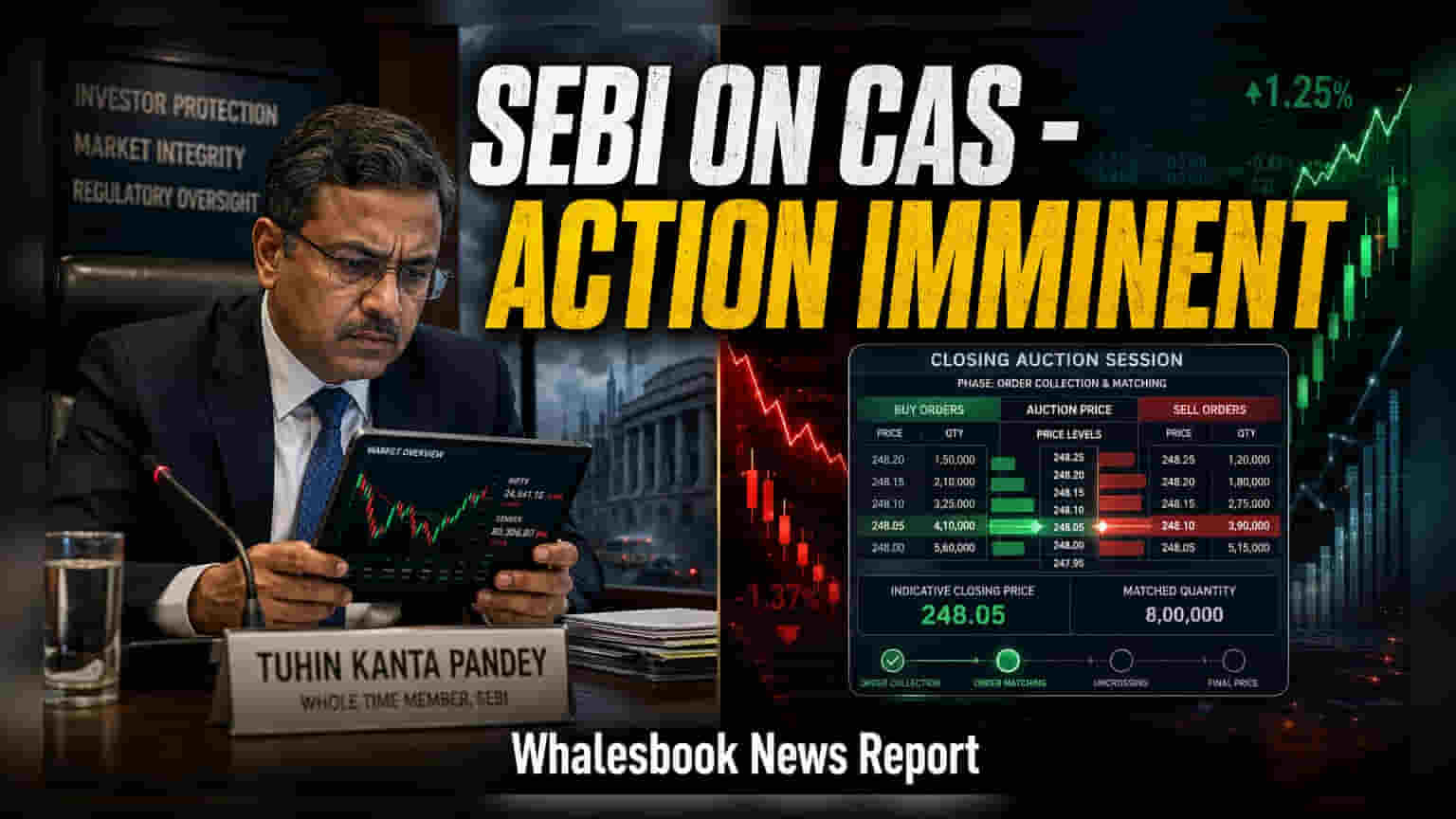
SEBI is actively reviewing feedback on the new Closing Auction Session (CAS) implemented in August 2026. While the regulator aims to align Indian markets with global standards, the transition has faced initial challenges like liquidity gaps and price differences between exchanges. Investors should note how this change impacts trade execution and mutual fund valuations as systems continue to adjust.
The Securities and Exchange Board of India (SEBI) is currently evaluating feedback regarding the new Closing Auction Session (CAS), which was introduced on August 3, 2026. SEBI Chairman Tuhin Kanta Pandey confirmed that while the regulator is aware of concerns raised by traders and market players, the system is designed to improve how closing prices are determined. The goal is to move the Indian stock market toward global standards used in major financial centers like the US, Japan, and Germany, where auction-based pricing is common.
Understanding the Shift in Closing Prices
Before this change, the closing price of a stock was calculated based on the average price over the final 30 minutes of trading. The new CAS mechanism changes this by using an auction-based equilibrium price. In this system, buy and sell orders are gathered and matched to find a single price that satisfies the maximum number of orders. This is intended to create a more transparent and fair closing price for the day, reducing the possibility of last-minute price manipulation.
Navigating Initial Market Challenges
Despite the long-term objective of improved transparency, the transition has not been without hurdles. During the initial rollout, some stocks showed price discrepancies between the National Stock Exchange (NSE) and the Bombay Stock Exchange (BSE) due to lower participation levels. Liquidity—the ease of buying and selling shares without causing large price moves—has also been a point of focus. SEBI has noted that these issues are largely part of the transition process as traders, brokers, and algorithms adjust to the new way of calculating closing prices.
Increasing Participation and System Adaptation
To help the market adapt, major brokerages like Zerodha, Upstox, Groww, ICICI Securities, and Angel One have started displaying indicative CAS prices on their platforms. This helps traders understand potential closing prices before the session concludes. Data indicates that institutional involvement is growing, with mutual fund participation in the session reaching approximately 20% to 25%. This suggests that as market players become more familiar with the auction process, participation levels are expected to rise, which should help stabilize prices and reduce the discrepancies observed between exchanges.
For investors, the most important aspect to monitor is the continued integration of these systems. As broker platforms refine their tools to show real-time indicative prices, the trading experience is likely to become smoother. The key monitorable remains how effectively the CAS mechanism balances supply and demand as more investors and algorithmic systems fully adapt to this new standard.