

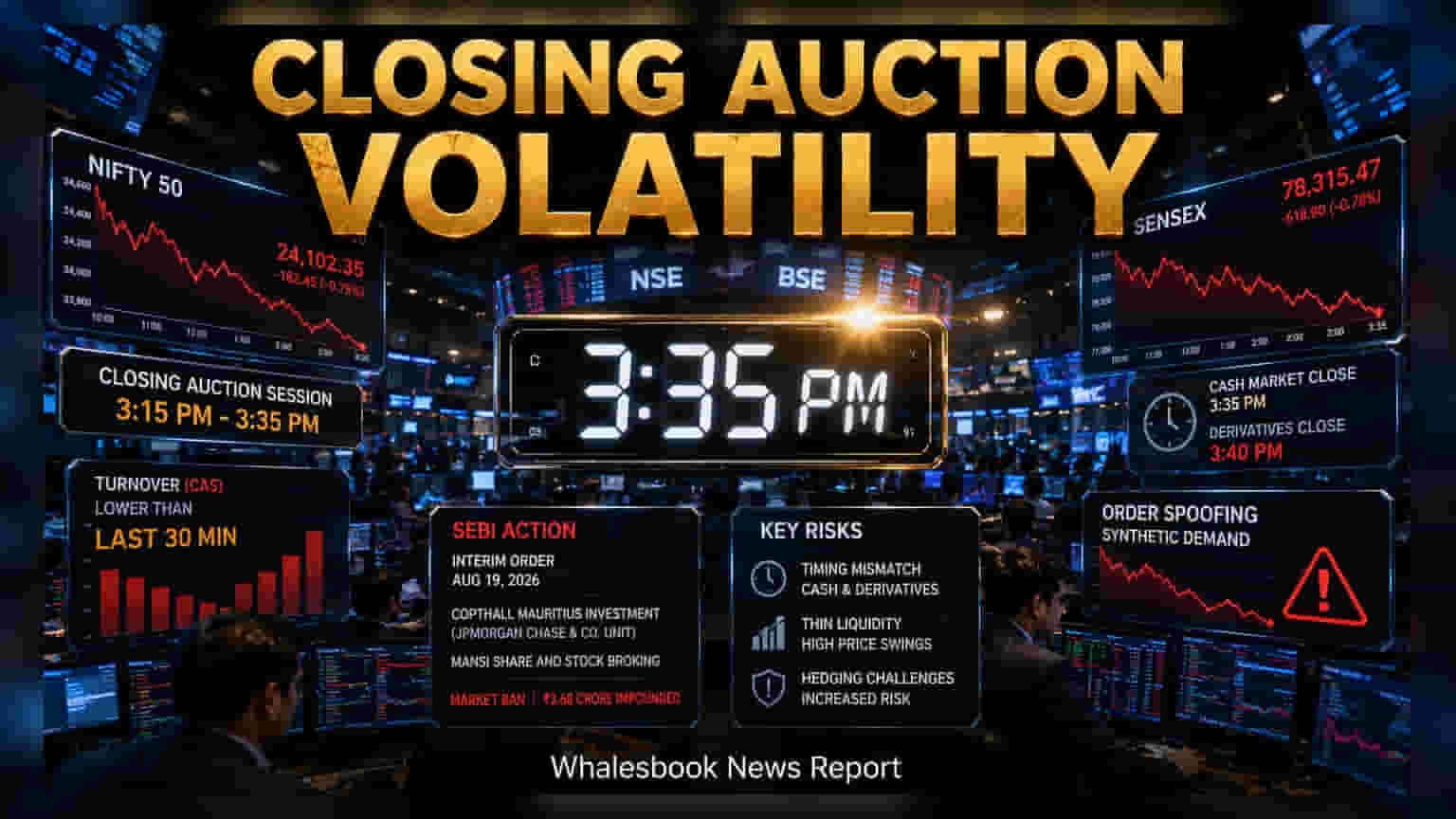
India’s new 20-minute closing auction for F&O-eligible stocks has triggered regulatory scrutiny after market manipulation concerns. SEBI impounded ₹3.68 crore from two firms, including a JPMorgan unit, for alleged order-spoofing. While the system aims to improve price discovery, investors face challenges with volatility and hedging due to timing gaps between the cash and derivatives markets.
On August 3, 2026, Indian stock exchanges implemented a 20-minute Closing Auction Session (CAS) for F&O-eligible stocks. The move was designed to standardize price discovery by replacing the previous Volume-Weighted Average Price (VWAP) calculation used in the final 30 minutes of trading. However, the early implementation has led to unexpected volatility and regulatory intervention.
Regulatory Crackdown on Manipulation
The Securities and Exchange Board of India (SEBI) issued an interim order on August 19, 2026, taking action against two entities for alleged market manipulation during the August 13, 2026, trading session. The regulator barred Copthall Mauritius Investment, a unit of JPMorgan Chase & Co., and local firm Mansi Share and Stock Broking from the securities market. SEBI accused these entities of engaging in order-spoofing—a practice where large orders are placed with no intention of execution, only to be cancelled moments before the market closes. This behavior is alleged to have created synthetic demand, causing the official closing price to deviate from actual market sentiment. SEBI has impounded approximately ₹3.68 crore in alleged wrongful gains from these firms.
Structural Risks for Investors
The new mechanism has introduced structural friction that investors should track carefully. A primary concern is the timing mismatch between the cash and derivatives markets. The cash market's closing auction concludes at 3:35 PM, while the derivatives segment continues trading until 3:40 PM. This five-minute gap creates a regulatory and operational divide, making it difficult for traders to hedge their positions using underlying shares during the final stages of the derivatives window. Without the ability to balance positions between cash and F&O, investors may face higher risks during periods of market stress.
Liquidity and Execution Challenges
Market data indicates that turnover during these 20-minute sessions has been lower than the liquidity typically seen in the final half-hour of continuous trading. The combination of thin liquidity and the risk of price swings has made institutional investors cautious. This creates a feedback loop: institutional participants avoid the auction window to minimize the risk of manipulation, but their absence reduces the depth required to absorb large orders. This environment can lead to exaggerated price movements, affecting the final day-end value for portfolio managers and retail investors holding F&O-eligible stocks. Investors should monitor future exchange announcements regarding potential adjustments to the auction mechanism or changes to trading hours, as regulators continue to evaluate the system’s effectiveness in maintaining market integrity.