

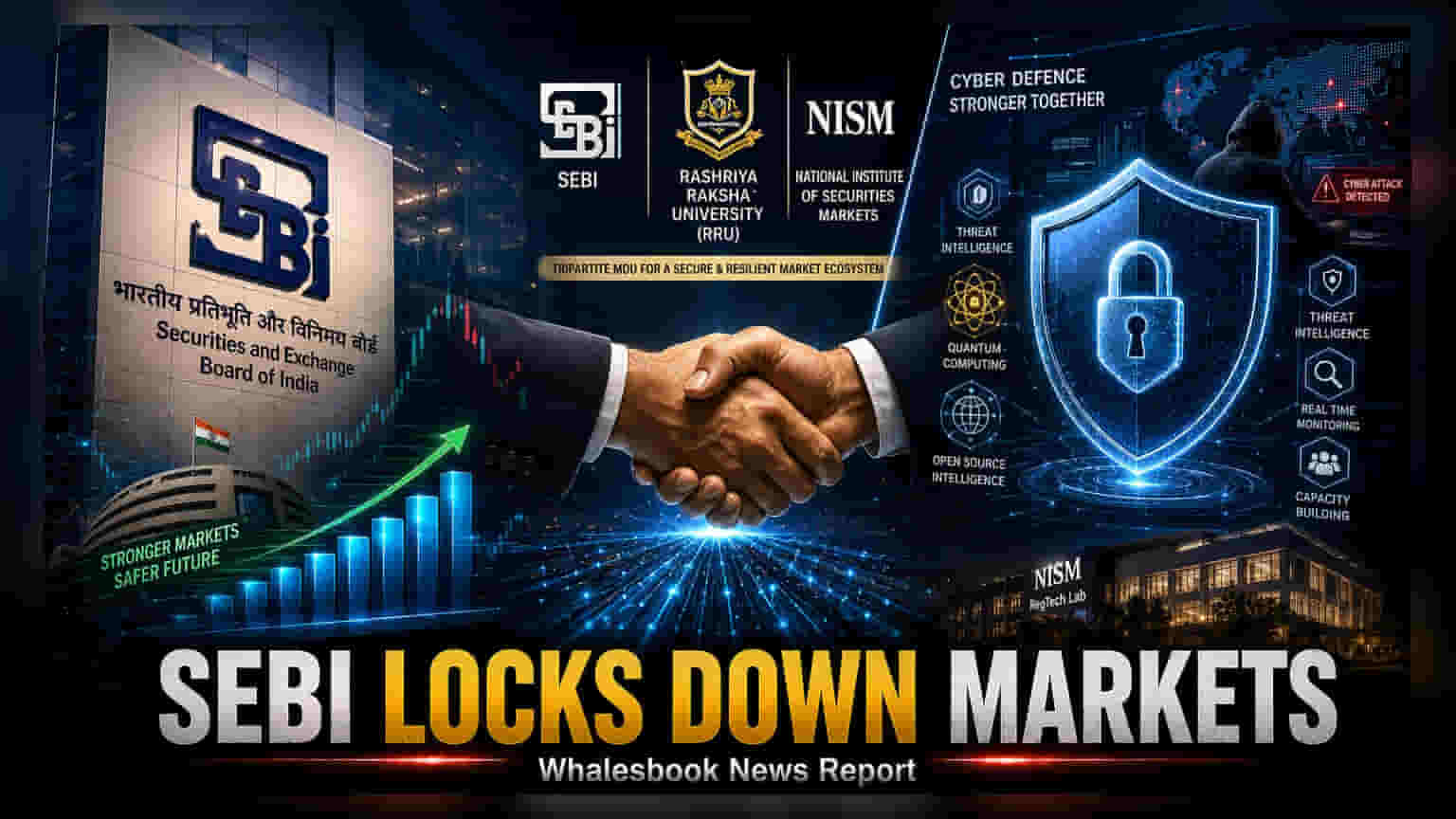
The Securities and Exchange Board of India (SEBI) has entered a strategic agreement with Rashtriya Raksha University and NISM to enhance cybersecurity, training, and threat intelligence. This initiative aims to establish a central command center for market security, signaling an era of stricter technology and data protection mandates for market intermediaries and listed entities.
The Securities and Exchange Board of India (SEBI) has formalized a tripartite agreement with Rashtriya Raksha University (RRU) and the National Institute of Securities Markets (NISM) to upgrade the safety and resilience of the Indian securities market. This memorandum of understanding, signed on August 17, marks a significant shift toward deeper collaboration on cybersecurity, capacity building, and advanced technological training for financial entities.
The initiative is designed to move beyond traditional regulatory oversight by integrating specialized skills in areas like artificial intelligence, quantum computing, and open-source intelligence. As part of this collaboration, the institutions plan to establish a Technical Innovation Unit, which will function as a central command center for research and joint operations. This unit aims to centralize efforts in monitoring threats and developing solutions to protect the capital market ecosystem from emerging digital vulnerabilities.
This partnership follows a series of broader digital infrastructure upgrades rolled out by the regulator in August 2026. SEBI has already launched the 'SEBI Incident Reporting' portal and the 'Cyber Suraksha' portal to streamline how market participants report and manage security incidents. Additionally, the regulator inaugurated a new RegTech Lab at the NISM Patalganga campus, specifically designed to foster regulatory compliance and technology-enabled learning. These moves suggest that the regulator is prioritizing the digitization of compliance and the automation of security protocols.
For investors and market intermediaries, this development signals a clear shift in regulatory expectations regarding technology governance. Listed companies, brokers, and other financial intermediaries may need to prepare for more stringent cybersecurity and data protection mandates. While these measures are intended to reduce systemic risks and protect the market from cyber threats, they could lead to increased operational and compliance costs. Firms will likely need to invest in upgrading their internal software, strengthening data encryption, and training staff to meet these evolving security standards.
The move also highlights the regulator's intent to professionalize cyber risk management across the entire financial sector. By leveraging specialized resources from RRU, which operates under the Ministry of Home Affairs, and NISM, the regulator is creating a structured knowledge repository for the industry. Going forward, the market should track how these new cybersecurity and reporting protocols are implemented across different financial entities and whether this leads to updated mandatory security guidelines for listed firms and market participants.