

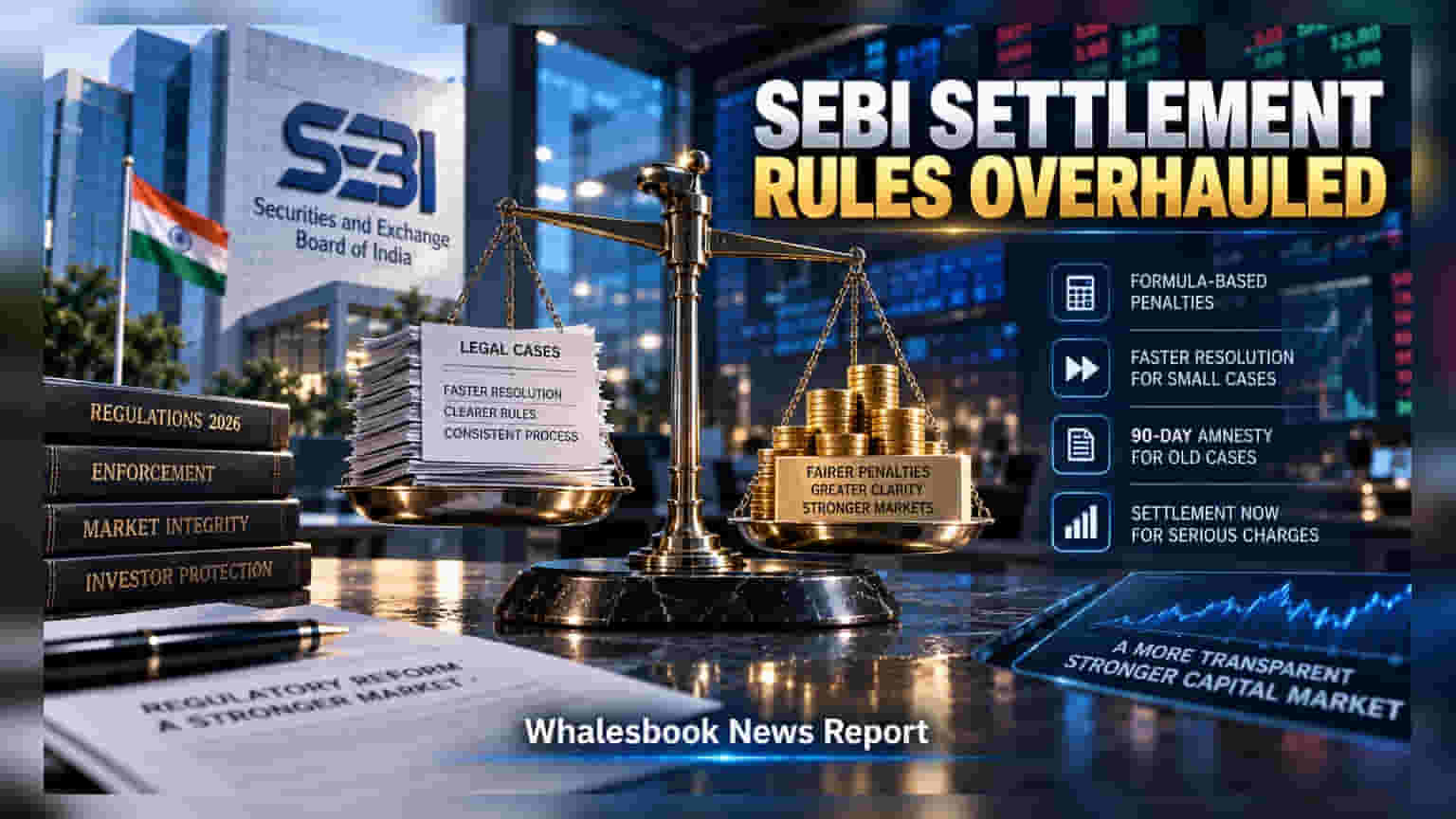
SEBI has introduced the 2026 settlement regulations, replacing the 2018 framework with a transparent, formula-driven penalty model. The update includes a fast-track path for minor violations and a 90-day amnesty window for previously rejected cases. This move aims to clear pending litigation and provide clarity on financial penalties, reducing long-term uncertainty for listed companies facing regulatory scrutiny.
The Securities and Exchange Board of India (SEBI) has launched a significant update to how it handles legal and administrative cases against market participants. The new 'Settlement of Administrative and Civil Proceedings Regulations, 2026' replaces the older 2018 framework, aiming to bring more clarity, speed, and consistency to regulatory enforcement.
New Formula for Penalties
One of the biggest changes is the move to a standardized, formula-based calculation for settlements. Previously, penalty assessments could feel subjective. The new approach uses a clear mathematical formula: the base penalty is multiplied by factors reflecting the gravity of the violation and the applicant's profile, with legal costs added on top. Importantly, the regulator has decided to separate 'disgorgement'—the process of paying back wrongful gains—from the penalty calculation itself. This prevents the previous issue of double-counting investor losses within the settlement amount, giving companies a clearer picture of their total financial liability.
Faster Resolution for Small and New Cases
SEBI is introducing a 'Wells Notice' mechanism, which allows the regulator to communicate with entities before formal charges are filed. This change is designed to resolve issues early, potentially saving companies from prolonged legal battles. For smaller cases, specifically those involving monetary values under Rs 10 lakh or simple disclosure-related lapses, the regulator has created a fast-track route. These cases will bypass standard, time-consuming adjudication steps, moving directly to a panel for rapid closure once the payment is made.
One-Time Amnesty for Old Cases
To clear the backlog of older legal cases, SEBI has opened a 90-day window for entities that previously had their settlement applications rejected, withdrawn, or returned under the old 2018 rules. This is a one-time opportunity for companies to resolve pending issues. However, there is a cost: applicants will have to pay an additional 20% premium on top of the calculated settlement amount.
Settlement Now Allowed for Serious Charges
Perhaps the most notable shift is that cases involving financial misstatements and fund siphoning are now eligible for settlement. Previously, these were often excluded from such processes. Under the new rules, companies can settle these serious matters, provided they agree to specific remedial measures, such as full disclosure and the return of any diverted funds.
The new regulations extend the application period for entities after receiving a show-cause notice from 60 days to 90 days. For investors, these changes are a monitorable development as they may lead to a faster resolution of ongoing regulatory disputes. Investors should track how companies with pending litigation utilize the 90-day amnesty window to clear their regulatory standing.