

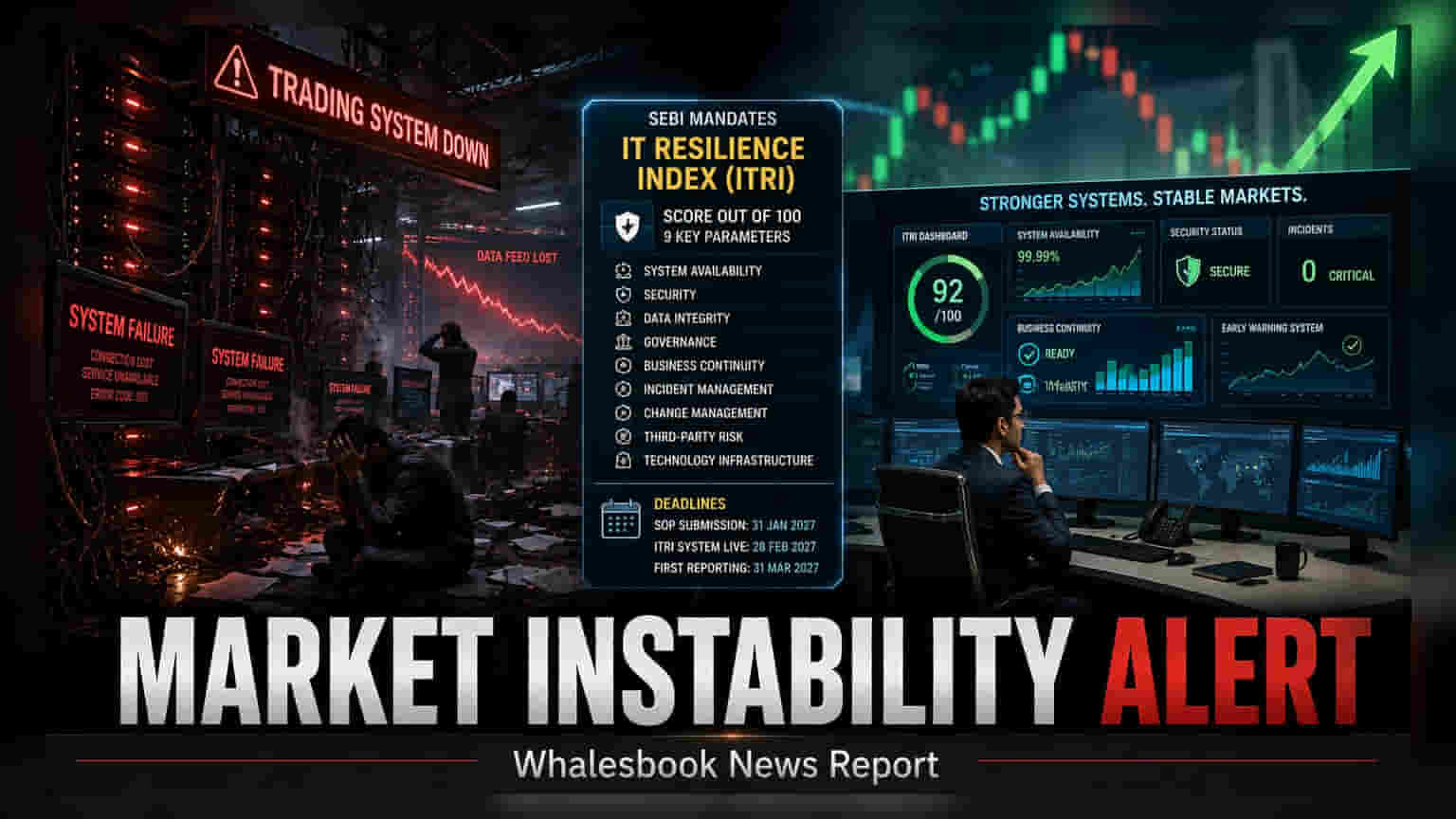
SEBI has introduced a new IT Resilience Index (ITRI) requiring stock exchanges, clearing corporations, and depositories to track and report their technology robustness. The framework, which mandates full operational status by February 2027, aims to reduce system glitches and improve market stability. For investors, this move focuses on ensuring more reliable and secure trading systems.
The Securities and Exchange Board of India (SEBI) has directed all Market Infrastructure Institutions (MIIs)—including stock exchanges, clearing corporations, and depositories—to adopt a new IT Resilience Index (ITRI). This framework establishes a standardized scoring system to measure the robustness, security, and operational continuity of their critical technology platforms.
The ITRI will be scored out of 100, based on nine specific parameters. These include critical metrics such as system availability, security, data integrity, governance, and business continuity. By requiring automated calculations rather than manual inputs, SEBI intends to ensure that these assessments remain objective and free from human error.
For the average investor, this update is a move toward more stable trading. Technology glitches at exchanges or depositories can lead to trading halts, delayed data updates, or issues with settlement, which disrupt market activity. By mandating this index along with an Early Warning System, SEBI is pushing these institutions to proactively identify and resolve technical vulnerabilities before they affect the wider market.
Market Infrastructure Institutions face a clear deadline for this transition. The full ITRI framework, including real-time monitoring dashboards, must be operational by February 28, 2027. The first official reporting period under these new rules will be for the half-year ending March 31, 2027. To meet these standards, MIIs will need to submit detailed standard operating procedures to the regulator by January 31, 2027.
From a financial and operational perspective, this mandate will likely require increased spending on IT infrastructure, software automation, and system upgrades. While companies like the Bombay Stock Exchange (BSE), National Stock Exchange (NSE), and depositories such as Central Depository Services Ltd (CDSL) operate in a highly regulated environment where such costs are part of doing business, it is a development that shareholders should note. Higher technology spending could lead to increased operational expenses in the short to medium term. However, the long-term goal is to improve the reliability of the entire financial ecosystem. The primary monitorable for investors will be how efficiently these institutions integrate these new monitoring systems and whether the stricter oversight successfully reduces the frequency of technical disruptions.