

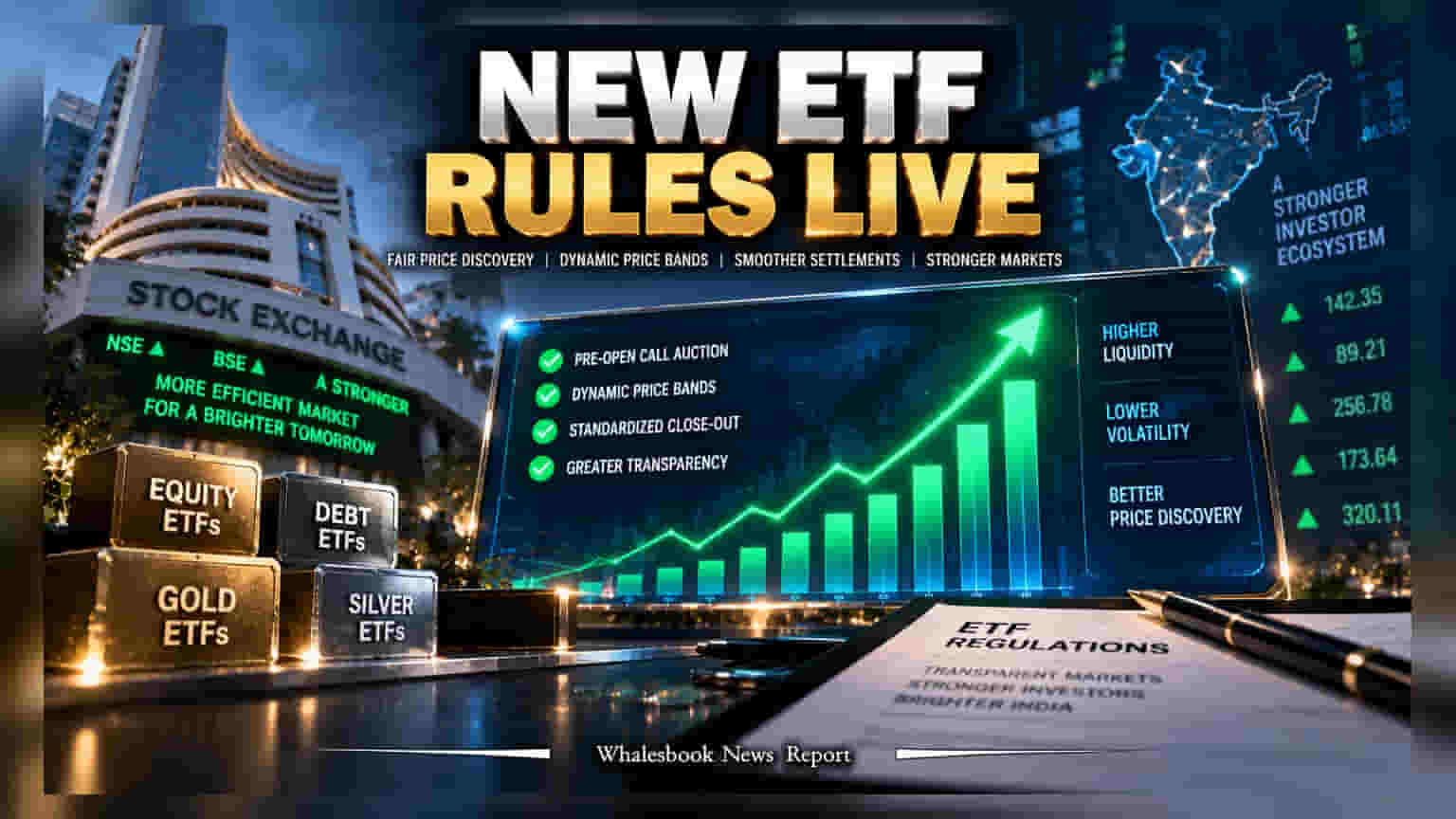
The Securities and Exchange Board of India has officially launched a new trading framework for exchange-traded funds (ETFs) today. The rules, which were delayed by one week to ensure system readiness, introduce new mechanisms for price discovery, dynamic price bands, and standardized settlement procedures to improve market stability and liquidity for investors.
Exchange-traded fund (ETF) trading in India has entered a new phase with the implementation of updated regulatory norms effective today, September 7, 2026. The rollout, which was initially planned for September 1, was deferred by one week to provide stock exchanges and clearing corporations with additional time to finalize technical preparations and conduct necessary mock sessions.
The updated framework brings structural changes to how ETFs are traded throughout the day. A key addition is the introduction of a pre-open call auction mechanism for specific ETFs. This session is designed to aggregate buy and sell orders over a short window before regular trading begins, matching them at a single price. For investors, this process helps achieve a fairer and more transparent price discovery, reducing the sharp price fluctuations that sometimes occur immediately after the market opens.
To further safeguard against extreme price volatility, SEBI has introduced dynamic price bands for ETFs. These bands are tailored to different categories of funds and prevent abnormal price spikes, ensuring that the market price of an ETF remains more closely aligned with its underlying net asset value (NAV). This alignment is crucial for investors, as it minimizes the risk of buying or selling an ETF at a price that deviates significantly from the value of the stocks or assets held within the fund.
Additionally, the new guidelines establish a standardized close-out procedure to handle situations where a trade cannot be fulfilled during the standard settlement cycle. By clearly defining how such settlement failures are resolved, the regulator aims to reduce uncertainty and streamline the operational process for both retail and institutional market participants.
While these changes are technical in nature, they reflect a broader effort to modernize market infrastructure and minimize the gap between the trading price of an ETF and its actual portfolio value. Investors should note that these rules now govern trading across all major platforms, including the NSE and BSE. As the system goes live, the primary focus for the market will be the smooth execution of these new price discovery and settlement protocols across all asset classes, including equity, debt, gold, and silver ETFs.