 Whalesbook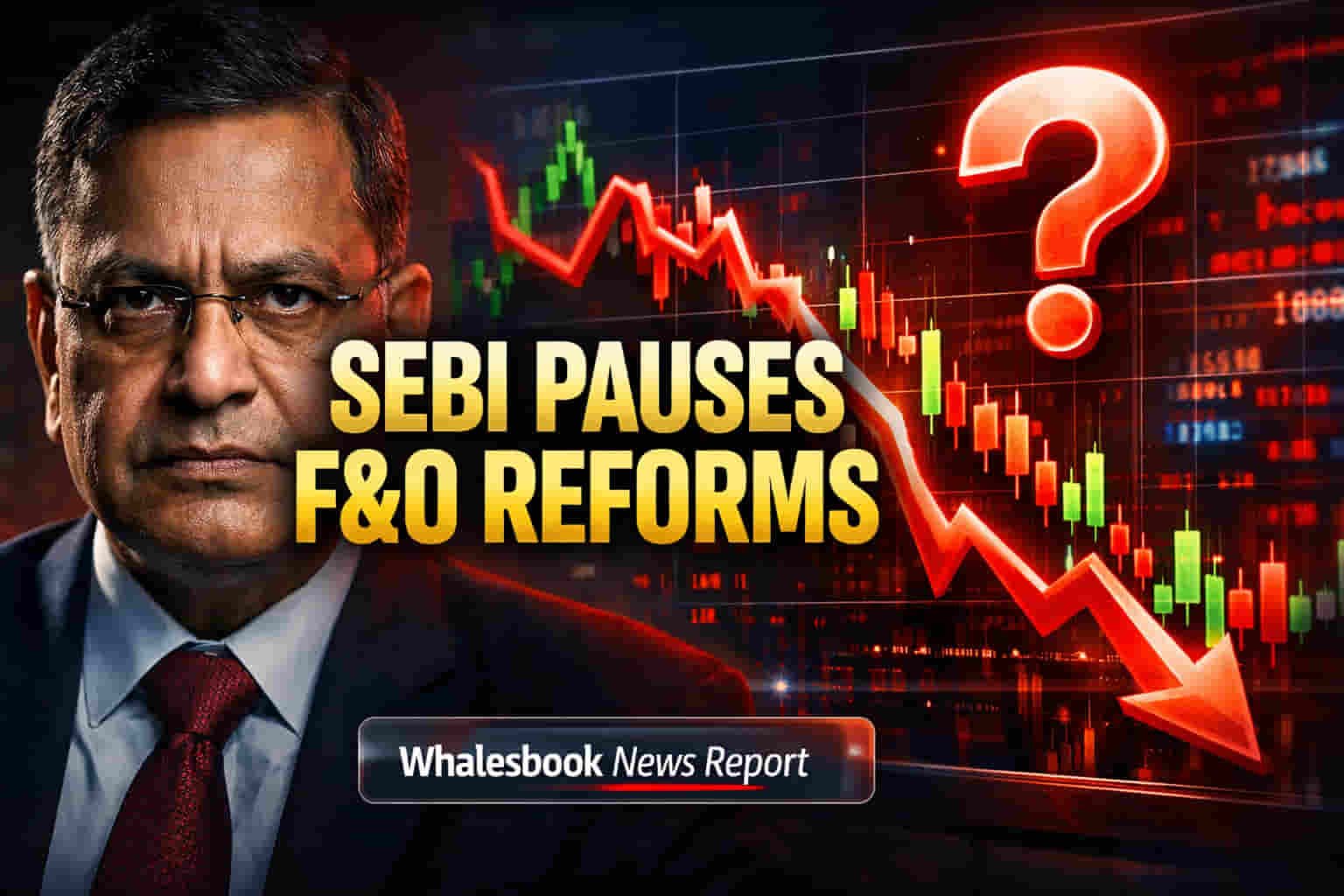


THE SEAMLESS LINK
This regulatory pause signals SEBI's deeper concern that the proliferation of short-dated options, characterized by "hyperactivity," may be diverging from their intended economic functions of hedging and price discovery. The decision to defer further reforms underscores a commitment to data-driven policy, aiming to understand if recent interventions have genuinely curbed excessive speculation or merely added transactional friction to market participants.
Derivative Activity Under Scrutiny
SEBI's cautious stance comes amid continued high volumes in India's F&O market, particularly in index options, which have been a focal point for retail investor participation. The "wait and watch" approach implies that SEBI is closely monitoring how traders react to the suite of risk management tools introduced in late 2025. While some measures, like enhanced margins and intraday monitoring, were designed to dampen excessive intraday volatility, the market's reaction to this regulatory forbearance will be telling. Investors will look for clarity on whether SEBI intends to allow market forces to self-regulate within the existing framework or if this pause precedes a more fundamental reassessment of derivative product design itself. The current market sentiment is one of cautious observation, with traders seeking to understand the long-term implications of this regulatory hiatus on trading strategies and derivative accessibility.
Recent Measures and Their Objective
The reforms enacted by SEBI in December 2025 represented a significant tightening of the F&O regulatory framework. These included the removal of a one-day grace period for index derivative limits, the introduction of a pre-open session for futures, and stringent real-time intraday monitoring of market-wide position limits (MWPL). The stated objective was to curb excessive speculation and prevent the kind of "hyperactivity" that concerned Chairman Pandey, especially in weekly options. These measures were intended to increase the cost and difficulty of taking large speculative positions, thereby aligning trading activity more closely with economic utility.
Global Regulatory Parallels and Historical Context
SEBI's approach reflects a global trend among regulators grappling with the explosive growth of retail trading in derivatives. While other jurisdictions have implemented similar measures like circuit breakers or enhanced disclosure requirements, SEBI's specific focus on the "economic purpose" of instruments like short-dated options is a nuanced angle. Historically, regulatory pauses in India have often preceded periods where market participants recalibrated strategies, but they can also draw criticism if they are perceived as a delay in addressing systemic risks. The key challenge for SEBI is to strike a delicate balance: imposing enough control to mitigate systemic risks without stifling the legitimate price discovery and hedging functions that sophisticated derivatives markets are designed to provide.
Structural Weaknesses and Reputational Risk
A prolonged "wait and watch" period carries inherent risks. The primary concern is that regulatory forbearance could allow speculative excesses, particularly in short-dated options, to re-emerge unchecked if underlying market dynamics haven't fundamentally changed. While SEBI's intentions are to gather data, the market may interpret this inaction as a lack of decisiveness, potentially emboldening risk-taking behavior. Furthermore, the challenge of distinguishing between genuine economic hedging and speculative churn in complex derivative instruments remains substantial. Critics might argue that SEBI is reacting rather than proactively shaping the market, potentially leading to a cycle of implement-assess-modify that could create uncertainty. Defining "economic purpose" in an evolving market is an arduous task.
Analyst Sentiment and Forward Guidance
Market analysts are observing SEBI's stance with a mix of approval and apprehension. While the regulator's commitment to a data-driven policy is lauded, some express concern that this extended pause might delay necessary structural reforms if speculative activity intensifies. Brokerage houses are closely watching for any shifts in SEBI's tone or any emerging data points that could signal a change in strategy. The absence of a defined timeline for future measures suggests that SEBI will remain in observation mode, with potential future interventions hinging entirely on the impact analysis of current risk management frameworks.