

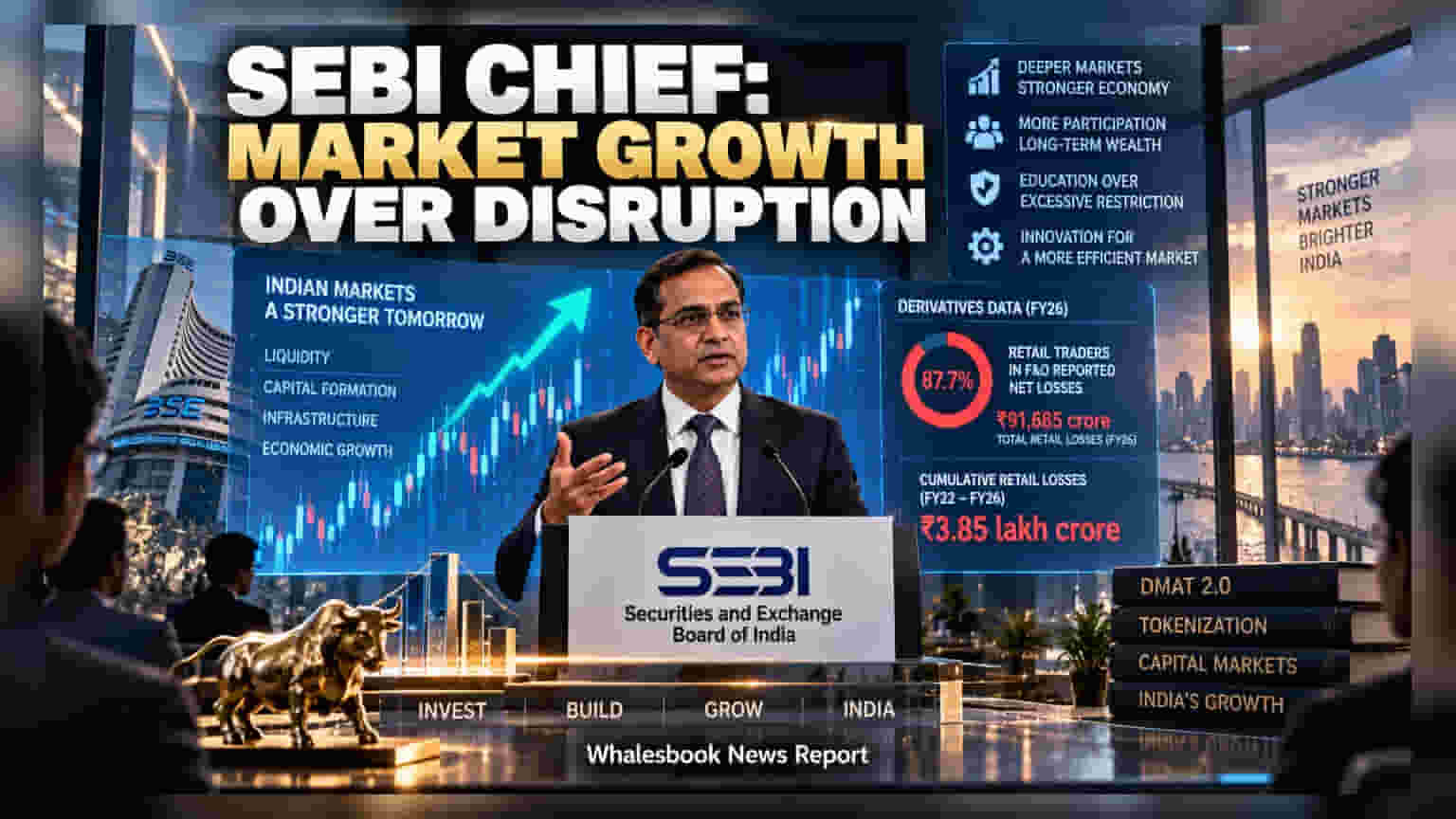
SEBI Chairman Tuhin Kanta Pandey has signaled a shift toward market development rather than imposing fresh restrictions on the derivatives segment. Despite retail traders losing ₹91,685 crore in FY26, the regulator is encouraging interest in longer-dated instruments to curb speculative behavior. This approach aims to balance investor protection with the need for deeper liquidity in the broader Indian financial system.
The Securities and Exchange Board of India is adopting a growth-focused strategy for the derivatives segment. Chairman Tuhin Kanta Pandey stated that the regulator will prioritize developing the market over implementing new, strict rules, even as the scale of retail losses in futures and options trading remains significant. This policy shift intends to maintain the liquidity and depth of the financial ecosystem while addressing the risks associated with rapid, speculative trading.
Financial data for the 2026 fiscal year highlights the challenges facing individual participants. During FY26, 87.7% of retail traders in the futures and options category reported net losses, amounting to a total of ₹91,685 crore. When looking at the broader period from FY22 to FY26, the cumulative losses for retail investors stand at approximately ₹3.85 lakh crore. While the regulator has previously introduced measures like modified position limits and larger contract sizes to manage risk, shifting retail behavior away from high-risk, short-term index options remains a difficult task.
To address these trends, the regulator is promoting a move toward longer-dated stock futures and options. The goal is to provide investors with more stable, longer-term instruments, potentially reducing the appeal of high-risk, short-dated speculation. This strategy is part of a broader vision to support India’s long-term economic funding needs, including major investments in energy transitions, urbanization, and infrastructure.
Beyond derivatives, the strength of the overall financial system is a core priority. The domestic market has seen substantial growth, with mutual fund assets reaching ₹87 lakh crore and the outstanding corporate bond market growing to ₹61 lakh crore. These figures suggest that domestic capital mobilization is reaching record levels, which the regulator views as essential for national economic development. Furthermore, initiatives such as DMAT 2.0 and the use of tokenization are being pushed to improve settlement efficiency and price discovery for all investors.
The future regulatory agenda will center on institutional participation and liquidity, ensuring the market remains a stable pillar for the economy. For investors, the next important update will be how the regulator implements these new product frameworks and whether these measures effectively change the trend of retail participation in short-term speculative instruments.