

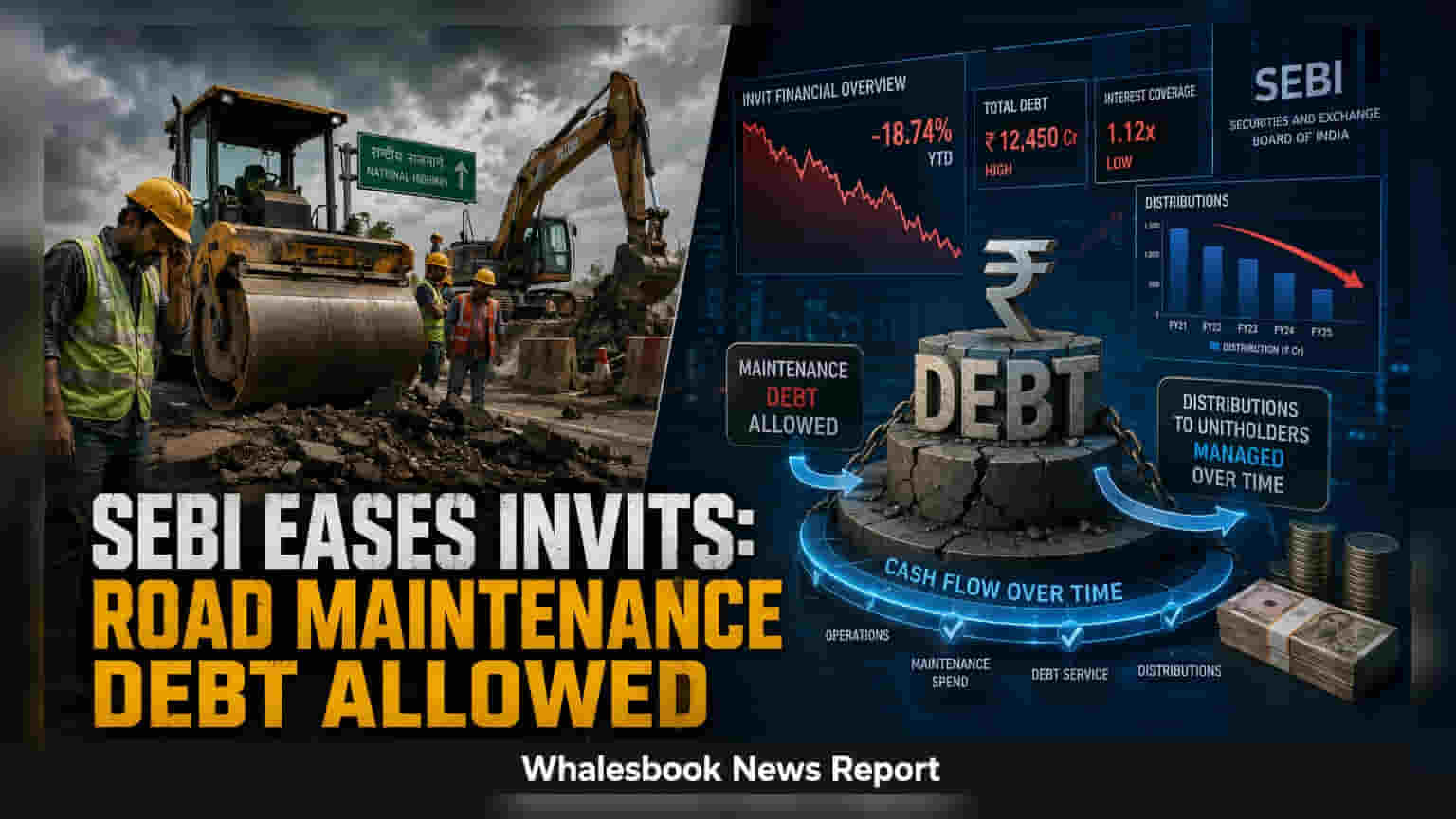
SEBI has allowed road-sector InvITs to add back debt-funded major maintenance costs when calculating distributable cash flows. This regulatory change helps infrastructure trusts manage heavy, non-routine upkeep expenses without immediate cuts to unitholder distributions, provided they follow strict disclosure and approval guidelines.
The Securities and Exchange Board of India (SEBI) has introduced a significant change to how Infrastructure Investment Trusts (InvITs) calculate their Net Distributable Cash Flows (NDCF). Under the new guidelines, road-sector InvITs can now add back certain major maintenance expenses to their NDCF, provided these expenses are financed through external debt. This flexibility is applicable at both the Special Purpose Vehicle (SPV) and the InvIT trust levels.
Impact on Cash Flow and Distributions
For investors, the primary implication is the potential for smoother dividend or distribution payments. Infrastructure assets, particularly roads, require periodic major maintenance that can be expensive. Traditionally, when an InvIT pays for this maintenance out of its operating cash, the amount available for distribution to unitholders falls sharply during that period. By allowing InvITs to fund these costs through borrowing—and then 'adding back' that expense to the cash flow calculation—the regulator is effectively allowing the trust to spread the financial impact of maintenance over a longer period.
This shift allows InvITs to maintain more stable distribution yields for unitholders, avoiding sudden drops in payouts due to lumpy capital expenditure. However, this comes with an increase in debt obligations. Investors must monitor whether the InvIT's long-term revenue growth is sufficient to cover both the interest on this new debt and the regular distribution payouts.
Governance and Safeguards
To prevent the misuse of this flexibility, SEBI has mandated strict governance and disclosure requirements. InvITs cannot simply use debt for any maintenance; the expenses must be strictly for 'major maintenance,' defined as non-routine work required under the concession agreement.
Before an InvIT can incorporate these debt-funded expenses into its NDCF, it must secure approval from at least 60 percent of its unitholders. The investment manager must provide clear, detailed information regarding the projects, estimated costs, and the expected impact on future distributions. Furthermore, a statutory auditor is required to certify that the maintenance work aligns with the concession agreement and is genuinely funded by external borrowing. Any borrowing that exceeds the amount originally approved by unitholders will require a fresh round of voting.
Monitoring for Investors
While this change offers operational flexibility, it increases the leverage risk within the trust. Investors should track the debt-to-equity ratios and interest coverage levels of their InvITs. If an InvIT relies heavily on debt to fund maintenance, it may face pressure if interest rates rise or if toll revenue growth slows down. The next key monitorable for investors will be how individual InvITs explain their specific maintenance borrowing plans in future regulatory filings and unitholder communications.