

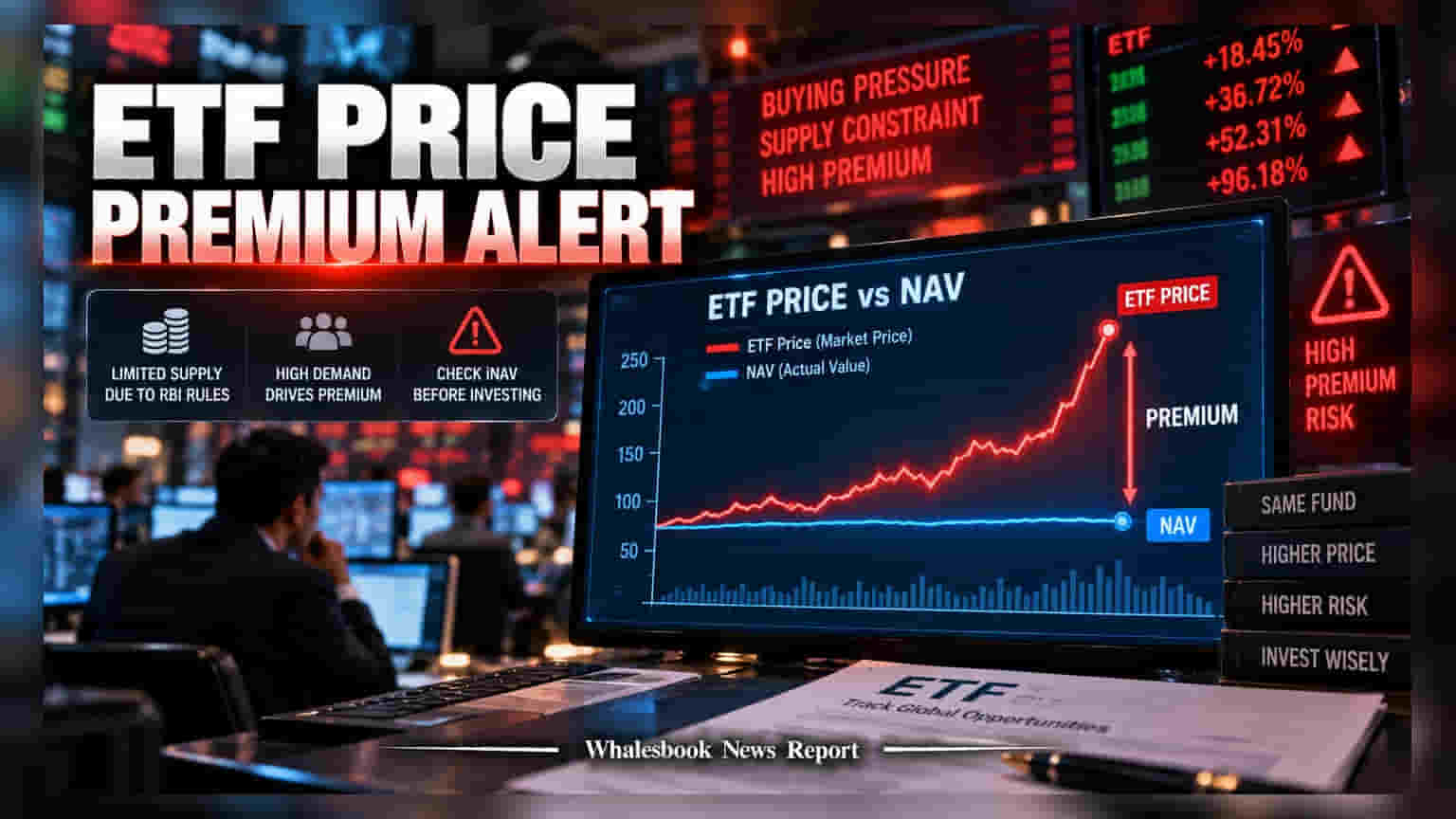
New trading rules effective September 7, 2026, have caused some international ETFs to trade at large premiums over their actual value. Because RBI limits restrict new unit creation, supply cannot meet demand, leading to price distortions. Investors risk buying assets far above their worth, which can result in capital losses even if global markets perform well. Always verify the Indicative NAV before trading.
A new framework for Exchange Traded Funds (ETFs) introduced by the Securities and Exchange Board of India (SEBI) on September 7, 2026, has created an unexpected situation for investors in international funds. The rule, which aimed to refine how ETF price bands are calculated by using the previous day's closing Volume-Weighted Average Price (VWAP) rather than the T-2 NAV, has led to some international ETFs trading at prices significantly higher than their actual worth.
In a standard, functioning ETF, market makers keep the price of the ETF close to its Net Asset Value (NAV) by creating or redeeming units based on market demand. However, this mechanism is currently broken for many international funds due to limits imposed by the Reserve Bank of India (RBI) on overseas investments. Since Asset Management Companies (AMCs) cannot create fresh units to meet sudden buying demand, the supply of these ETFs remains fixed. When buyers outnumber sellers in this constrained environment, the market price of the ETF can surge, creating a gap known as a premium.
This premium effectively means investors are paying more for the fund units than the underlying stocks in the portfolio are actually worth. For example, reports have noted that the Motilal Oswal Nasdaq Q50 ETF has traded at substantial premiums, sometimes near 96%, in recent sessions. This situation creates a hidden cost for investors, as the premium acts as an additional, non-recoverable expense.
The core risk for investors is that this premium may eventually shrink or disappear. If the market sentiment cools or if the premium normalizes toward the actual asset value, investors could suffer significant losses even if the global indices the ETF tracks, such as the Nasdaq or S&P 500, continue to perform well. This risk is particularly high for investors using Systematic Investment Plans (SIPs), as they may unknowingly purchase units at highly inflated prices month after month.
To navigate this, investors should avoid relying solely on the Last Traded Price (LTP) shown on trading apps. Before placing any buy orders, it is crucial to check the Indicative NAV (iNAV) available on the stock exchange websites. The iNAV provides a real-time estimate of the actual value of the underlying assets. If the market price is significantly higher than the iNAV, investors might consider waiting for the premium to stabilize rather than buying into an overvalued asset.