 Whalesbook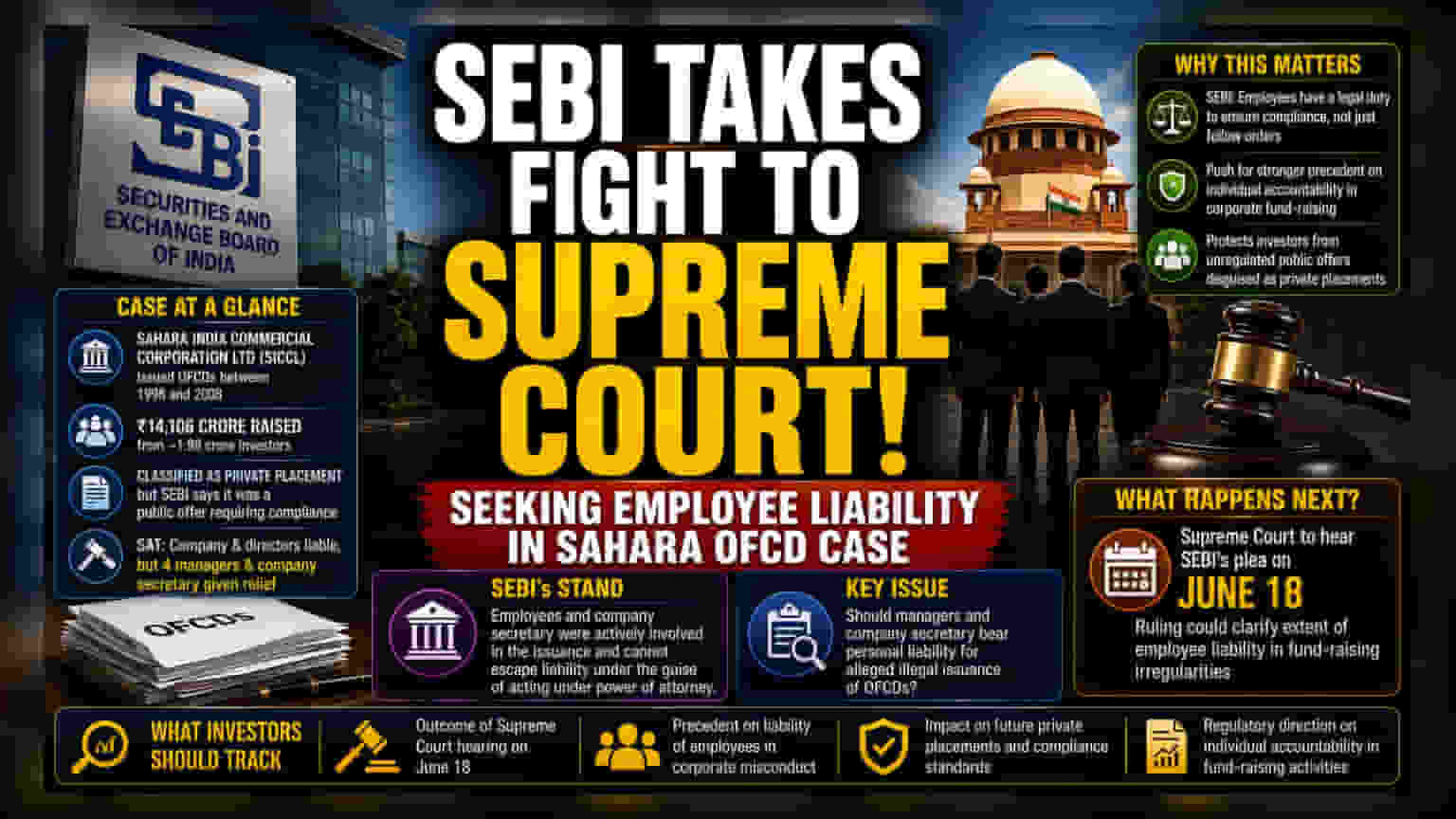


SEBI has moved the Supreme Court to contest a tribunal decision that cleared certain managers and a company secretary of liability in the Sahara India Commercial Corporation (SICCL) debenture case. The ongoing dispute involves over ₹14,000 crore raised through Optionally Fully Convertible Debentures (OFCDs). This legal step highlights the regulator's push for corporate accountability regarding fundraising violations.
What Happened
The Securities and Exchange Board of India (SEBI) has approached the Supreme Court to challenge an order passed by the Securities Appellate Tribunal (SAT). The dispute involves Sahara India Commercial Corporation Ltd (SICCL) and its issuance of Optionally Fully Convertible Debentures (OFCDs) between 1998 and 2008. While the tribunal had previously upheld SEBI’s action against the company and its directors, it granted relief to four managers and the company secretary, effectively clearing them of personal liability. SEBI is now seeking to hold these employees accountable, arguing that they should bear responsibility for the alleged illegal issuance of these financial instruments.
Understanding the OFCD Dispute
At the heart of the matter is how the company raised funds from the public. SICCL issued OFCDs, which are debt instruments that can be converted into company shares at the investor's choice. The company had classified these as a private placement, which comes with fewer regulatory requirements. However, SEBI’s investigation found that the company had mobilized approximately ₹14,106 crore from nearly 1.98 crore investors. The regulator maintained that given the sheer number of investors, this was effectively a public offer that required stricter regulatory compliance and oversight. In March, the tribunal agreed that the company and its directors were liable, but it carved out an exception for the employees, stating they were acting on behalf of the company and under power of attorney.
Why This Matters for Corporate Accountability
SEBI’s decision to escalate the case to the Supreme Court signals a firm stance on corporate governance and individual accountability. The regulator's argument rests on the principle that employees, including company secretaries and managers, have a responsibility to ensure that fundraising activities comply with the law, regardless of their role. If the Supreme Court sides with SEBI, it could set a stronger precedent, suggesting that individuals within a company cannot easily escape liability by claiming they were merely following orders or acting under the authority of senior directors.
The Regulatory Context
This case is a significant chapter in the long-standing regulatory interactions between SEBI and the Sahara group regarding the mobilization of funds. For investors and the broader market, the case is a reminder of the strict rules governing private placements in India. Regulatory bodies often scrutinize such issuances to prevent retail investors from being exposed to risks associated with funds raised outside of public market disclosures and protections. The focus on employee liability is also a critical observation for those who track how regulatory bodies interpret professional responsibilities in corporate law.
What Investors Should Track
The Supreme Court is scheduled to hear SEBI's plea on June 18. The outcome of this hearing will be the primary monitorable for this case. A ruling could clarify the extent to which employees can be held liable for corporate fundraising irregularities. Market participants and legal observers will be watching to see how the apex court views the responsibilities of company officers versus those of the directors. Any decision here may influence how companies approach future compliance in private placements and how regulators pursue liability in cases of alleged fundraising misconduct.