

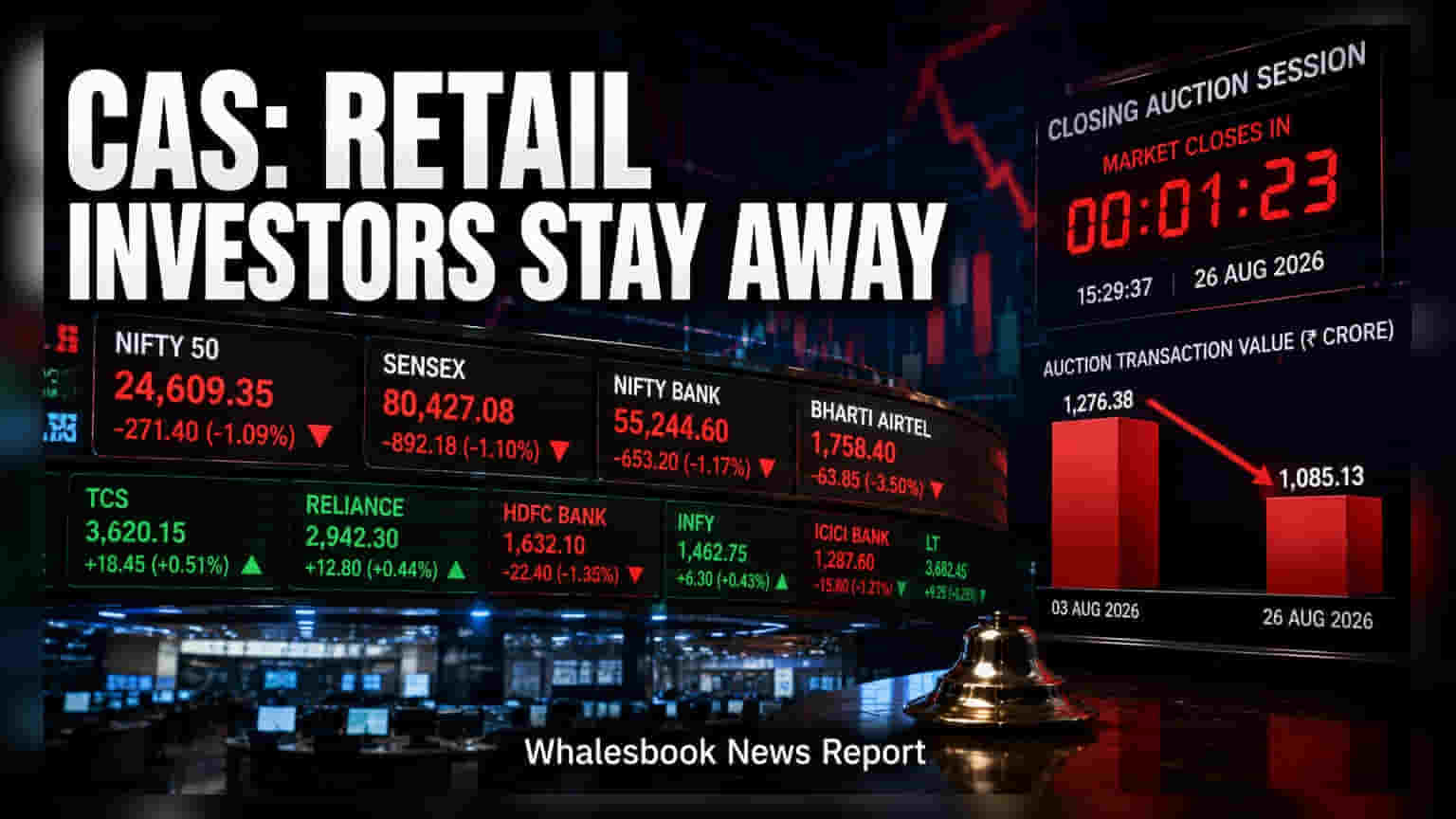
India’s new Closing Auction Session, launched August 3, is seeing less than 10% retail participation. Investors are avoiding the window due to unpredictable price swings and low liquidity, highlighted by a recent 271-point Nifty index slide. With recent regulatory fines for market manipulation in this session, traders are increasingly sticking to standard market hours for better stability.
The Closing Auction Session (CAS), introduced on August 3, 2026, aimed to bring more transparency to the end of the trading day for F&O-eligible stocks. However, the mechanism has struggled to gain traction among retail investors. While the Securities and Exchange Board of India (SEBI) designed this window to improve price discovery, current data shows that retail participation remains below 10%. Instead of adopting the new system, most individual traders are completing their transactions during the standard six-hour market window.
Volatility and Price Discovery Concerns
The primary reason for this caution is the erratic nature of the auction window. Unlike the standard trading session where price movements are typically gradual, the auction session has experienced sharp, sudden shifts. A clear example occurred on August 26, when the Nifty 50 index saw a rapid 271.4-point slide within seconds of the auction opening. This volatility was linked to large-volume orders in specific stocks, such as Bharti Airtel, which caused wider ripple effects across the index. For retail investors, who often rely on stop-loss orders and predictable price action, these sudden swings make the late-day window appear closer to a gamble than a functional market utility.
Regulatory Scrutiny and Market Risks
Beyond just the unpredictability of prices, regulatory concerns have further dampened confidence. The auction mechanism has already drawn attention from regulators regarding potential misuse. SEBI recently imposed a fine of ₹3.7 crore on two entities—Mansi Share and Stock Broking and Copthall Mauritius Investment—citing alleged manipulation of the auction mechanism. This regulatory action serves as a reminder of the risks associated with new market structures that may have lower liquidity levels, making them more susceptible to large, market-moving orders.
Declining Transaction Volumes
The quantitative data reflects this shift in sentiment. NSE closing auction transaction values dropped to ₹1,085.13 crore on August 26, compared to the ₹1,276.38 crore recorded on the launch date. This reduction in volume highlights that, for now, the mechanism is primarily being used by institutional players or high-frequency traders, while the broader retail community prefers the familiar liquidity of the standard market session.
For investors, the current takeaway is clear: the standard trading hours offer the most liquidity and the least amount of artificial price distortion. Until the auction session demonstrates consistent liquidity and improved price stability, retail participants are likely to continue prioritizing the main session. Moving forward, market participants should watch for further SEBI interventions or operational adjustments to the auction rules, as the regulator continues to stress that the mechanism is a permanent addition to the Indian equity markets.