

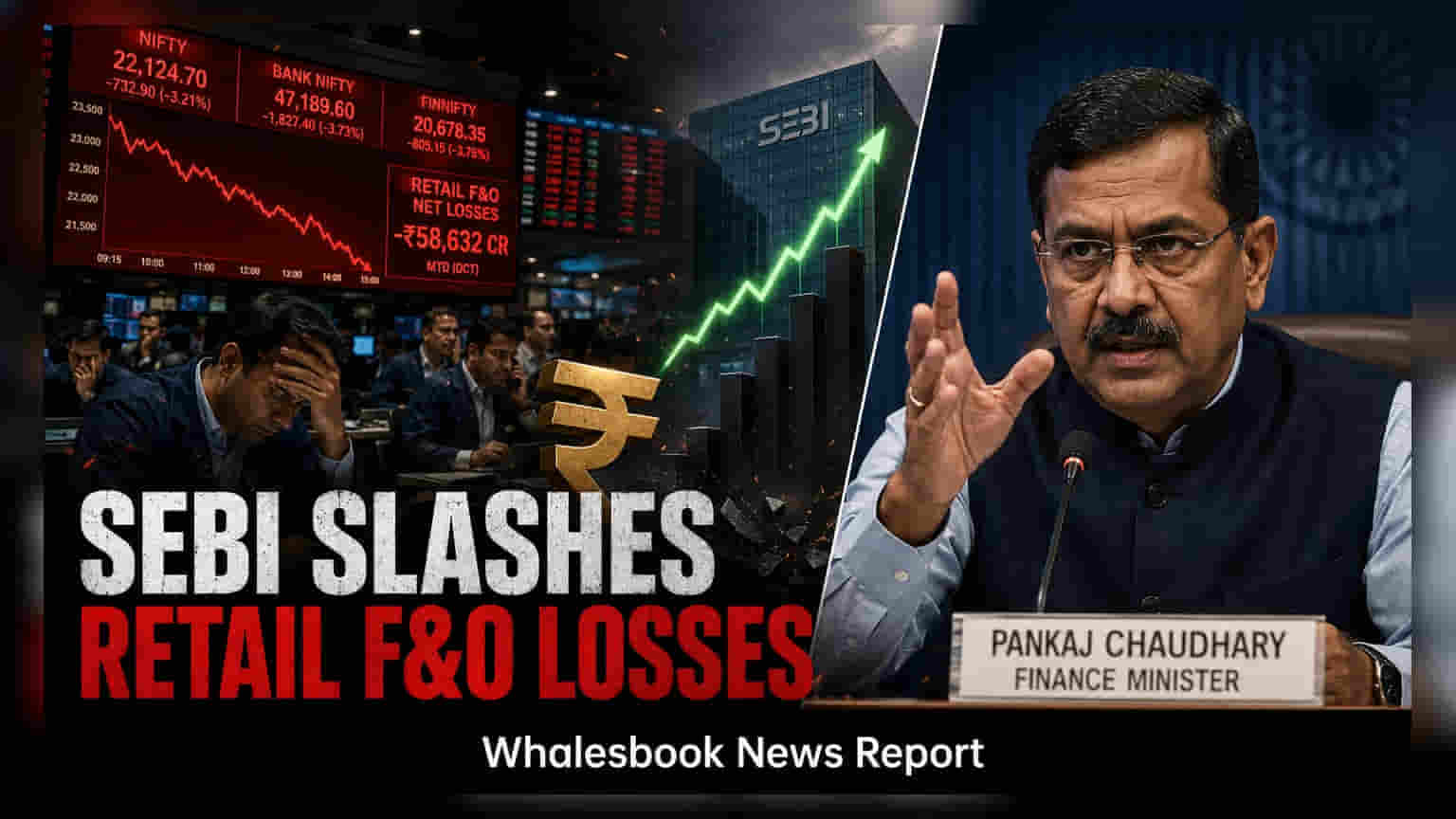
Retail losses in India’s derivatives market fell to ₹91,685 crore in FY26 from ₹1.12 trillion the previous year, as SEBI measures discouraged casual trading. While fewer people participated, the average loss per investor actually rose to ₹1,16,654. This highlights that while regulatory hurdles have successfully reduced overall retail participation, the high-risk nature of F&O trading persists for those remaining in the market.
Retail losses in the Indian equity derivatives (Futures and Options) segment declined to ₹91,685 crore in the fiscal year 2026, marking a significant drop from the ₹1.12 trillion recorded in the previous year. This shift follows a series of regulatory interventions by the Securities and Exchange Board of India (SEBI) designed to tighten control over speculative trading and protect small investors from excessive risk.
Data presented to Parliament shows that the number of unique active retail investors in the F&O segment dropped from 98.10 lakh in FY25 to 78.60 lakh in FY26. While the total number of participants decreased, those who remained in the market faced higher financial stakes. The average loss per individual investor actually increased slightly to ₹1,16,654, compared to ₹1,13,913 in the prior year. This trend suggests that while fewer people are trading, the individuals still active in the market may be taking larger risks or are more exposed to market volatility.
SEBI introduced several measures starting in late 2024 to curb speculation. Key changes included increasing contract sizes for index derivatives, rationalizing the frequency of weekly and monthly expiry products, and mandating the collection of upfront premiums from traders. These rules were aimed at making derivatives trading more expensive and difficult for casual participants, effectively filtering out those who may not fully understand the risks associated with such leveraged instruments.
Despite the reduction in the number of retail participants, the derivative market remains intense. The government reported that Securities Transaction Tax (STT) collected from F&O trades surged to ₹27,695 crore in FY26, a sharp increase from ₹7,893 crore in the previous year. Furthermore, the combined notional turnover—a measure of the total value of bets placed—rose by 4.3% to ₹110.4 trillion. This combination of higher tax revenue and increased turnover despite fewer retail traders indicates that institutional activity or the size of positions held by the remaining traders remains substantial.
The findings serve as a reminder that F&O trading is inherently a high-risk activity. The increase in the average loss per person suggests that even with tighter regulations, the potential for capital erosion remains significant. Investors should monitor future market updates to see if participation levels stabilize or if the trend of fewer but more active traders continues to shape the market’s behavior.