

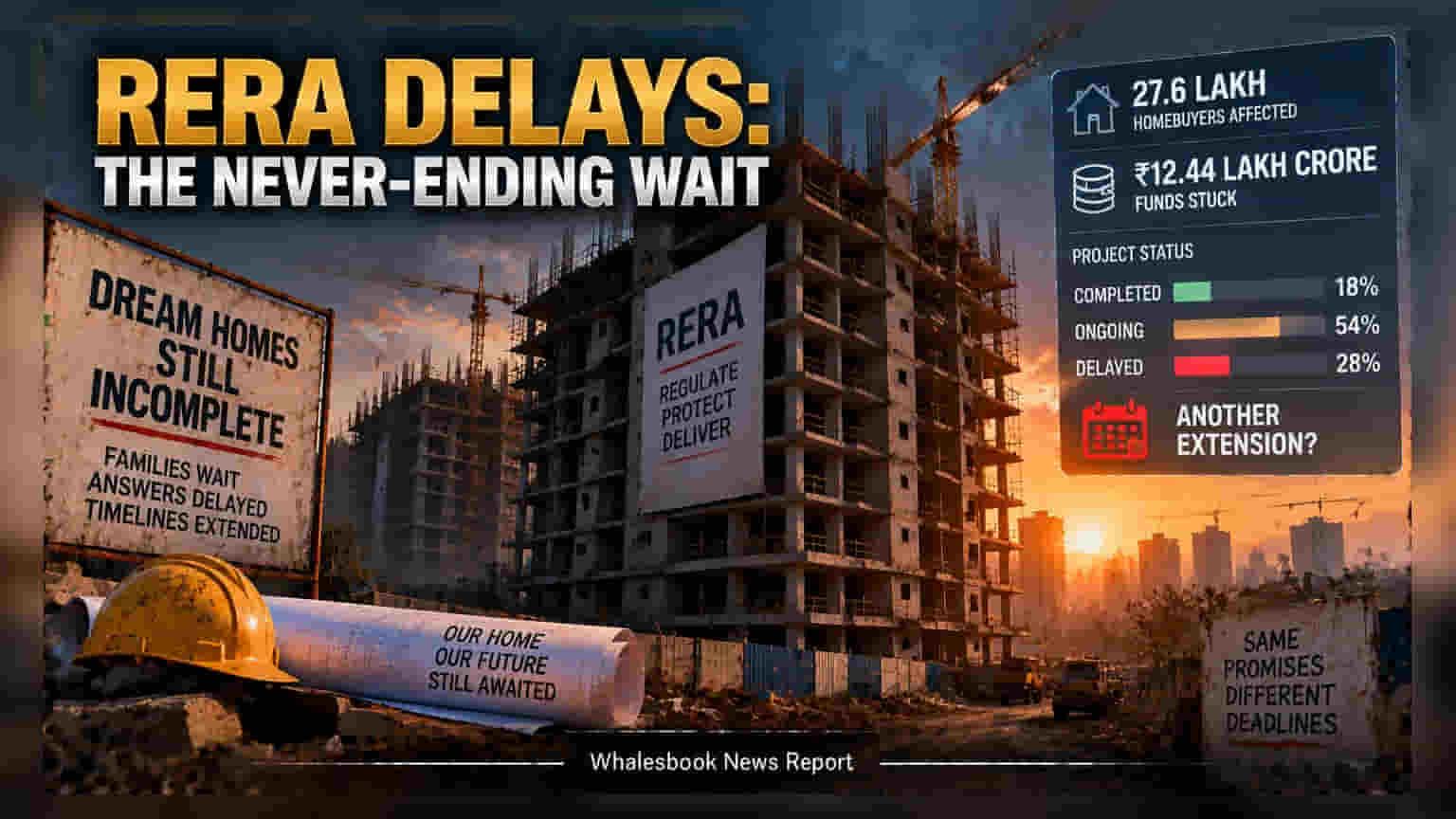
Around 27.6 lakh Indian homebuyers are waiting for homes worth ₹12.44 lakh crore amid persistent project delays. While regulators have granted fresh timeline extensions citing global supply chain issues, many buyers remain stuck paying EMIs for unfinished properties. The situation raises concerns about the reliability of project completion data and the effectiveness of current oversight.
The dream of owning a home is facing a significant test as nearly 27.6 lakh homebuyers find themselves in an uncertain position. Recent data highlights that approximately ₹12.44 lakh crore is currently tied up in stalled or delayed residential projects across India. While the Real Estate (Regulation and Development) Act (RERA) was introduced to protect buyers and ensure timely delivery, many projects are now relying on repeated regulatory extensions to stay afloat, effectively resetting the clock on delivery timelines.
The 'Force Majeure' Extension
In late July 2026, the Ministry of Housing and Urban Affairs (MoHUA) advised state regulatory authorities to grant a four-month extension to eligible housing projects. The official reasoning cited was 'Force Majeure' caused by the ongoing conflict in West Asia, which has disrupted global supply chains and increased the cost of construction materials. The government's intent is to prevent viable projects from becoming insolvent, which could lead to total project abandonment. However, this relief has drawn sharp criticism from homebuyers who argue that these extensions only provide a shield for developers who were already failing to meet their original deadlines.
The Gap Between Paper and Reality
One of the most persistent frustrations for buyers is the discrepancy between official completion reports and the actual state of construction. Many developers submit filings indicating that a project is 95% to 100% complete to secure extension approvals. In many cases, these figures do not account for critical infrastructure, such as fire safety systems, functional elevators, or the receipt of the necessary occupancy certificates. Consequently, a project can be marked as 'active' and 'nearing completion' on regulatory portals for years, while the units remain uninhabitable.
In regions like Maharashtra, the reliance on these extensions is high. Data from MahaRERA indicates that for every 100 new project registrations, regulators have processed nearly 88 extension applications in the 2025-26 period. This volume suggests that extensions have moved from being an exceptional measure for unforeseen disasters to a standard administrative tool for managing stalled sites.
Legal Liability Remains
It is important for buyers and investors to distinguish between a regulatory registration extension and a contractual waiver. A critical point often missed is that while RERA may extend the date for a project's registration, this does not automatically waive the developer’s obligation to the buyer. Developers remain legally bound by their original contractual possession dates. Under the law, they are generally still liable to pay interest or compensation to buyers for delays. The extension of the RERA timeline does not necessarily absolve them of these financial penalties, a fact that many buyers are now using in legal claims to protect their interests.
What to Monitor Next
The lack of a unified, real-time national database makes it difficult for a homebuyer to judge the true health of a project. Until such transparency is fully implemented, the onus lies on the buyer to verify the actual status of construction rather than relying solely on official percentage figures. The key monitorable for the coming months will be whether state authorities tighten the criteria for these 'Force Majeure' extensions and whether they will mandate stricter evidence for claiming completion, such as proof of utility connections and occupancy permits, before granting further time.