

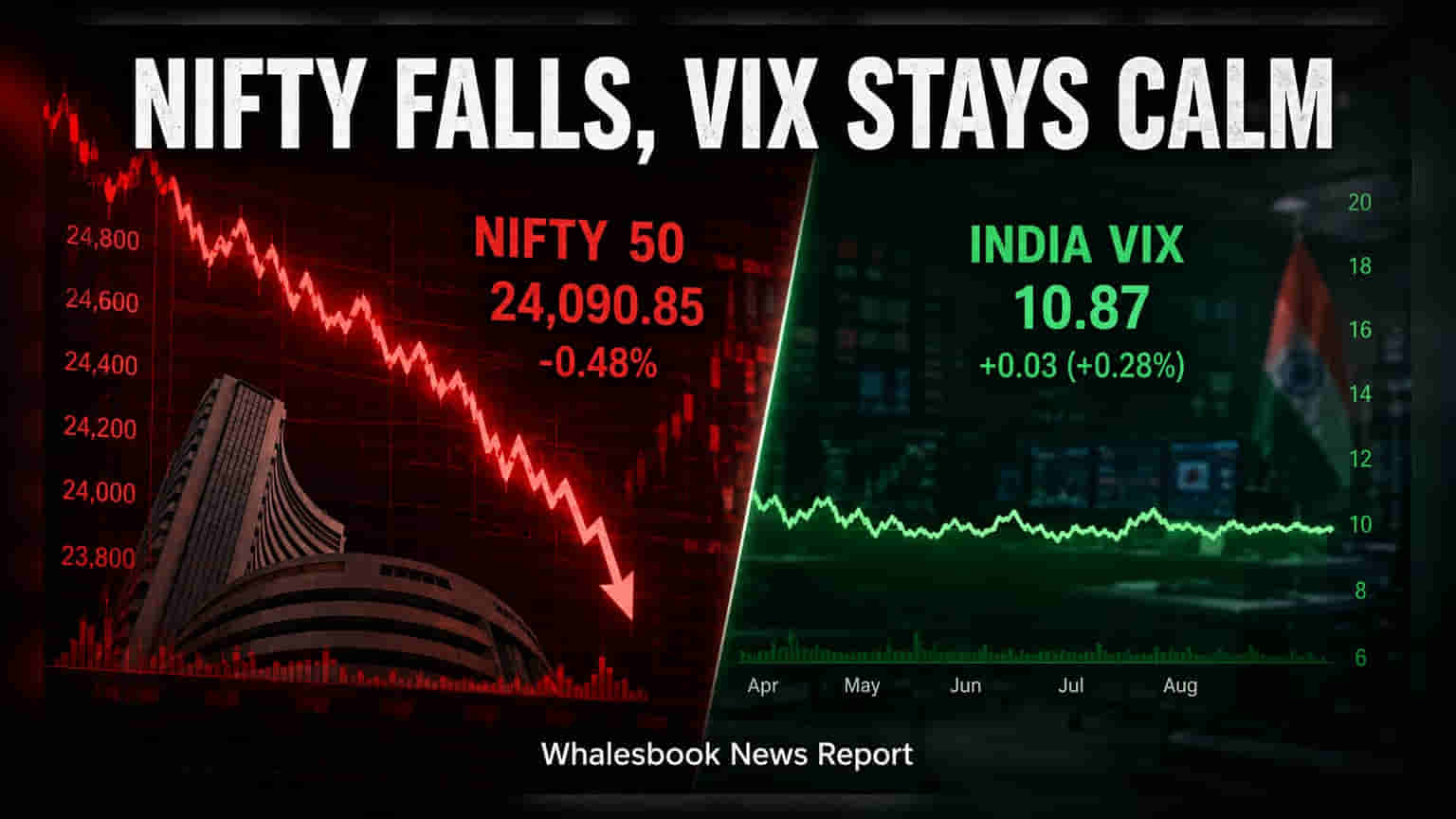
The Nifty 50 is experiencing mild downward pressure while the India VIX stays at low, calm levels. This divergence makes buying naked Put options expensive due to time decay, as premiums fail to rise significantly when the market drops. Traders are increasingly looking toward defined-risk spread strategies to protect capital in this quiet, sideways-trending market.
The current behavior of the Indian equity markets has created a unique challenge for derivatives traders. Typically, when the Nifty 50 index retreats, there is a surge in fear, which causes the India VIX—the index that measures market anxiety—to spike. However, in recent sessions, the index has drifted lower while the India VIX has remained unusually calm, hovering near the 10.5 to 11.5 range. This absence of fear indicates that the market is currently in a phase of consolidation rather than panic-driven selling.
The Hidden Cost of Option Buying
For traders using naked Put options—buying a Put without any offsetting position—this environment is particularly difficult. In a normal market decline, the fear component causes option premiums to expand, which benefits the buyer. However, when the VIX remains low, these premiums do not rise as expected. Instead, traders face the persistent impact of time decay, often referred to as theta decay. This means the value of the purchased option erodes daily even if the Nifty index moves sideways or drifts downward only slightly. Essentially, traders are paying for protection that is not delivering the expected gains.
Managing Risk Through Spread Strategies
To navigate this, many market participants are shifting their focus away from naked directional bets toward structural strategies like Bear Put Spreads. This approach involves buying an at-the-money or in-the-money Put option while simultaneously selling a lower-strike Put option. By doing this, the trader reduces the upfront cost of the trade. This setup defines the maximum risk from the start and acts as a buffer against time decay, as the premium received from selling the lower-strike Put helps offset the cost of the main position. It is a tactical move that prioritizes capital preservation over high-risk directional speculation.
Why Monitoring Volatility Matters
The market view is currently characterized by a cautious grind rather than a breakdown. Relying solely on the price of the Nifty can be misleading, as the index is drifting within a defined technical range. A high-conviction move in either direction usually requires the India VIX to move in tandem with the spot index. Until the VIX shows a decisive trend, or until the Nifty clearly breaks past key support levels, many traders are avoiding impulsive, high-premium trades. The key monitorable for investors will be any sudden shift in the India VIX, which could signal a change in the market environment and render current neutral strategies less effective.