

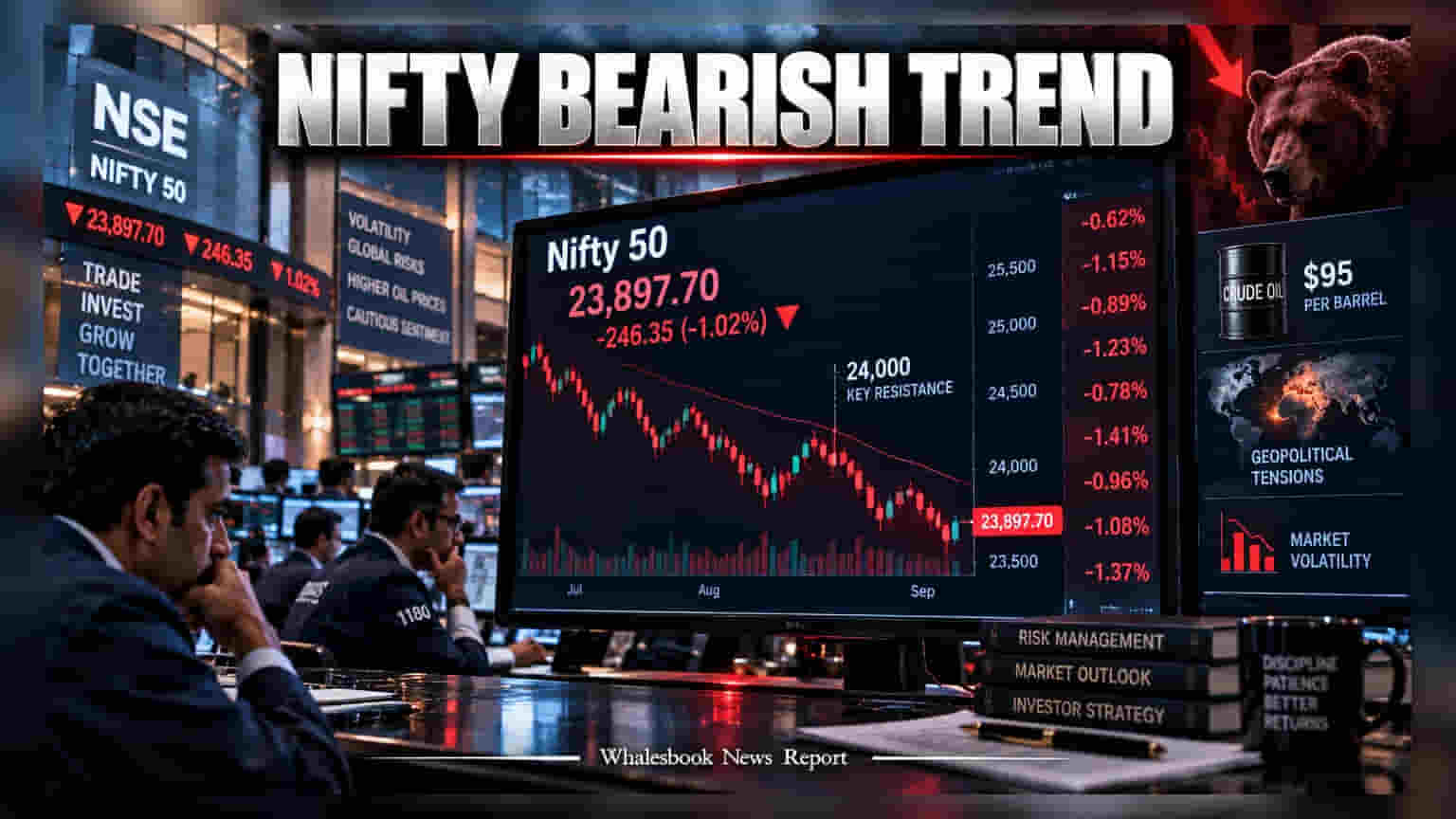
The Nifty 50 finished the week at 23,897.70, falling 1.15% as the index struggled to move past the 24,000 level. Investors are dealing with higher crude oil prices and global geopolitical uncertainty. Additionally, traders are preparing for new NSE trading rules starting September 7, which may influence market activity.
The Nifty 50 concluded the week on a weak note, ending at 23,897.70. This marks the fourth consecutive week of declines for the index, highlighting the current bearish trend as buyers fail to push the price past the significant 24,000 mark. This psychological resistance level has become a major hurdle for the index, preventing a sustainable recovery in early September.
Global Pressures Impacting Sentiment
Several external factors are currently weighing on the Indian market. Crude oil prices, which are a major input cost for many Indian industries, are hovering near $95 per barrel. Rising energy costs can hurt profit margins for companies in sectors like manufacturing and logistics. Simultaneously, ongoing geopolitical instability in West Asia is reducing the appetite for riskier assets. Investors are observing these developments closely, as any further escalation could add more volatility to the markets.
Technical Support Levels to Monitor
From a technical perspective, the index is facing persistent selling pressure at higher levels. With the Nifty trading below key moving averages, the immediate support zone is now clustered between 23,700 and 23,800. If the index fails to hold this range, the market may look to test lower levels. While volatility metrics have remained relatively suppressed, the consistent weekly decline reflects a cautious environment where investors prefer to sell into price rallies rather than buy.
Regulatory Change Effective September 7
An important update for traders is the National Stock Exchange’s (NSE) implementation of a new pre-open call-auction framework for equity derivatives. This rule change, effective from September 7, 2026, aims to improve the price discovery process during the start of the trading session. Traders and investors should prepare for potential adjustments in how order flow is handled for index and stock futures when the market opens next week. This, combined with the current bearish technical setup, suggests that the coming days may see increased focus on how these new rules impact liquidity and execution at the market open.