

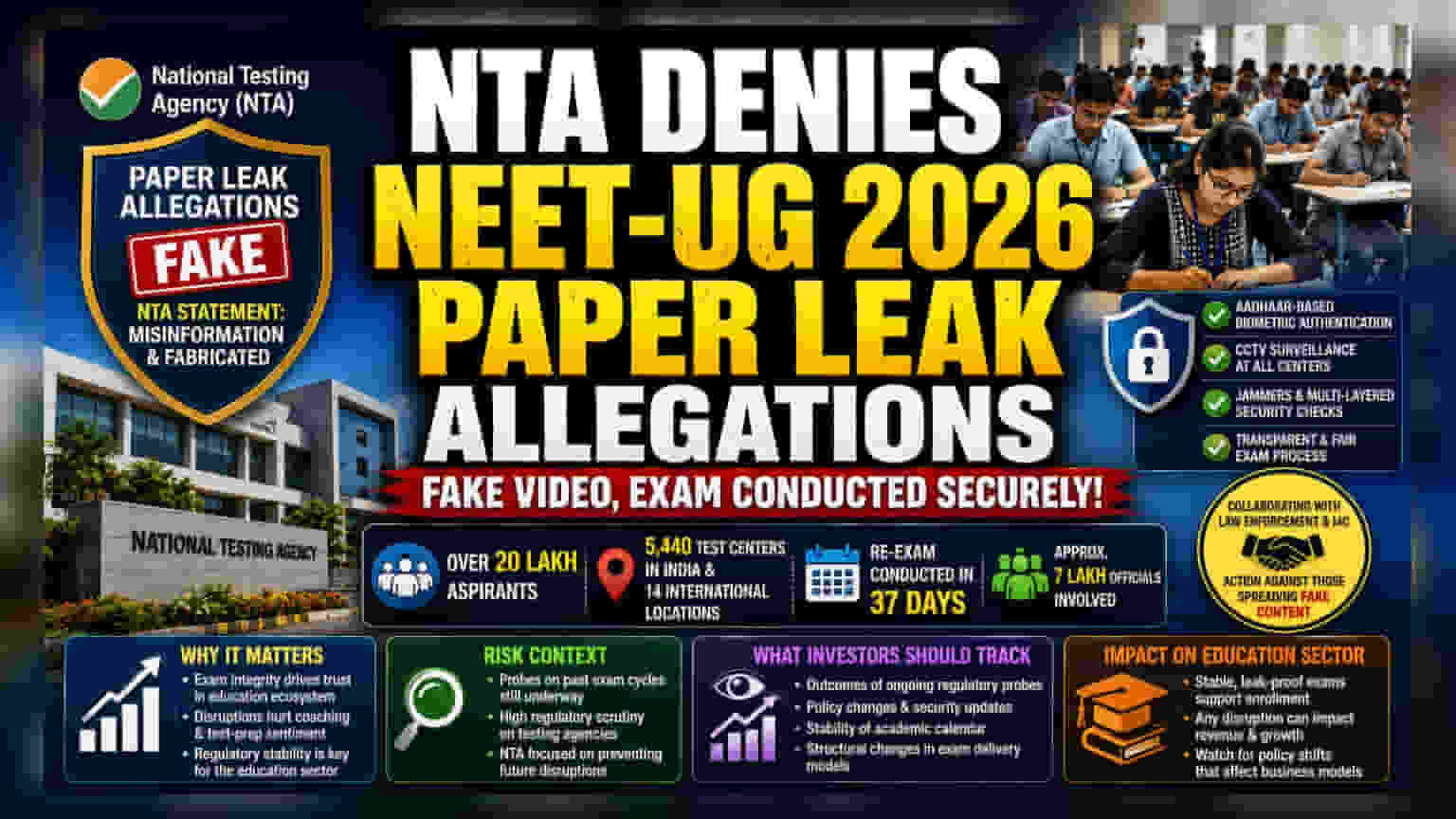
The National Testing Agency (NTA) has officially refuted a viral video alleging a NEET-UG 2026 paper leak, terming it as fake. The clarification follows the successful conclusion of the re-examination for over 20 lakh aspirants. For investors, this incident underscores the regulatory and reputational sensitivity of India’s competitive examination landscape, which remains a critical factor for the sentiment of the test-prep and education sector.
What Happened
The National Testing Agency (NTA) has formally denied allegations of a paper leak regarding the NEET-UG 2026 examination. The agency labeled a widely circulated video claiming such a leak as “fake” and “fabricated.” The NTA emphasized that the re-examination process was concluded successfully, having implemented comprehensive security protocols to ensure the integrity of the test.
The scale of this operation was significant, involving more than 20 lakh medical aspirants across 5,440 test centers within India and 14 international locations. According to the agency, the re-exam was conducted in 37 days, utilizing a collaborative approach that involved approximately 7 lakh officials, including law enforcement, observers, and exam staff. Measures to prevent malpractice included Aadhaar-based biometric and face authentication, CCTV surveillance, jammers, and multi-layered frisking.
The Education Sector and Regulatory Sensitivity
For market observers and investors in the education and test-prep space, the integrity of major public examinations is a crucial performance driver. The Indian coaching and test-preparation industry is highly sensitive to regulatory changes and examination stability. Any disruption or perceived loss of trust in the examination process can lead to increased regulatory scrutiny, policy shifts, and a negative impact on the sentiment surrounding listed and unlisted education companies.
The move by the NTA to quickly debunk misinformation is seen as an attempt to maintain confidence in the system. When massive exams like NEET face integrity issues, it often leads to temporary volatility in sentiment for companies that rely on high enrollment rates for medical and engineering coaching services.
The Risk Context
While the NTA has declared the current incident as misinformation, it is important for observers to note the broader context. There are ongoing probes and legal proceedings regarding the integrity of previous examination cycles, which led to the cancellation of the original NEET-UG exam. These historical issues have kept regulatory pressure high on testing agencies.
The NTA has stated that it is collaborating with law enforcement and the Indian Cyber Crime Coordination Centre (I4C) to take action against those responsible for creating and circulating the fake content. This proactive stance reflects the agency’s focus on mitigating the risk of future disruption.
What Investors Should Track
Moving forward, the primary monitorables for market participants involved in the education sector include the final outcomes of the ongoing regulatory probes into past examination integrity and any subsequent policy changes or security updates mandated by the government.
Investors may also track the stability of the academic calendar and the government's ability to maintain a leak-proof environment for future examinations. Any significant shift in exam delivery models or major structural changes to how these tests are administered will likely have a direct impact on the operational strategies of private education and coaching firms.