

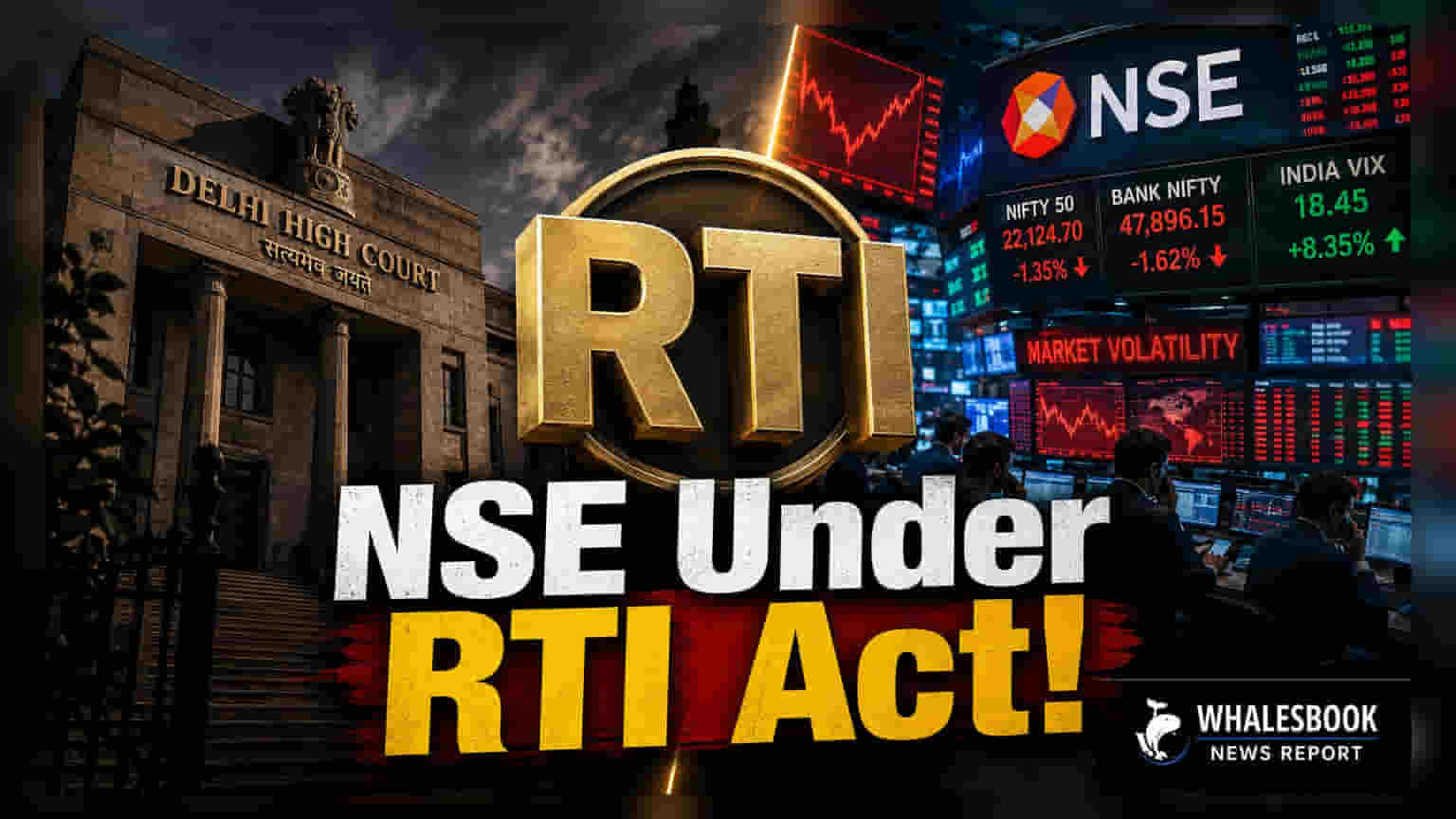
The Delhi High Court has ruled that the National Stock Exchange (NSE) functions as a 'public authority' under the Right to Information (RTI) Act. This verdict challenges the exchange's private status and may establish a precedent for other market infrastructure institutions and regulated entities to face similar disclosure requirements.
What Happened
The Delhi High Court has ruled that the National Stock Exchange (NSE) qualifies as a 'public authority' under the Right to Information (RTI) Act. This decision marks a shift in how market infrastructure institutions are classified, moving them from the traditional view of private entities toward public oversight. The court's judgment is based on the significant regulatory control exercised by the Securities and Exchange Board of India (SEBI) and the mandatory statutory recognition required for the exchange to operate. By definition, being classified as a 'public authority' means the entity must now comply with transparency requirements and RTI requests from citizens.
Why It Matters For The Business
For decades, stock exchanges in India have operated with a private corporate structure, maintaining that their internal processes and decision-making were exempt from the RTI Act. This ruling potentially removes that shield. For the NSE, it means the exchange will need to establish robust mechanisms to handle RTI applications. While the RTI Act contains exemptions for commercial confidence, trade secrets, and information that could compromise market integrity, the burden of proof for withholding information may now become more complex and subject to legal review.
Potential Impact On Other Market Entities
The legal reasoning behind the court’s decision is not limited to the NSE. Experts suggest that the criteria used—specifically the pervasive regulatory control by SEBI—could apply to other market infrastructure institutions. This includes the Bombay Stock Exchange (BSE), the Central Depository Services Ltd (CDSL), and the National Securities Depository Ltd (NSDL). If these entities are also brought under the RTI ambit, it would signify a fundamental change in the operational transparency of India's capital market infrastructure.
Balancing Transparency And Market Security
A key concern for investors and market participants is the potential exposure of sensitive data. While the RTI Act is designed to foster accountability, stock exchanges handle immense amounts of proprietary, trading, and system-level data. The challenge for these institutions will be to manage transparency while ensuring that highly confidential market-sensitive information, which could be misused to affect stock prices or market stability, remains protected. Legal experts indicate that the court’s ruling necessitates a careful calibration of what information can be disclosed versus what must remain private to safeguard market integrity.
What Investors Should Track Next
Investors should monitor how the NSE and other affected market institutions respond to this order, including whether there will be an appeal to a higher bench. The next important step will be seeing if the NSE updates its internal governance and compliance policies to accommodate RTI applications. Furthermore, market participants should watch for any subsequent guidance from SEBI or other regulators regarding how this ruling impacts the broader financial sector, including banks and insurance companies, which are also heavily regulated by government bodies.