

The government will introduce a Merchant Discount Rate (MDR) on large UPI transactions from October 15, 2026. While capital market payments face a specific 0.02% fee, NSE Managing Director Ashishkumar Chauhan expects a temporary dip in trading volumes via UPI channels.
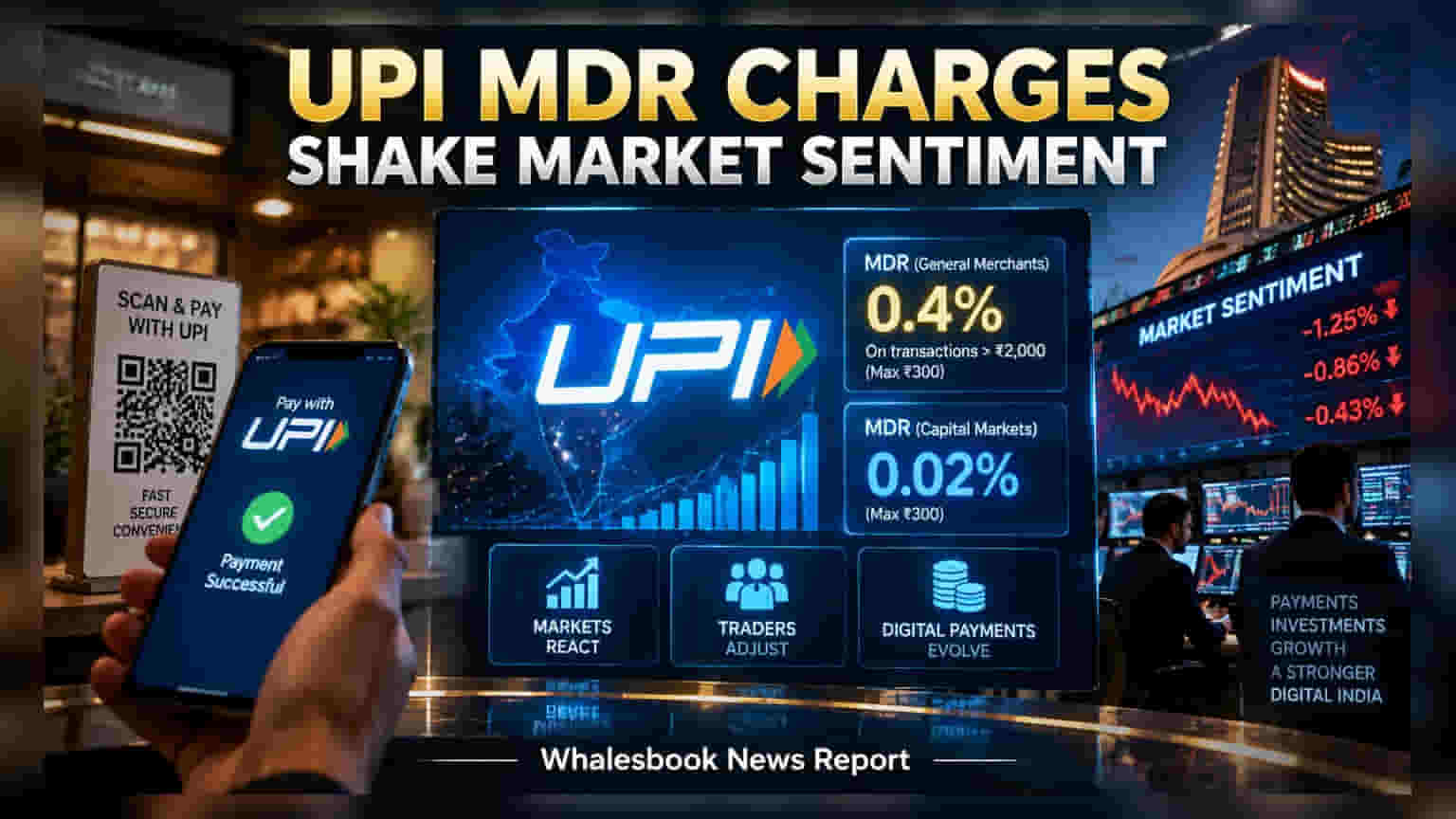
The landscape for digital payments in India is set to change on October 15, 2026, as a new Merchant Discount Rate (MDR) framework comes into effect for Unified Payments Interface (UPI) transactions. This regulatory shift ends the long-standing zero-MDR environment for larger digital payments. For general merchant transactions (P2M) exceeding ₹2,000, a 0.4% fee will now apply, with a maximum cap of ₹300 for payments of ₹75,000 and above.
Impact on Stock Market Transactions
Specific rules have been established for the capital markets, covering mutual fund investments, securities trading, and transactions with stockbrokers. These payments will attract a significantly lower MDR of 0.02%, which is also capped at ₹300 per transaction. It is important for investors to note that transactions valued at ₹2,000 or less, as well as all peer-to-peer (P2P) transfers, remain free of charge. Furthermore, small merchants who receive up to ₹1 lakh per month via UPI QR codes continue to be exempt from the new charges.
CEO Perspective on Volume and Friction
National Stock Exchange (NSE) Managing Director Ashishkumar Chauhan has acknowledged that the new fee structure could lead to a temporary dip in trading volumes routed through the UPI channel. Financial markets often show sensitivity to changes in transaction costs, and even minor fees can introduce friction, especially for active traders who perform high-frequency transactions. However, the expectation from the exchange leadership is that this initial adjustment phase will eventually give way to market stabilization as participants adapt to the new cost architecture.
This move is framed as a step toward ensuring the long-term sustainability of India’s digital payment ecosystem. By introducing a fee on larger transactions, the goal is to shift the cost of maintaining critical infrastructure—such as cybersecurity and payment gateways—away from government subsidies and toward a model that is supported by the users of these high-value services.
What Investors Should Monitor
As the industry moves toward the October 15 implementation date, the primary focus for market participants will be how different brokerage houses and financial intermediaries decide to handle the 0.02% MDR. While some firms may choose to absorb these costs to remain competitive and encourage retail participation, others might pass the fee on to clients. Investors should track official communications from their respective brokers regarding any potential changes in transaction processing fees or UPI usage policies. The broader trend of digital payment normalization will also be a key factor to watch, as the industry balances the need for cost-efficient services with the sustainability requirements of the digital payment infrastructure.