

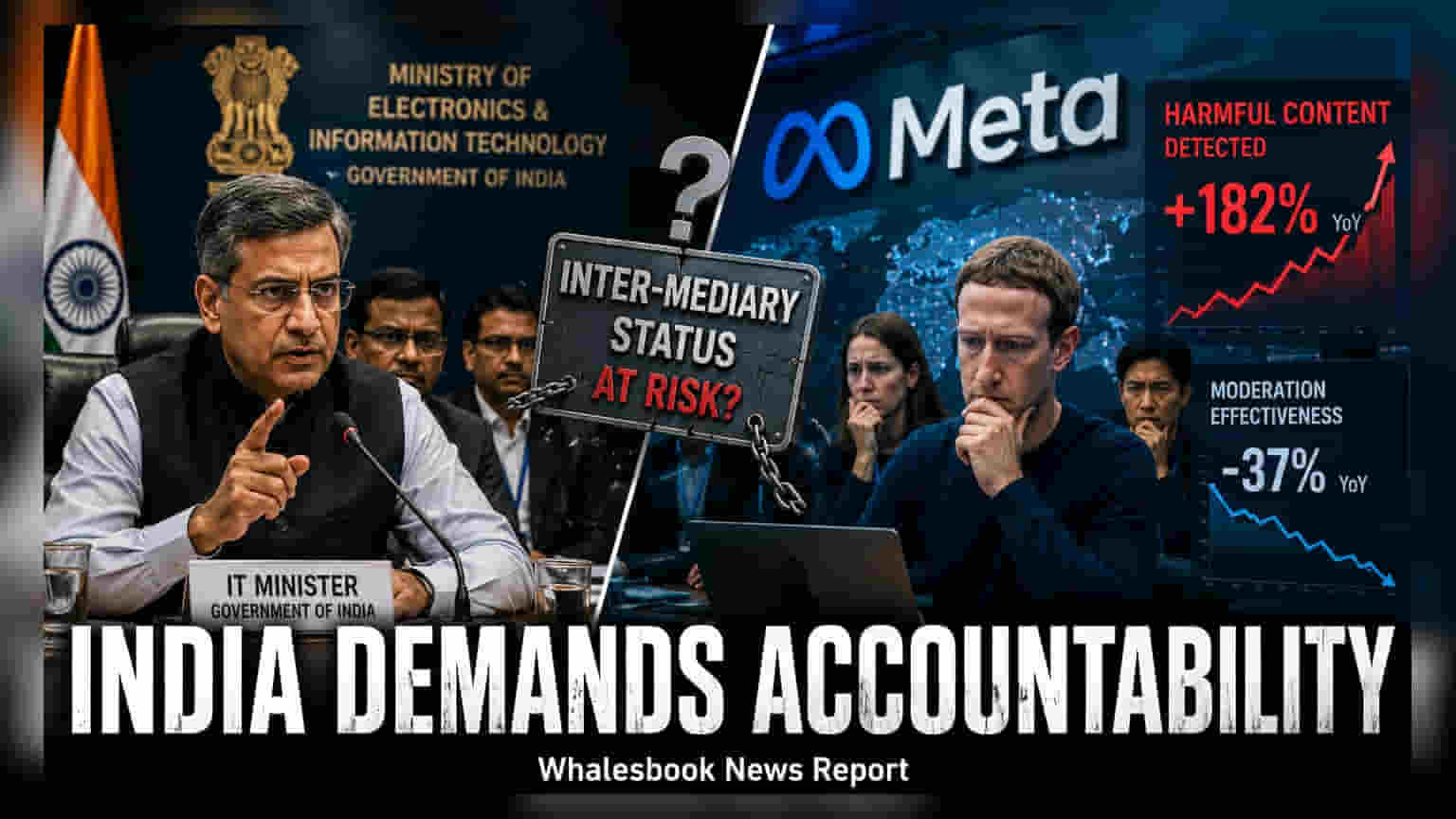
India’s IT Ministry is meeting with Meta to address concerns regarding deepfakes and illegal content. The government is questioning if Meta’s algorithmic tools disqualify it from legal immunity under the IT Act, a regulatory risk that could increase the company's liability for platform content.
Indian government officials are holding meetings with Meta representatives this week to address growing concerns regarding content moderation. The discussions follow reports of circulating deepfakes, child sexual abuse material, and synthetic media lacking clear labeling on the company's platforms. The IT Ministry is pressing for stronger human oversight and better alignment with local cultural nuances, especially regarding content in regional Indian languages.
Legal Immunity at Stake
The most significant regulatory risk involves the company's status as an intermediary. Under Section 79 of India's Information Technology Act, digital platforms currently enjoy a safe harbor status, which shields them from legal liability for content posted by third parties. However, officials are examining whether Meta’s recommendation algorithms and paid promotion services effectively turn the platform into a publisher rather than a neutral host. If the government determines that the company is actively curating and promoting specific content, it could argue that this legal protection should be limited or revoked, which would make the firm directly responsible for user-generated material.
Financial Context and Global Pressures
While the company faces regulatory challenges in India, it is also managing financial pressure at a global level. In its second-quarter results for 2026, Meta reported revenue of $60.8 billion, a 28% increase compared to the previous year. Despite this revenue growth, operating margins dropped to 31% from 43% in the same period last year. This decline is largely driven by increased spending on AI infrastructure and one-time costs, including legal expenses. Global regulatory hurdles, such as recent large settlements involving child safety issues in the United States, have also contributed to the ongoing financial and operational strain for the company.
What Investors Are Watching
The immediate focus for observers will be the outcome of these discussions and whether they lead to changes in Meta’s operational guidelines in India. Investors may continue to monitor how the company manages the balance between heavy capital spending on AI expansion and the need to protect profit margins, while also navigating increasing global regulatory risks that could impact business models in key growth markets.