

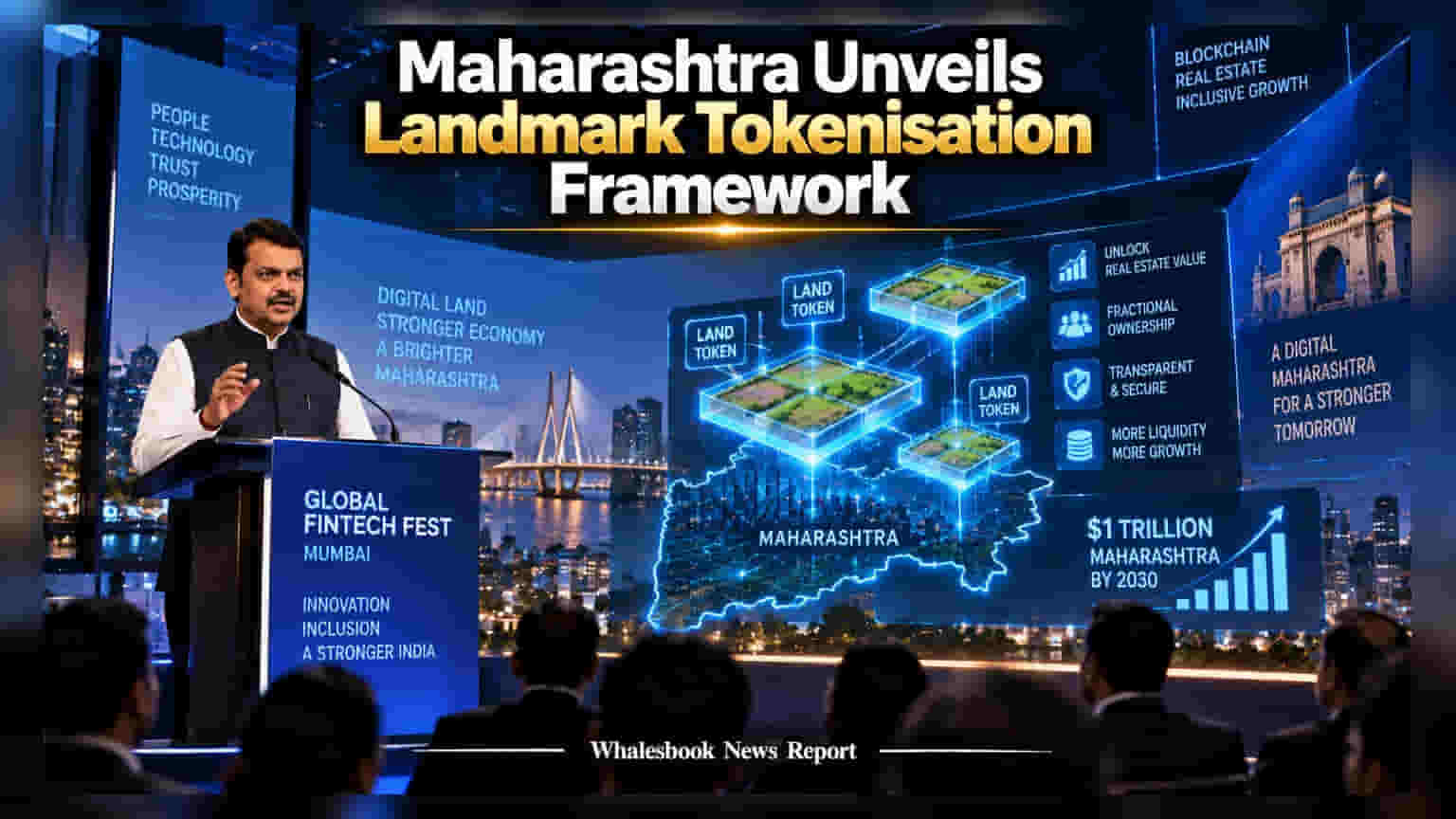
The Maharashtra government is working on the DELTA Act, a legislative framework to allow blockchain-based tokenisation of land and physical assets. This initiative aims to unlock dormant economic capital to support the state's goal of becoming a $1 trillion economy by 2030.
The Maharashtra government is taking significant steps toward digitizing real estate through the proposed Maharashtra Digitisation and Exchange of Land Token Assets (DELTA) Act. This legislative framework aims to allow the conversion of land and immovable property into digital tokens using blockchain technology. The primary objective is to unlock the latent economic value trapped in underutilized real estate, thereby improving liquidity and simplifying property-related financial transactions.
Chief Minister Devendra Fadnavis introduced the initiative, emphasizing its role in the state's broader economic strategy to reach a $1 trillion economy by 2030. By enabling fractional ownership and digital trading of land tokens, the government hopes to create a more efficient system where capital can flow more easily into development projects.
To ensure the framework is robust and secure, the government has formed an expert committee. This group includes representatives from market regulators and exchanges, specifically SEBI, the BSE, and the NSE. Their role is to develop a legal structure that balances technological innovation with financial safety. This involvement from capital market entities suggests the government is aiming for a highly regulated and transparent environment rather than an unregulated digital market.
While the prospect of unlocking capital is significant, the initiative faces notable challenges. Cybersecurity remains a critical concern, as any blockchain-based platform for land assets requires rigorous protection against fraud and unauthorized access. Additionally, the success of the DELTA Act will rely heavily on public and institutional trust. If property owners and investors are not comfortable with digital representations of land, the adoption of the technology could be slow.
Market experts also note that the economic impact will depend on the creation of secondary markets where these tokens can be traded. Without sufficient liquidity and a clear regulatory path for exit, the tokens may fail to deliver the expected financial benefits. Investors and stakeholders should monitor the progress of this draft legislation. As of September 9, 2026, the project remains in the drafting phase, and the formal implementation will depend on the finalized legal framework and the recommendations provided by the expert committee.