

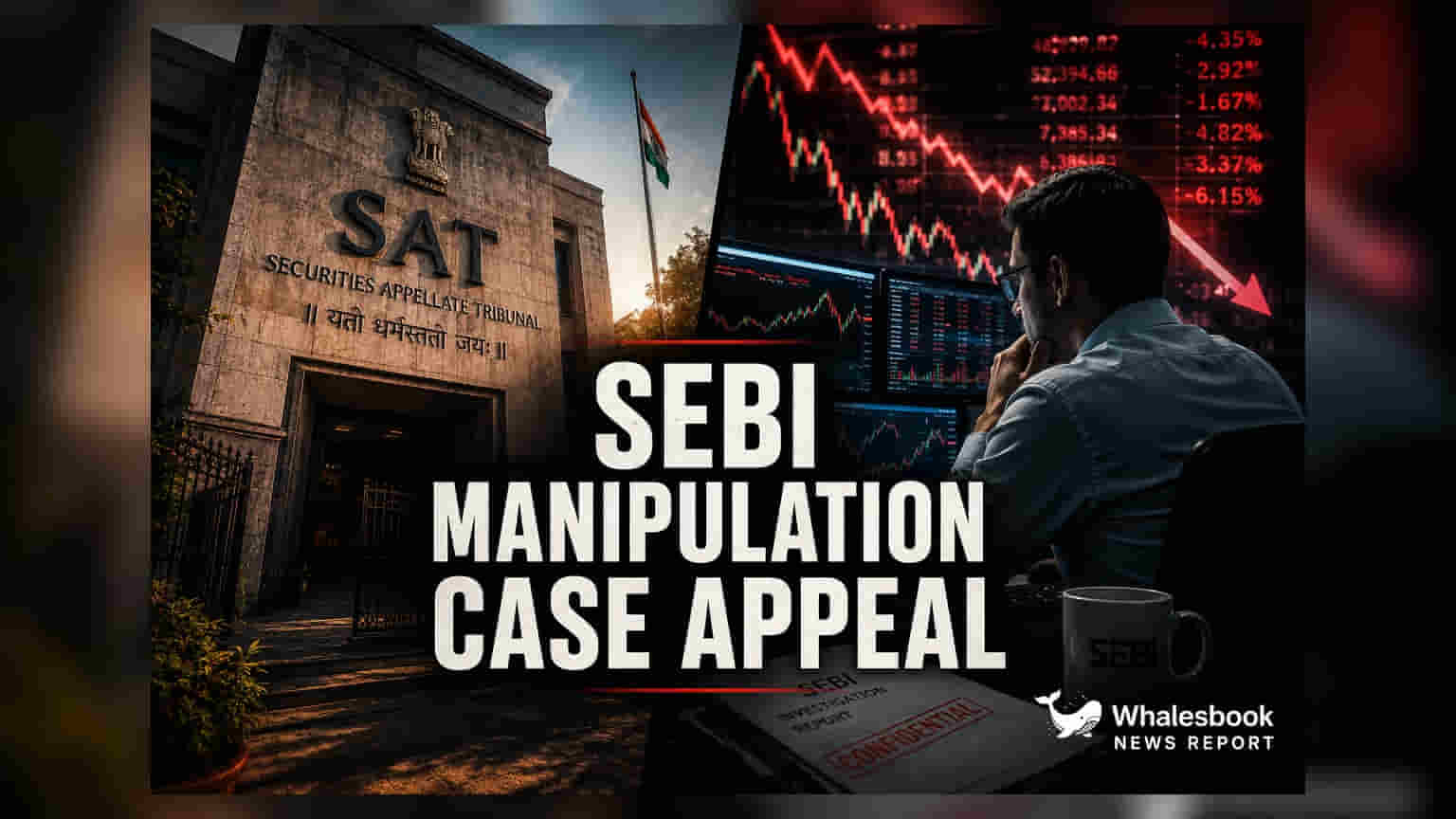
The Securities Appellate Tribunal will hear an appeal from Jane Street on July 31 regarding regulatory directives issued by SEBI. The case involves allegations of market manipulation and follows a dispute over the regulator's enforcement actions against the trading firm.
The Securities Appellate Tribunal (SAT) has scheduled a hearing for July 31 to review an appeal filed by Jane Street, a major global quantitative trading firm. This legal challenge is directed against enforcement orders issued by the Securities and Exchange Board of India (SEBI) related to allegations of market manipulation.
Regulatory Dispute and Legal Process
SEBI is responsible for investigating and penalizing activities that it determines are not in line with fair trading practices. When firms disagree with SEBI’s findings or the severity of penalties imposed, they often approach the SAT, which serves as the independent authority to review and rule on such matters. In this instance, Jane Street is seeking to contest the regulator's previous decision. While the specific nature of the alleged manipulation and the exact penalties imposed by the regulator have not been detailed in public filings, the upcoming hearing will focus on the validity of these charges and the regulatory response.
Impact on Market Operations
Jane Street is a well-known entity in the financial industry, specializing in market-making and quantitative trading strategies. These firms provide liquidity to the market by continuously buying and selling financial instruments. For investors and market observers, the outcome of this case is important because it clarifies the boundaries of permitted trading strategies and the extent of the regulator's power to enforce market integrity. A ruling from the SAT could either uphold SEBI’s position, setting a stricter precedent for similar trading activities, or provide clarity for firms regarding the interpretation of market manipulation rules.
Investors typically watch such high-profile regulatory cases to understand potential shifts in the legal environment for institutional trading. The result of the July 31 hearing will determine whether the matter is resolved, requires further investigation, or if either party chooses to escalate the case to higher judicial levels. Future updates from the tribunal will be necessary to understand the final impact on the company’s ability to conduct its specific market-making operations in India.