

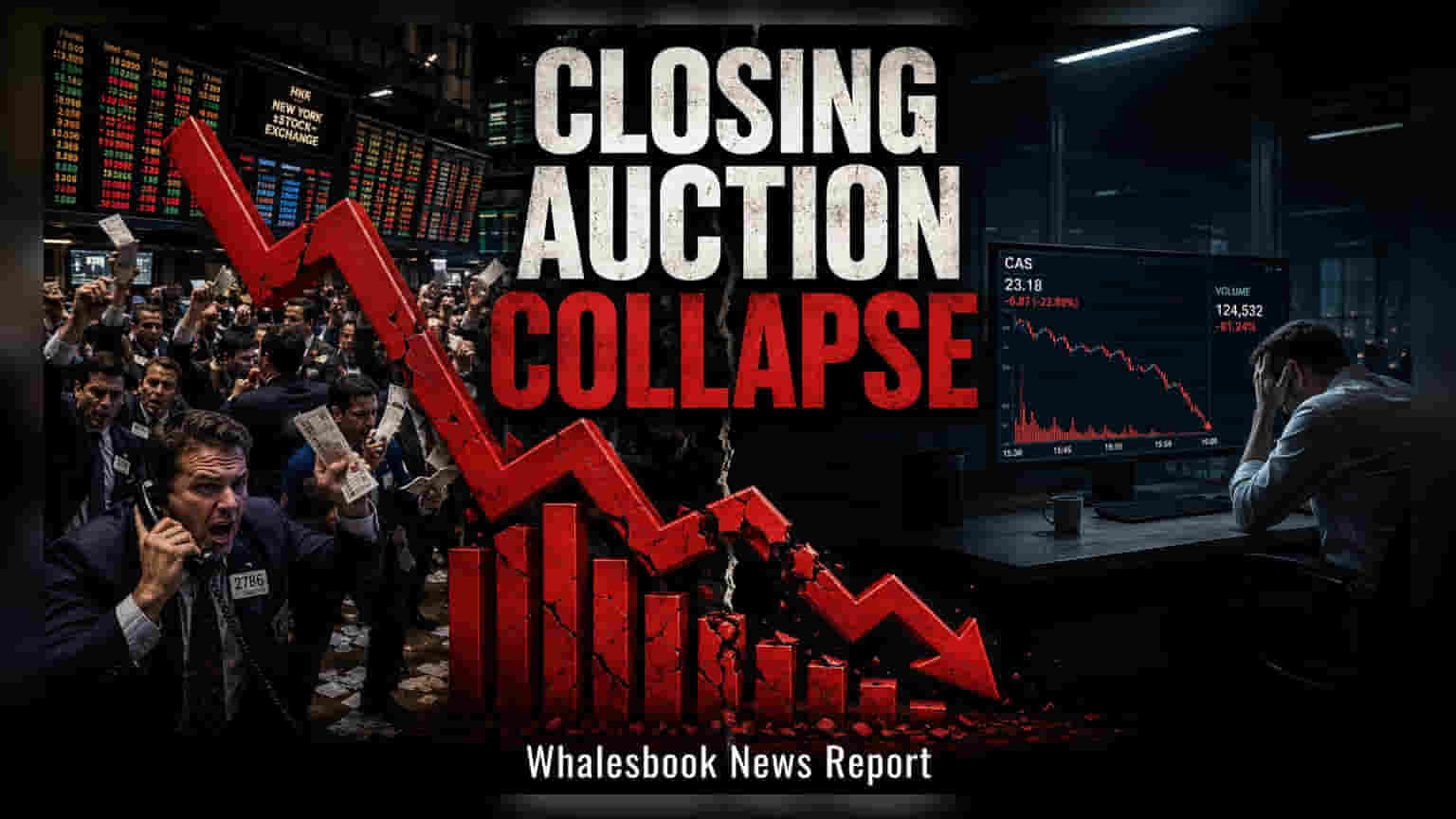
The new 15-minute Closing Auction Session (CAS) introduced on August 3, 2026, has seen trading volumes fall to roughly 1.6%–2.3% of daily turnover, down from the historical 10% average. While the system aims to curb manipulation, it has led to liquidity concerns and divergent closing prices across stock exchanges. Investors should be aware that this lower participation may increase price volatility during the market's final minutes.
Since August 3, 2026, the Indian stock market has operated under a new 15-minute Closing Auction Session (CAS). This change, implemented to replace the previous 30-minute Volume-Weighted Average Price (VWAP) method, is designed to enhance price discovery and protect the market from manipulation. However, early data indicates a significant shift in trading behavior, with volumes in the final 15 minutes falling to a fraction of their historical levels.
Under the previous system, the final 30 minutes of trading were typically the most active, often accounting for approximately 10% of the total daily turnover. In contrast, the current CAS window is now handling roughly 1.6% to 2.3% of the daily volume. This drastic reduction means that the market close, previously a high-liquidity period, has become much quieter, which changes the environment for traders and institutional investors alike.
Why Lower Volume Matters for Investors
The drop in participation creates a more fragile trading environment during the closing minutes. In finance, liquidity refers to how easily an asset can be bought or sold without significantly affecting its price. When trading volumes are low, the market is described as 'thin.' In such conditions, even relatively small buy or sell orders can cause noticeable price swings. This volatility can affect the final closing price, which is a key benchmark for mutual funds, exchange-traded funds (ETFs), and various derivative contracts that rely on accurate settlement data.
Another point of concern for investors is the observation of divergent closing prices between the National Stock Exchange (NSE) and the Bombay Stock Exchange (BSE). Because the auction mechanisms are new and participation is lower, there have been instances where the same stock closes at different prices on the two exchanges, creating temporary price gaps. This inconsistency can complicate trades that are timed specifically to the closing price.
The Path Toward Stability
There is an active debate regarding how to improve the efficiency of this new system. Some market experts and foreign traders have suggested that the Indian market could benefit from a formal 'market-making' mechanism. In global markets like the UK, US, and Hong Kong, designated market-makers are responsible for providing both buy and sell quotes, which helps keep the 'bid-ask spread' tight and liquidity high. Currently, there are discussions about whether High-Frequency Traders (HFTs) could take on a similar role to help stabilize prices and reduce the divergence observed in recent sessions.
Brokers remain divided on the long-term outlook. Some suggest that the current low volume is a temporary adjustment phase as retail investors and domestic institutions adapt to the new rules. Others point to structural hurdles, noting that the Indian market lacks the same depth in securities lending and borrowing as seen in more mature global markets, which limits the tools available to manage positions efficiently.
The key monitorable for investors in the coming weeks will be how the exchanges and regulators refine the CAS framework. Any updates regarding data display for retail investors, changes to the auction rules, or the introduction of formal market-making provisions will likely influence how liquidity returns to the final 15 minutes of the trading day.