

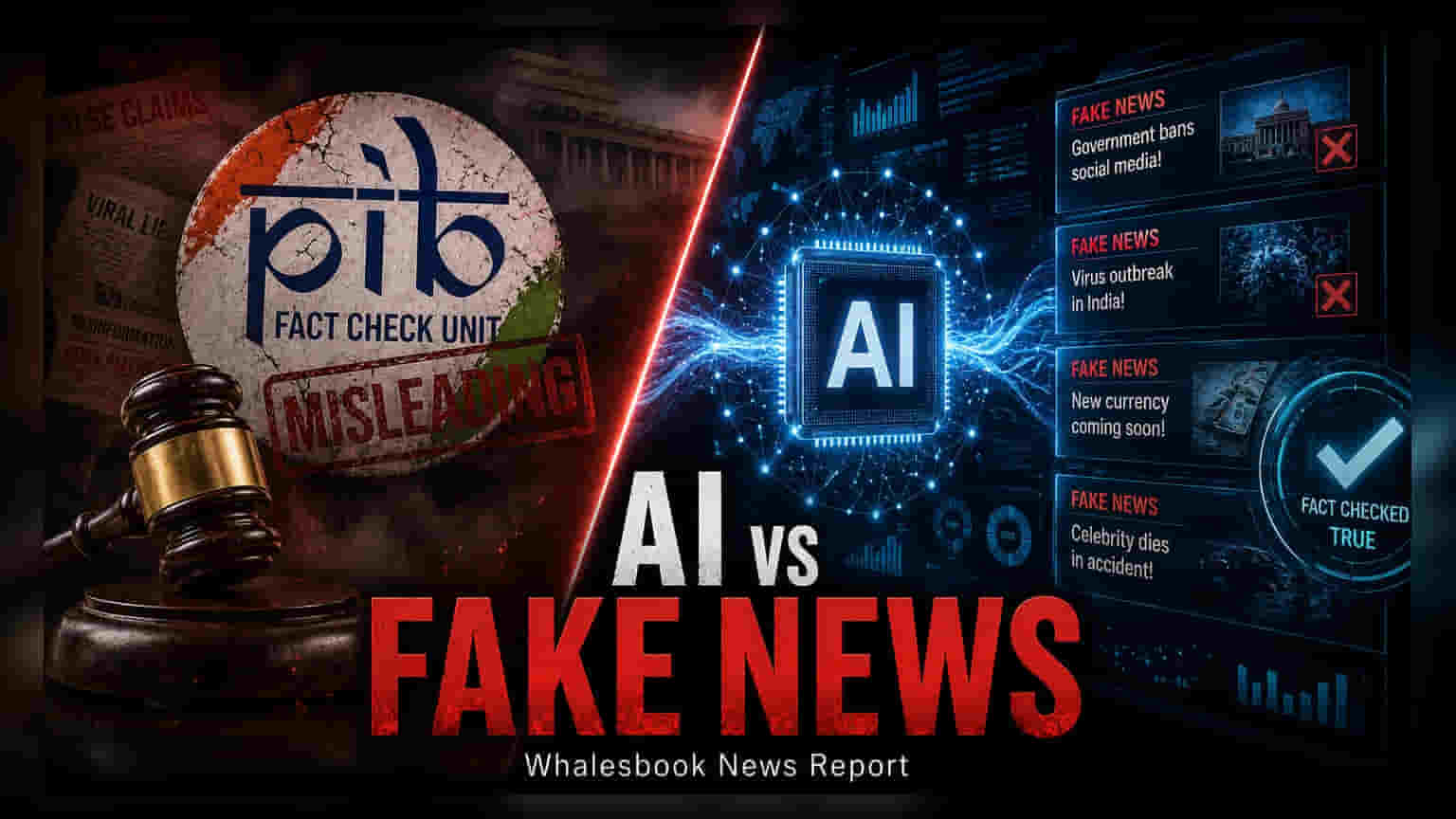
The Indian government is developing AI-powered tools to combat misinformation following a Bombay High Court ruling that stripped the PIB Fact-Check Unit of its statutory powers. While the government appeals the decision, this shift towards automation highlights a changing regulatory environment for digital platforms. The move aims to speed up verification, impacting how online intermediaries manage content compliance and regulatory expectations in the country.
The Indian government is intensifying its focus on using artificial intelligence to manage online misinformation, following a significant legal setback for its primary fact-checking body. The Press Information Bureau's Fact-Check Unit (PIB FCU), which was designed to flag content, recently lost its proposed statutory authority after the Bombay High Court declared the relevant provision of the Information Technology Rules unconstitutional. This ruling invalidated a March 2024 notification that had empowered the unit to identify and potentially order the removal of government-related content from digital platforms.
Transition to AI-Powered Verification
The Ministry of Information and Broadcasting has acknowledged that manual verification and basic open-source tools are struggling to keep pace with the volume of information online. To address these gaps, the ministry is collaborating with the National e-Governance Division to build an AI-powered chatbot designed for real-time verification of claims. Additionally, the government is working on an automated system capable of detecting manipulated content instantly. This transition represents a strategic move to improve the speed and efficiency of fact-checking compared to the previous manual approach.
Regulatory and Investor Context
While the PIB FCU is a government entity and not a publicly traded company, this policy shift carries implications for the broader digital economy. Companies that operate as online intermediaries must maintain strict due diligence to retain their legal protections. As the government moves toward more automated and AI-driven enforcement, digital platforms and technology firms providing compliance solutions may see evolving requirements. The focus on AI development also reflects a broader sector trend where government bodies are increasingly adopting technology to streamline administrative and regulatory tasks.
Legal Standing and Compliance
The government has challenged the Bombay High Court's ruling in the Supreme Court, and related matters are currently under review by the Delhi High Court. Despite the legal uncertainty regarding the FCU's statutory standing, the ministry continues to monitor online content under existing legislation, including provisions within the Bharatiya Nyaya Sanhita, which address misinformation related to public order and national integration. Media organizations and journalists remain subject to accreditation rules, which include potential debarment for submitting false information. Furthermore, the Ministry is in discussions with the Press Council of India to evaluate potential amendments to the Press Council Act, suggesting that a updated regulatory framework for the media landscape may be on the horizon.
For investors and market participants, the key monitorable is how the government balances these new AI-driven verification systems with judicial protections for free speech. Future updates on the Supreme Court's stance regarding the PIB FCU and any new guidelines regarding a common code for content will be important for assessing the compliance landscape for digital businesses in India.