

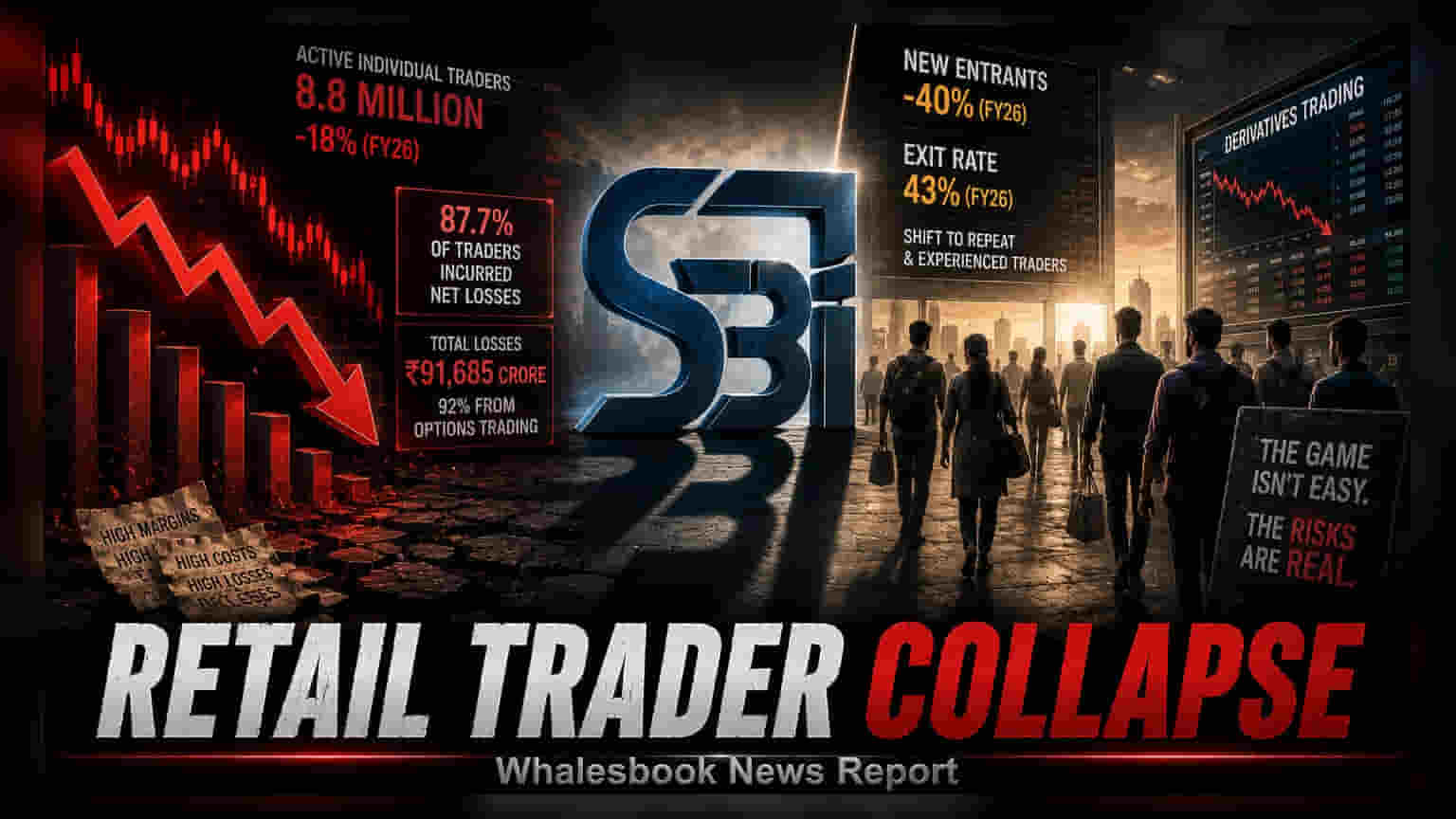
India’s retail derivatives market has recorded its first annual decline, with active individual traders dropping 18% to 8.8 million in FY26. This contraction follows stricter SEBI risk-management rules and increased transaction taxes. Despite the drop, 87.7% of individual traders still incurred net losses, highlighting the severe financial risks that remain for participants.
India’s derivatives market, which had surged significantly in recent years, is undergoing a notable cooling phase. In the financial year 2026, the number of active individual traders in equity derivatives fell by 18%, bringing the total count to approximately 8.8 million. This marks a sharp reversal from previous years of unchecked growth, driven by a combination of new regulatory hurdles and persistent financial losses for participants.
Impact of Regulatory Changes
The decline follows a series of measures introduced by the Securities and Exchange Board of India (SEBI) between late 2024 and early 2025 to curb speculative activity. Regulators tightened risk management protocols by limiting weekly derivative contracts to one index per exchange, increasing minimum contract sizes, and raising margin requirements for short-position holders. These steps were paired with a hike in the Securities Transaction Tax (STT), which increased the overall cost of executing trades. For many retail participants, these changes made frequent, speculative trading significantly harder and more expensive to maintain.
The Reality of Trading Losses
Beyond the regulatory impact, data from the financial year underscores the high risk involved in this segment. Despite the 18% decline in the total number of traders, the financial outcome for those who remained active was severe. Approximately 87.7% of individual traders incurred net losses during FY26. The total value of these losses reached a staggering ₹91,685 crore. Of this amount, about 92% of the losses originated specifically from options trading, a segment that has traditionally attracted the largest share of retail activity.
A Changing Trader Base
The market is now seeing a distinct shift in its composition. The influx of first-time traders, which previously fueled the market’s rapid expansion, has slowed sharply, with new entrants into the derivatives segment falling by about 40% in FY26. Simultaneously, the rate at which traders exit the market has risen to 43%. While the total number of active participants has shrunk, the base is shifting toward repeat traders who now make up a larger portion of the total pool. This indicates that while the entry of new, potentially inexperienced participants has narrowed, those who stay are increasingly seasoned, though not necessarily profitable.
For the broader market, the key concern remains the sustainability of these retail activities. High transaction costs, combined with the reality that the vast majority of individual traders continue to lose money, highlight a significant financial risk. Investors and market observers will now track whether this reduction in speculative activity continues into the next year or if the market finds a new balance between participation and individual financial protection.