

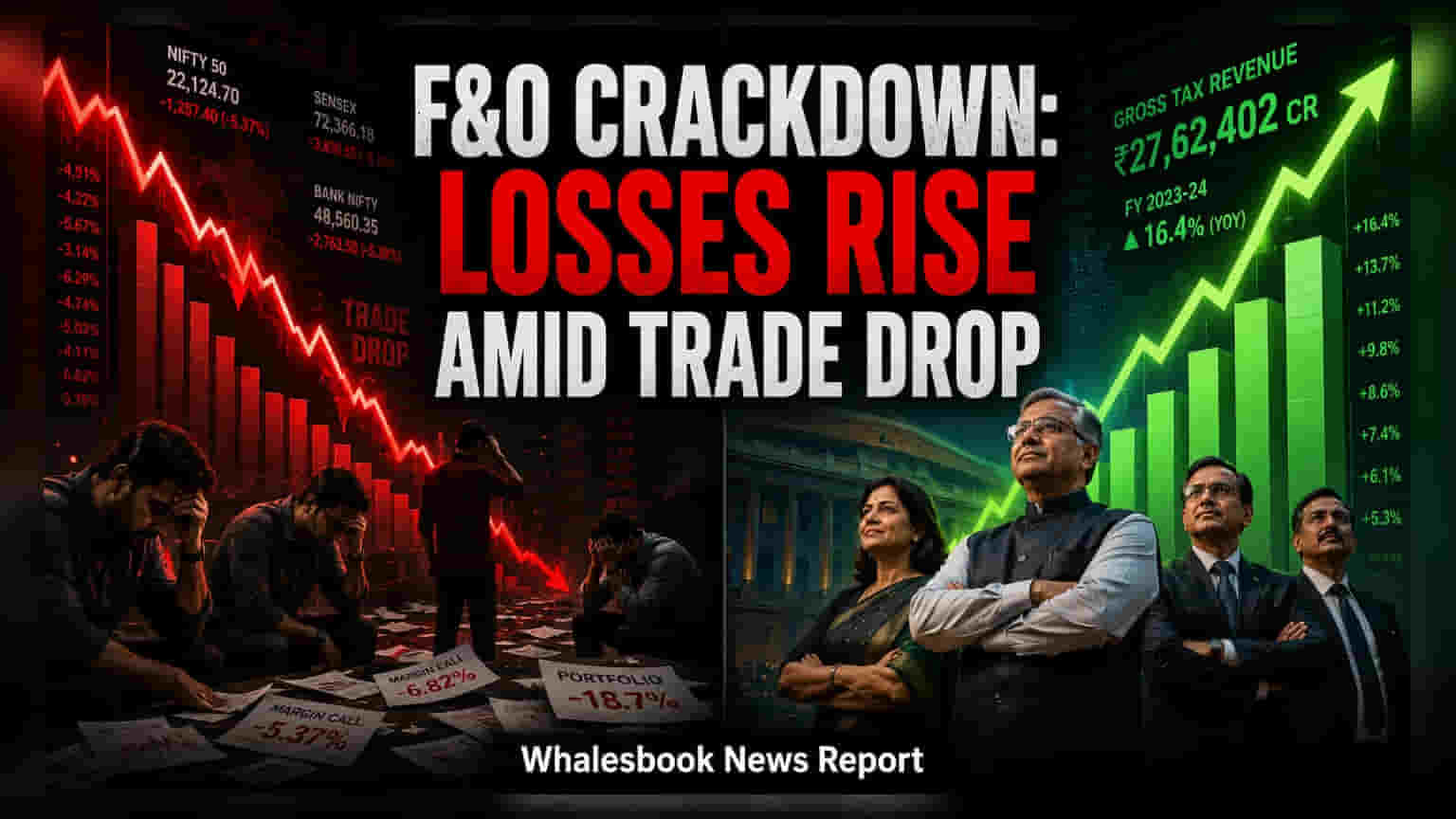
In fiscal year 2026, individual participation in India's F&O market fell by 20% to 78.6 lakh traders, following stricter SEBI rules. While total losses for the segment dropped to ₹91,685 crore, the average loss per trader actually climbed to ₹1.17 lakh. This trend highlights that while fewer people are participating, those who remain in the market are facing higher individual financial risks.
Data from the fiscal year 2026 shows a clear shift in how retail investors interact with India's derivatives market. The number of individual traders in the futures and options (F&O) segment fell to 78.6 lakh, a 20% decrease from the 98.1 lakh traders recorded in the previous fiscal year. This decline follows a series of regulatory updates aimed at cooling down speculative activity in the market.
Regulatory Changes Reshape Market Activity
Starting around November 2024, the Securities and Exchange Board of India (SEBI) introduced several measures to make derivative trading more disciplined. These steps included rationalizing weekly index derivative contracts, increasing the minimum contract sizes, and mandating that brokers collect option premiums upfront from buyers. These rules were designed to act as a filter, discouraging casual or uninformed participation in high-risk derivative instruments. The result has been a measurable retreat in the sheer volume of individual participants, effectively narrowing the base of retail investors in the F&O space.
The Paradox of Individual Losses
While the total money lost by retail traders—the aggregate loss—dropped by 18% to ₹91,685 crore in FY26, this does not mean the market has become safer for everyone. A closer look reveals a concerning trend: the average loss per trader actually increased. In FY26, the average loss per individual was ₹1,16,654, which is higher than the ₹1,13,913 recorded in FY25.
This data point provides a key lesson for investors. It suggests that while the total number of people losing money in the F&O market has decreased, the individuals who continue to trade are experiencing deeper financial pain. This implies that the risks associated with derivatives—where losses can be rapid and substantial—remain very high for those who do not have a robust risk management strategy or deep market knowledge.
Market Turnover and Tax Collections
The overall trading activity in the F&O segment also showed signs of moderation. Total turnover for the year stood at ₹202 lakh crore, down slightly from ₹213 lakh crore in the prior year. Despite this, the government continues to see high revenue from Securities Transaction Tax (STT). Collections from F&O trades reached ₹27,695 crore in FY26, with options trading alone contributing ₹19,802 crore to the total.
Looking ahead, the primary focus for market observers will be whether this trend of reduced participation continues and if SEBI introduces further guardrails to protect investors. The government has noted that it is yet to fully examine the impact of high-frequency and algorithmic trading on market fairness. For individual investors, the data reinforces that the F&O segment is a high-risk area where the cost of a wrong bet can be significant, regardless of the overall market participation numbers.