

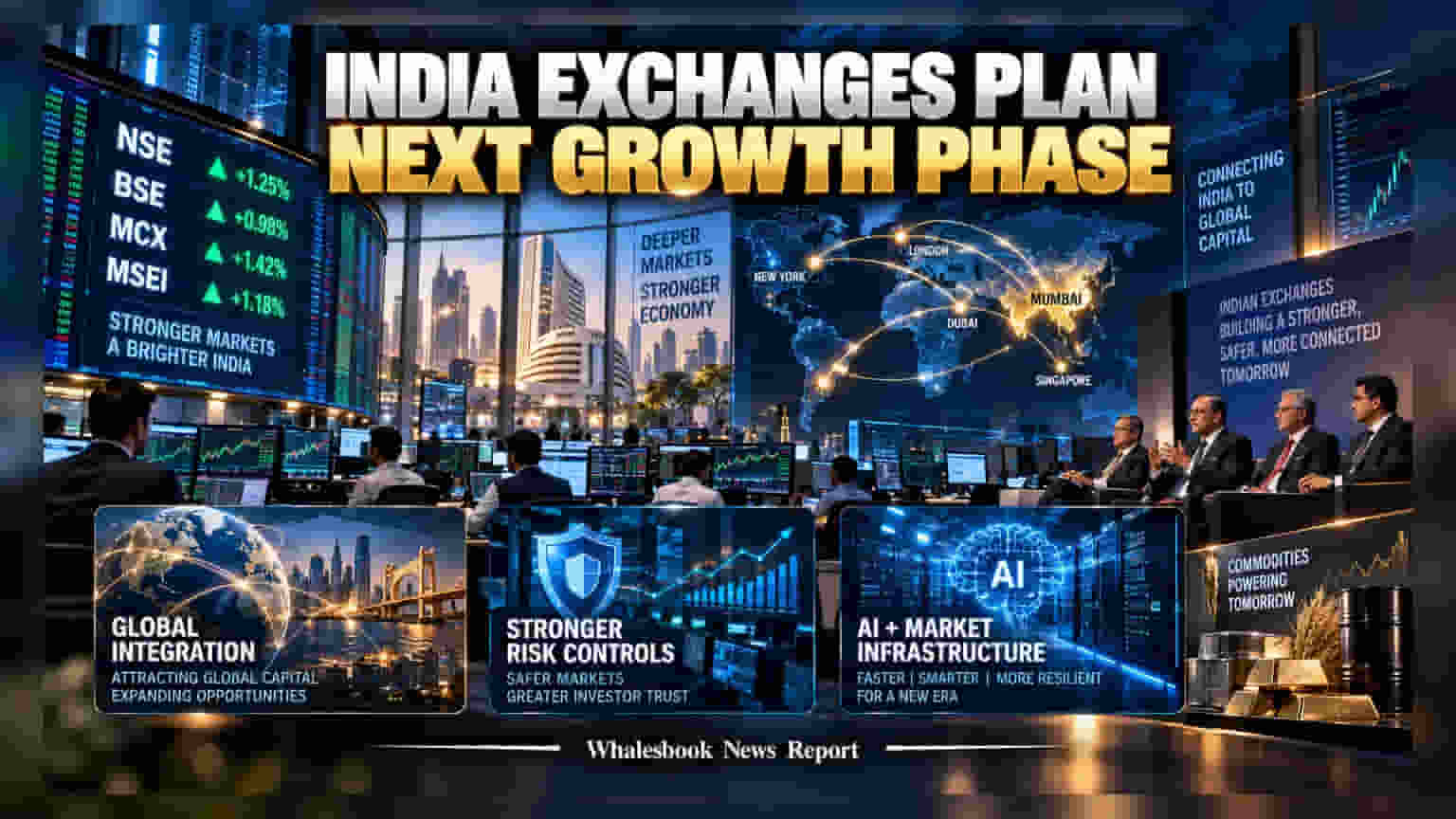
Leadership from the NSE, BSE, MCX, and Metropolitan Stock Exchange outlined a new roadmap at the Global Fintech Fest 2026. The focus is shifting from simple domestic volume growth to global integration, leveraging advanced technologies like AI to improve risk controls and investor access as market complexity increases.
India’s major stock exchanges—the National Stock Exchange (NSE), BSE, Multi Commodity Exchange of India (MCX), and the Metropolitan Stock Exchange of India (MSEI)—are recalibrating their strategic priorities. At the Global Fintech Fest 2026 in Mumbai, the leadership of these institutions signaled that the next phase of Indian market development will prioritize global competitiveness, technological resilience, and rigorous risk management over simple volume-based growth.
As Indian markets attract more participation, exchange heads emphasized that the future lies in transforming into platforms that can compete with international venues for global capital. This shift involves not just scaling up, but ensuring the system can handle complex, modern financial demands. The discussions highlighted a clear move toward integrating advanced technologies, including artificial intelligence and quantum computing, to create markets that are faster, more secure, and easier for the average investor to navigate.
Risk management emerged as a non-negotiable priority. With the rapid introduction of new products and digital assets, executives cautioned that innovation must be matched by effective guardrails. The emphasis is on building systems that provide stability and resilience, preventing potential vulnerabilities that often accompany fast-paced growth. This concern aligns with broader regulatory pushes, including the development of consumer protection indices and stricter cybersecurity and data privacy standards to safeguard retail investors.
For investors, this strategic shift indicates a focus on platform quality. As trading systems become increasingly digitized, the ability of exchanges to manage data, ensure software reliability, and provide 24/7 resilience is becoming as important as the liquidity they offer. The Metropolitan Stock Exchange, in particular, is working through a strategic relaunch that includes capital raises and a focus on regulatory compliance, reflecting the industry-wide push to upgrade infrastructure to meet global benchmarks.
Commodity markets are also seeing a change in direction. The leadership at MCX highlighted the opportunity for India to become a center for global price discovery. Instead of merely adopting global commodity products, the goal is to develop unique Indian benchmarks and services that attract international participants, effectively bridging the gap between domestic production and global demand.
Moving forward, the primary monitorable for market participants will be the execution of these tech-driven upgrades. As exchanges implement new AI-based tools for market surveillance and investor education, shareholders and market observers will likely watch for how these initiatives impact operational costs, system stability, and the ability of these exchanges to capture a larger share of global trading activity. The balance between aggressive innovation and maintainable, stable infrastructure will be the defining challenge for these institutions in the coming years.