

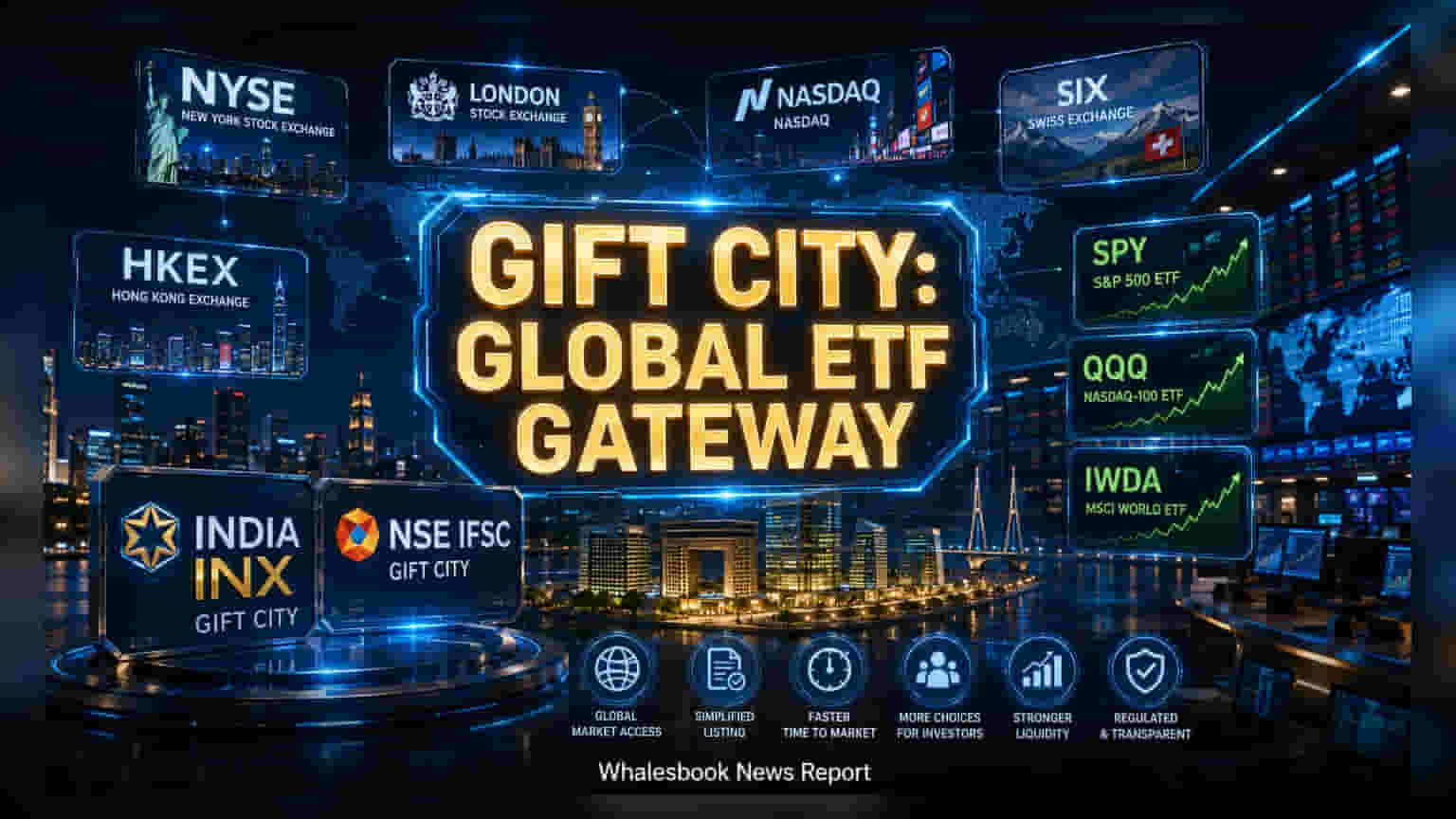
The IFSCA released a consultation paper on August 27, 2026, to simplify how global Exchange Traded Funds (ETFs) can list in GIFT City. This move could allow international ETFs to trade directly on exchanges like India INX and NSE IFSC, potentially giving investors access to global products without the need for complex, new fund structures.
On August 27, 2026, the International Financial Services Centres Authority (IFSCA) unveiled a plan to ease the entry of global Exchange Traded Funds (ETFs) into GIFT City. The proposal allows these funds—which are already actively trading on major overseas markets like New York or London—to list directly on local platforms such as India INX and NSE IFSC. By formalizing this path, the regulator aims to remove the need for global asset managers to create entirely new, jurisdiction-specific fund structures, which often involve significant time and cost.
Simplifying Access for Global Managers
Currently, bringing a global fund to the Indian financial ecosystem often requires setting up a new vehicle, which can be an expensive and time-consuming process. The new proposal aims to remove this administrative friction. Under the framework, if an ETF is already listed on a recognized international exchange, it could leverage its existing performance data and net asset value calculations to list in GIFT City. This is designed to help global firms—such as major asset managers who already operate in Western markets—bring their established products to Indian investors and non-resident Indians (NRIs) with greater ease.
Positioning GIFT City Globally
This initiative is part of a broader strategy to transform GIFT City into a competitive international financial center. By lowering barriers to entry, India is looking to mirror the success of regional hubs like Singapore and Hong Kong. For global fund managers, the ability to bypass complex licensing hurdles is a significant incentive to bring their products to local exchanges. For the Indian financial ecosystem, this could mean faster access to a wider variety of global investment products.
Important Considerations for Investors
While the proposal aims to streamline the process, there are practical factors that will determine its success. The efficiency of these listings will depend heavily on market liquidity, which means there must be enough active buyers and sellers on the local exchanges to ensure trades happen smoothly.
Foreign asset managers will also need to align their operations with the reporting and compliance standards required by Indian regulators. Furthermore, investors should understand that these global ETFs carry their own market and currency risks, independent of the local regulatory structure. The stability and success of this initiative will also depend on how well the infrastructure, such as market-making support, develops to handle these international instruments.
The proposal is currently in the consultation phase, allowing industry participants to provide feedback. The final set of rules will determine the specific requirements for managers to list these funds. Investors should track official notifications from the IFSCA, which will clarify the timeline and the operational framework for when these ETFs might start trading.