 Whalesbook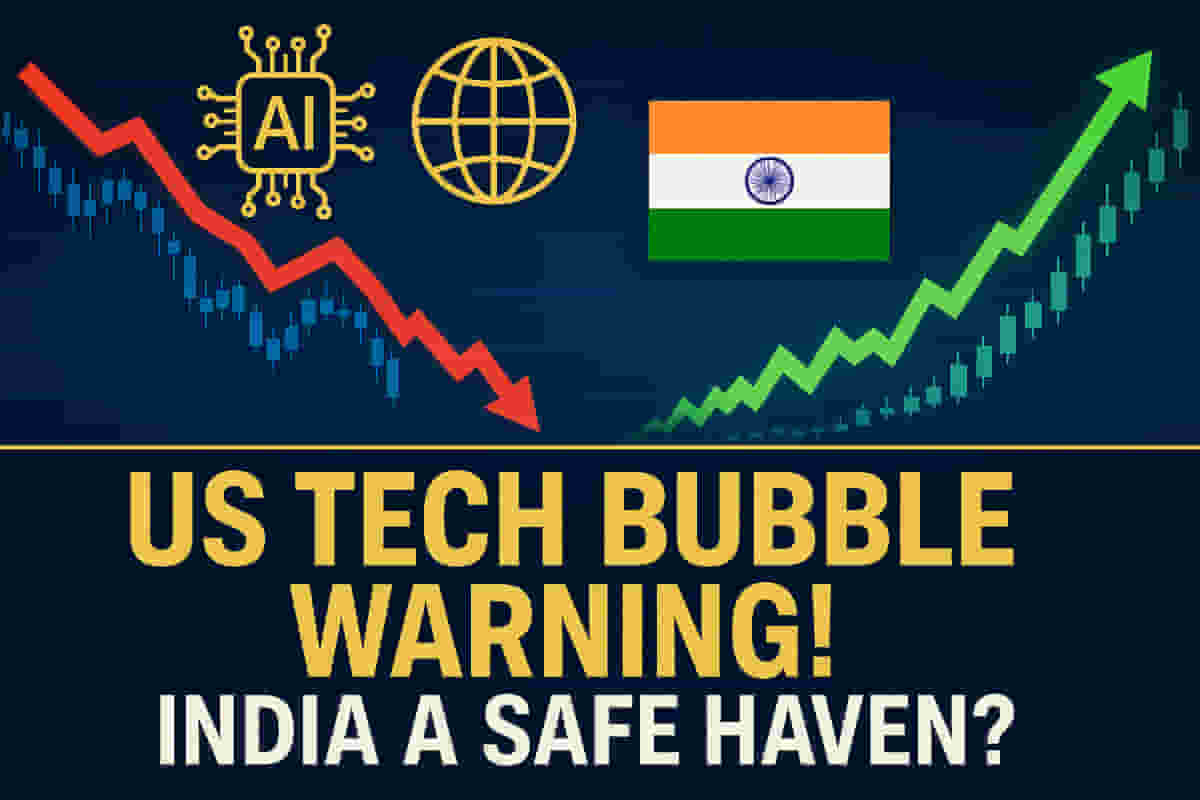
US Tech Stocks Overpriced, Fed Rate Cut Hopes Premature, Warns Expert
Andrew Fred, CEO of Ecognosis Advisory, has issued a strong warning to investors, stating that optimism surrounding potential interest rate cuts by the US Federal Reserve is premature. He argues that these expectations are built on incomplete economic data and that US equity markets, particularly technology and AI-focused stocks, are significantly overvalued and vulnerable to a substantial correction.
Incomplete Data Fuels Fed Speculation
Fred expressed concern over the US Federal Reserve's policy direction, noting that current assessments appear to overlook crucial inflation and labor market readings for October and November. He highlighted that policy decisions seem to be influenced by data available only up to September, making the anticipation of further rate cuts appear unfounded and driven by hope rather than concrete evidence.
Inflation Risks Persist
According to Fred, inflation has not eased sufficiently to warrant a shift towards a more dovish monetary policy. Key inflation metrics, including headline Consumer Price Index (CPI), core CPI, and the Federal Reserve's preferred Personal Consumption Expenditures (PCE) price index, continue to remain above the three percent threshold. This indicates that inflation risks are far from resolved and still pose a significant concern.
Bearish Outlook on US Equities
Fred maintains a firmly bearish stance on US markets, with a particular focus on large technology and Artificial Intelligence (AI) driven stocks. He dismissed the notion of a market rotation, suggesting investors are hesitant to admit outright price declines. He also flagged excessive capital expenditure by major AI-linked companies, noting a lack of clear visibility on future earnings and citing recent corporate results as evidence that heavy spending is not yet yielding sufficient returns.
Diversification Beyond the US
Advising investors to look beyond the United States, Fred pointed to strong performance in defense stocks, select European markets, and Asian indices such as South Korea, Taiwan, and Singapore. He identified India as a particularly attractive diversification option, noting its relatively low correlation with the dominant AI theme. Fred remarked that India is being viewed as a hedge precisely because it is largely unrelated to the speculative AI frenzy.
Impact
This cautionary outlook could prompt investors to reconsider their exposure to US technology and AI stocks, potentially leading to increased capital allocation towards markets like India, Europe, and Asia. A significant shift in investment sentiment could trigger volatility in US tech sectors while potentially boosting the performance of recommended diversification markets. The anticipation of US interest rate cuts may also be tempered, impacting broader market expectations.
Impact Rating: 7/10
Difficult Terms Explained
- Federal Reserve: The central banking system of the United States responsible for monetary policy.
- Interest Rates: The percentage charged by a lender to a borrower for the use of assets, typically money.
- Inflation: A general increase in prices and fall in the purchasing value of money.
- CPI (Consumer Price Index): A measure that examines the weighted average of prices of a basket of consumer goods and services.
- PCE (Personal Consumption Expenditures): A measure of price changes in consumer spending, often preferred by the Federal Reserve.
- Equities: Securities that represent ownership, such as stock.
- Dovish Policy: Monetary policy characterized by low interest rates and measures to stimulate the economy.
- Capital Expenditure: Funds used by a company to acquire, maintain, or upgrade physical assets.
- Asset Allocation: An investment portfolio strategy that balances risk and reward by apportioning a portfolio among various asset classes.
- Correlation: A statistical measure that describes the extent to which two variables fluctuate together.