 Whalesbook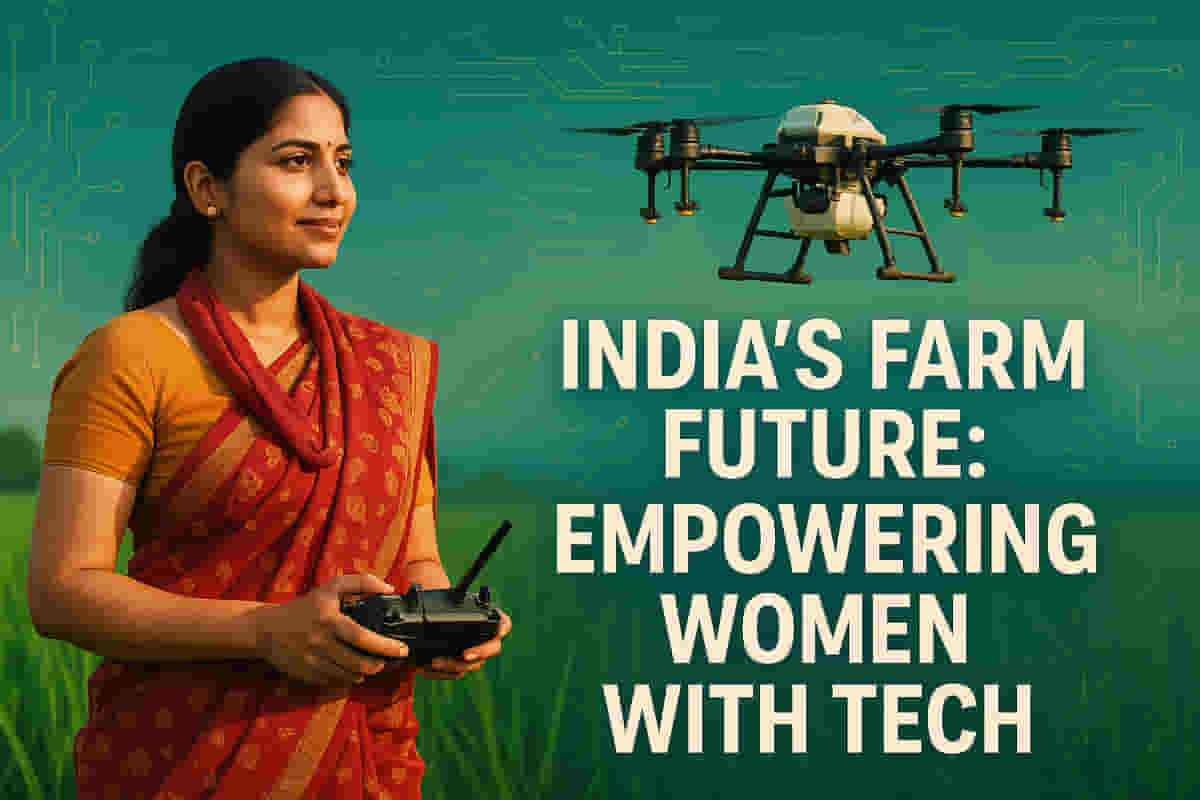
The Pivotal Crossroads
India’s agriculture sector stands at a critical crossroads, balancing rapid technological transformation with the persistent under-recognition of its female workforce. While drones, digital platforms, and precision farming promise a modernized future, millions of women engaged in cultivation remain underpaid, under-skilled, and largely invisible in formal economic metrics. This disparity is not merely a social concern but a significant impediment to national productivity and resilience in the face of evolving global agricultural demands.
The NCAER Skill Gap Study Findings
A recent National Council of Applied Economic Research (NCAER) Skill Gap Study on High Growth Sectors, focusing on the cultivation of cereals, legumes, and oilseeds, has brought this issue to the fore. The analysis reveals that women constitute 41.4 per cent of the workforce in this vital sub-sector. However, their roles are predominantly concentrated in low-skilled, low-paying, and informal capacities.
- Women are often confined to manual, repetitive, and unpaid family labour, contrasting with men who dominate mechanised and market-oriented operations.
- In market gardening and crop growing, where women are about one-third of the workforce, most jobs are labour-intensive.
- Within agricultural, forestry, and fishery labour roles, women form a majority, accounting for approximately 52 per cent of workers.
The Stark Skills and Education Deficit
The study highlights a profound skills and education gap among women in the sector. Nearly 50 per cent of female agricultural workers are illiterate. Access to training remains critically limited, with close to 99 per cent reporting no technical education and only about 0.5 per cent having received formal vocational training.
- Even non-formal vocational training reaches only around one in five women, significantly less than the one in three rate observed among men.
- Men are substantially more likely to possess medium-level skills or experience with modern machinery, exacerbating the disparity.
The Challenge of Unpaid Labour and Structural Invisibility
A significant structural issue is women’s heavy concentration in unpaid roles. Approximately 63 per cent of female agricultural workers are engaged as unpaid family labourers, starkly contrasting with just 21 per cent of men.
- This pattern leads to the structural invisibility of women’s work, which is critical to household and farm economies.
- Their contributions are often excluded from wage records, productivity measurements, and overarching policy frameworks.
Technology Adoption and the Risk of Exclusion
As Indian agriculture increasingly adopts technology, from satellite-driven crop planning to drone-based precision spraying, there is a significant risk of women being left behind. Most skilling programs remain heavily male-centric, with training modules rarely tailored for women’s specific needs or contexts.
- The government’s Drone Didi initiative, aimed at training women to operate agricultural drones, represents a positive step.
- However, this initiative needs to expand from pilot projects to a national, gender-sensitive skilling movement to be truly effective.
Pathways to Empowerment and Economic Inclusion
Technology in agriculture should serve to democratise access to opportunities. Women farmers and workers must be trained to handle advanced tools like drones, manage soil health data, lead Farmer Producer Organizations (FPOs), and engage actively in digital marketplaces.
- Empowering women with financial, digital, and entrepreneurial literacy can effectively bridge both the productivity gap and the gender gap.
- NCAER’s mapping of agricultural clusters in states like Uttar Pradesh, Maharashtra, Rajasthan, Madhya Pradesh, and Gujarat provides a framework for designing location-specific, gender-responsive skilling programs.
- These states, with their robust infrastructure and institutional systems, are ideal candidates to evolve into hubs for specialized agri-professional roles for women, such as drone operators and agri-tech advisors.
Addressing Structural Barriers in Skill Development
Realizing this potential requires policies to move beyond generic capacity-building and directly address the structural barriers women face. Limited access to training institutes due to distance or scheduling conflicts with domestic responsibilities, coupled with cultural norms restricting mobility, prevents many women from participating.
- Vocational curricula are often designed with male participants in mind, overlooking crucial socio-emotional, confidence-building, and entrepreneurial skills needed by women.
- These constraints must be addressed for stronger agricultural clusters to become genuinely inclusive hubs for women’s economic mobility.
A Focused Three-Pronged Strategy for Inclusion
Bridging these gaps necessitates a focused, three-pronged strategy. Skilling programs must reorient curricula to include socio-emotional skills, entrepreneurship, and digital literacy, equipping women for leadership roles.
- Training infrastructure needs decentralization, utilizing community-based centres offering flexible, locally relevant courses.
- Gender-linked incentives can encourage institutions to prioritize training and placing women in agri-tech roles.
Impact
The empowerment of women in agriculture is not just a social goal; it is an economic imperative for India’s sustained growth and food security. Embedding gender equality across the agricultural value chain, from curriculum design to placement support, is essential for a truly inclusive Green Revolution. This shift is as vital as technology and infrastructure for the future of Indian agriculture.
Impact Rating: 7/10
Difficult Terms Explained
- NCAER: National Council of Applied Economic Research, an Indian research institution that conducts economic policy research.
- Sub-sector “Growing of Cereals (including Rice), Leguminous Crops and Oilseeds”: A specific segment of the agriculture industry focused on staple crops like grains, pulses, and oil-producing plants.
- Informal roles: Jobs that lack formal contracts, benefits, and legal protections, often characterized by instability.
- Mechanised operations: Agricultural tasks performed using machinery, such as tractors or harvesters, rather than manual labour.
- Market-oriented operations: Farming practices primarily focused on producing crops for sale in commercial markets.
- Manual, repetitive labour: Tasks that are performed by hand and involve doing the same action repeatedly.
- Unpaid family labour: Work contributed to a family farm or business by family members without receiving a wage.
- Market gardening: The cultivation of fruits, vegetables, and flowers for sale in local markets.
- Agricultural, forestry and fishery labourers: Workers employed in farming, managing forests, or catching fish.
- Subsistence crop farmers: Farmers who cultivate crops mainly for their own family's consumption, with minimal surplus for sale.
- Labour-intensive roles: Jobs that require a significant amount of physical effort and human input.
- Value chain: The entire process involved in creating and delivering a product or service, from raw materials to the final consumer.
- Literate: Able to read and write.
- Technical education: Training that focuses on practical skills and knowledge for specific trades or industries.
- Vocational training: Education and training that prepares individuals for employment in a particular occupation or trade.
- Non-formal vocational training: Flexible training programs outside the traditional education system, often delivered in short modules or workshops.
- Skills gap: The difference between the skills that employers need and the skills that the workforce possesses.
- Structural invisibility: When the contributions or existence of a group are not formally recognized or accounted for within established systems and policies.
- Productivity: The efficiency with which inputs (like labour, capital) are converted into outputs (goods, services).
- Satellite-driven crop planning: Using data from satellite imagery to optimize agricultural planning, such as planting times and resource allocation.
- Drone-based precision spraying: Using drones to apply pesticides, herbicides, or fertilizers to specific areas of a field, minimizing waste and improving efficiency.
- Male-centric: Designed or oriented primarily towards men, often overlooking the needs or perspectives of women.
- Drone Didi initiative: A government-led program in India aimed at training rural women to operate agricultural drones for various farm tasks.
- Democratise access: To make something available and accessible to a broader population, reducing exclusivity.
- Farmer Producer Organizations (FPOs): Farmer-owned organizations that collectively engage in activities such as procurement, production, processing, marketing, and selling of agricultural produce.
- Digital marketplaces: Online platforms where buyers and sellers can conduct transactions for goods and services.
- Entrepreneurial literacy: The knowledge and skills required to start, manage, and grow a business.
- Agricultural clusters: Geographical regions characterized by concentrated agricultural production, related infrastructure, and institutional networks.
- Gender-responsive skilling programmes: Training initiatives specifically designed to acknowledge and address the unique needs, barriers, and opportunities faced by women.
- Agri-professional roles: Occupations within the agriculture sector that demand specialized technical knowledge, skills, and often higher education or certification.
- Agri-tech advisors: Professionals who provide expert guidance on the adoption and application of technology in agriculture.
- Farm machinery service technicians: Skilled individuals responsible for the maintenance, repair, and operation of agricultural machinery.
- Agronomic consultants: Experts who advise farmers on crop management, soil health, pest control, and optimizing yields.
- Structural barriers: Obstacles inherent in the social, economic, or institutional systems that impede progress or participation for certain groups.
- Domestic responsibilities: Duties and tasks related to managing a household and caring for family members.
- Socio-emotional skills: Abilities related to understanding and managing one's own emotions, and interacting effectively with others, including empathy, communication, and conflict resolution.
- Confidence-building: Processes or activities aimed at increasing an individual's self-assurance and belief in their capabilities.
- Pradhan Mantri Kaushal Vikas Yojana: A flagship scheme of the Indian government aimed at providing vocational training and skill development to youth.
- State Skill Missions: State-level bodies established to coordinate and implement skill development initiatives within their respective states.
- Decentralised: Transferring authority or functions from a central authority to regional or local levels.
- Krishi Vigyan Kendras (KVKs): Agricultural Science Centres established across India by the Indian Council of Agricultural Research (ICAR) to provide agricultural technology transfer and training to farmers.
- Gender-linked incentives: Financial or other forms of encouragement provided to institutions or individuals to promote gender equality and increase women's participation and success.
- Inclusive Green Revolution: A concept for a new phase of agricultural development that emphasizes sustainable practices and equitable benefits for all stakeholders, including marginalized groups.
- Economic imperative: A crucial requirement for economic success or advancement.
- Food security: The condition of having reliable access to sufficient quantities of affordable, nutritious food.