

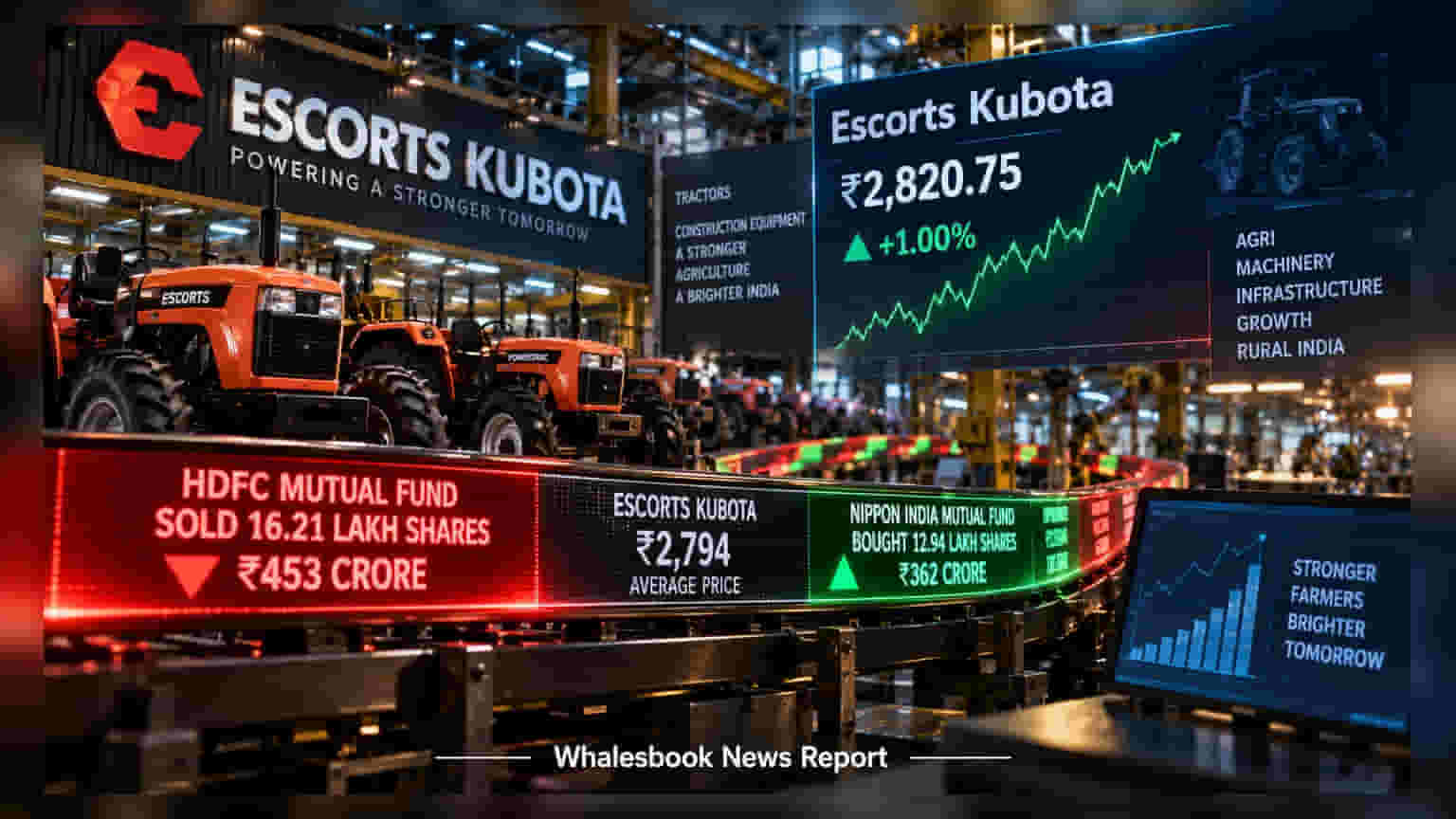
HDFC Mutual Fund has sold a 1.45% stake in tractor maker Escorts Kubota for ₹453 crore. In the same bulk deal, Nippon India Mutual Fund acquired a 1.16% interest in the company. The stock rose slightly on the news, reflecting how major fund houses are currently rebalancing their portfolios in the agricultural machinery sector.
Institutional Trade in Escorts Kubota
HDFC Mutual Fund reduced its holding in Escorts Kubota by selling 16.21 lakh shares through a bulk deal on Wednesday. The shares were offloaded at an average price of ₹2,794 each, resulting in a total transaction value of ₹453 crore. Following this sale, the mutual fund's total ownership in the company decreased from 6.94% to 5.49%.
While one fund house reduced its exposure, another increased it during the same trading session. Nippon India Mutual Fund stepped in as a buyer, acquiring 12.94 lakh shares at the same price of ₹2,794 per share. This purchase represents a 1.16% stake in the manufacturer, with an investment of approximately ₹362 crore.
Market Reaction and Sector Context
Escorts Kubota is a major player in the Indian agricultural and construction equipment market, known for brands such as Farmtrac and Powertrac. Market activity around such companies is often watched closely as institutional investors frequently adjust their holdings based on sectoral trends or internal portfolio strategies. Despite the large sell-off by HDFC Mutual Fund, the market absorbed the transaction smoothly. Following the news, shares of Escorts Kubota rose by nearly 1% to close at ₹2,820.75 on the Bombay Stock Exchange.
This positive price reaction suggests that the market did not view the institutional exit as a sign of weakness in the company’s fundamentals. For retail investors, these block trades demonstrate the ongoing movement of capital between large institutional players. While such trades are common in the equity markets, they provide a snapshot of how large investors are rotating their money within the manufacturing and heavy machinery sectors.
Looking ahead, the most important factors for shareholders will remain the company’s operational performance, including demand trends for tractors and construction equipment. Investors should continue to track future quarterly earnings reports, management commentary on raw material costs, and any updates regarding the utilization of the company’s manufacturing capacity. These operational metrics will carry more weight for long-term value than individual institutional rebalancing trades.