

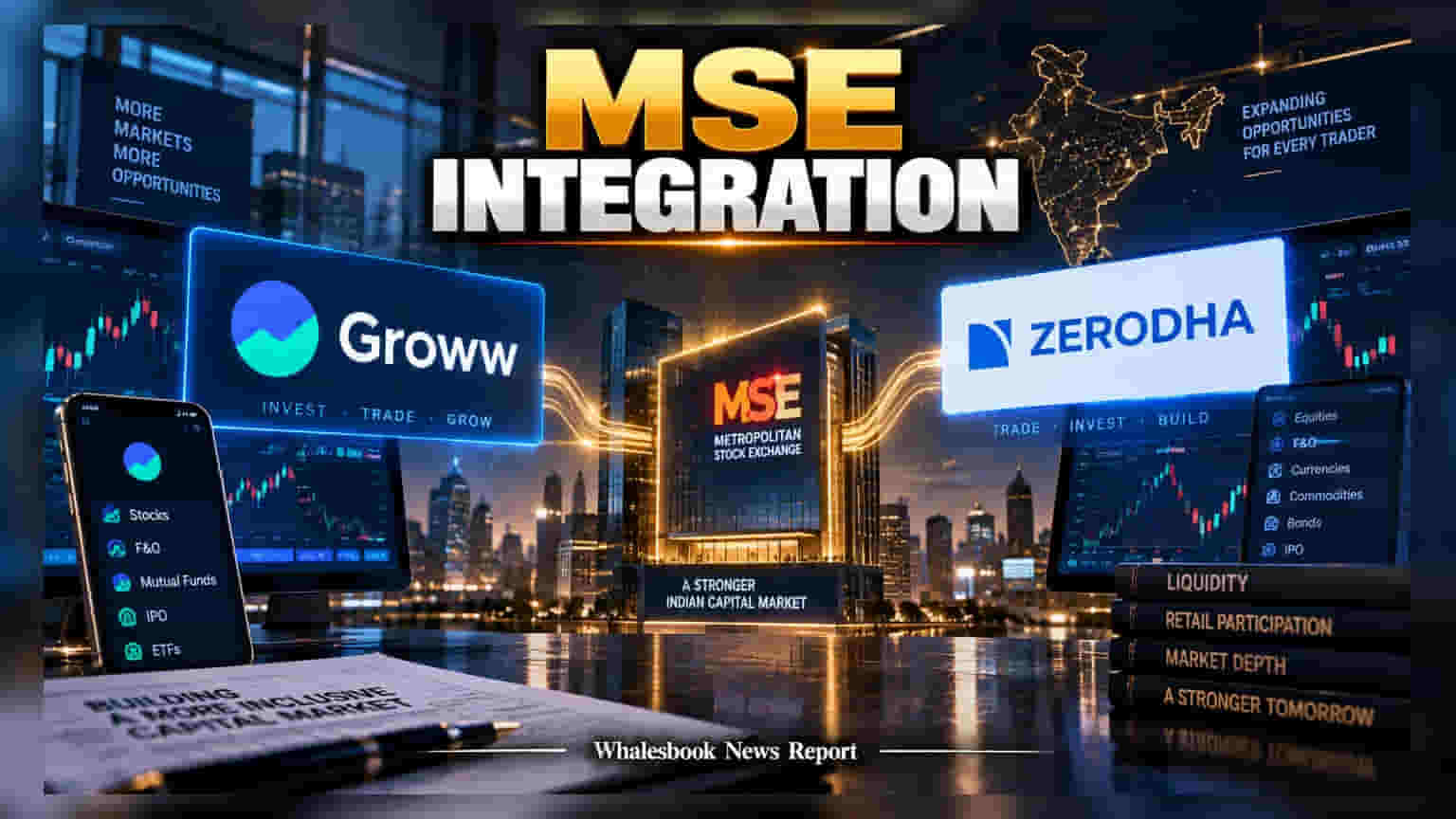
Major discount brokers Groww and Zerodha are integrating the Metropolitan Stock Exchange of India (MSEI) into their trading platforms to boost retail participation. The move aims to increase liquidity on the exchange, with full retail access expected within three to four months. This follows a significant capital investment made by the brokerages in the exchange back in 2024.
India’s two largest discount brokers, Zerodha and Groww, are currently working to integrate the Metropolitan Stock Exchange of India (MSEI) into their trading interfaces. This development is part of a larger push to bring retail traders to the exchange, which has struggled to gain significant market share against giants like the National Stock Exchange (NSE) and the Bombay Stock Exchange (BSE).
The integration is not just a commercial partnership but a move tied to the brokers' previous involvement in the exchange. In late 2024, entities linked to both brokerages—Billionbrains Garage Ventures for Groww and Rainmatter Investments for Zerodha—participated in a ₹238 crore capital infusion into the exchange. Following a platform relaunch in February 2026, the current effort is focused on building the backend connectivity needed to allow millions of retail users to trade on the MSEI platform.
The primary goal of this integration is to solve a long-standing challenge for the MSEI: liquidity. Currently, the exchange records daily cash market volumes between ₹400 crore and ₹500 crore. By connecting the massive user bases of Zerodha and Groww, the exchange hopes to attract more buyers and sellers, which is essential for healthy price discovery and trade execution. The management is focusing on establishing sustainable volume in the cash segment first, with plans to eventually expand into the futures and options (F&O) segment once the market gains depth.
While this integration is a strategic positive for the MSEI, the exchange faces significant hurdles. The Indian stock market is heavily concentrated, with the NSE and BSE dominating the vast majority of trading volumes. Changing trader habits and convincing investors to use a third exchange, where liquidity might be lower, remains a major difficulty. Furthermore, the regulatory environment is increasingly strict. SEBI has been tightening rules for the derivatives segment, including changes to weekly options expiries and position limits, which makes it challenging for smaller exchanges to launch and sustain new F&O products.
For investors and market participants, the success of this move will depend on how quickly the exchange can build consistent daily volumes. If the integration leads to a sustained rise in the cash market segment, it could provide a third venue for traders. However, the regulatory pressure on derivatives trading and the competitive dominance of the two larger incumbents will remain the key factors defining the long-term viability of this strategy. The next important update to monitor will be the official rollout of retail trading access and the subsequent growth in daily trade volumes on the MSEI platform.