

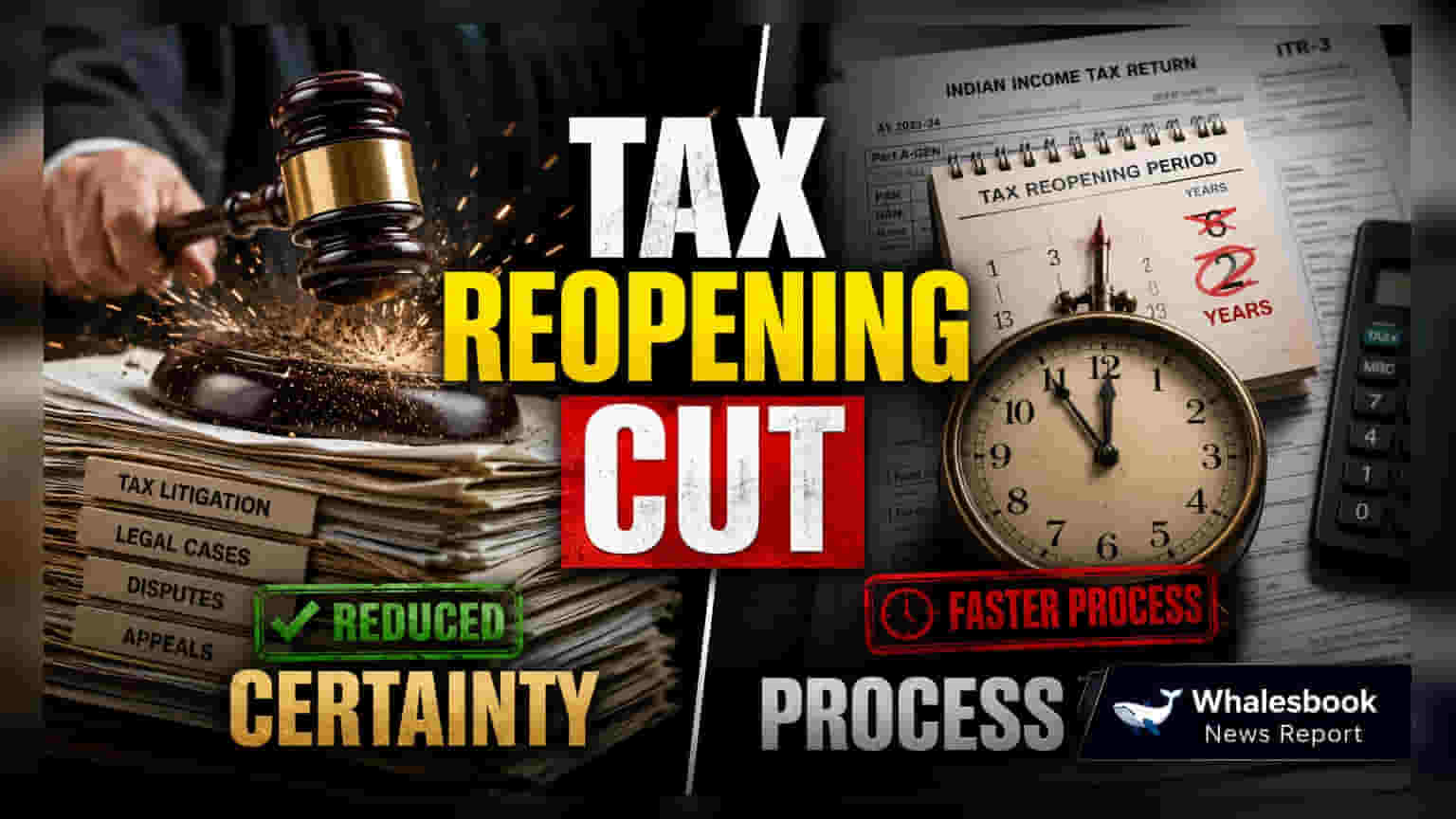
A high-level committee has recommended reducing the time the Income Tax Department has to reopen completed assessments. This proposal seeks to lower litigation and improve financial certainty for taxpayers. The shift is supported by improved digital tax tools, which allow authorities to identify potential discrepancies much faster than in the past.
What Happened
A committee led by NITI Aayog member Rajiv Gauba has proposed reducing the time limit for the Income Tax Department to reopen completed tax assessments. Currently, the department can generally reopen tax filings within three years from the end of the relevant assessment year. For cases involving suspected tax evasion of ₹50 lakh or more, the window extends to five years. The new proposal aims to shorten the three-year limit for routine tax cases to provide faster closure for taxpayers.
Why Certainty Matters for Business
Tax disputes can remain open for years, creating uncertainty for both individual taxpayers and corporations. When assessments stay open for a long time, it can lead to financial unpredictability and ongoing legal costs. By shortening the reopening window, the government aims to improve the "ease of doing business" in India. If implemented, this change would allow businesses and individuals to consider their tax filings finalized sooner, reducing the time and money spent on managing potential litigation.
The Role of Digital Tax Tools
The proposal for a shorter window is driven by the fact that the tax department now has access to better data. Over the last few years, the introduction of the Annual Information Statement (AIS), detailed TDS/TCS reporting, and the faceless assessment system has made it easier for authorities to match income and spending. Since the department can now identify potential errors or evasion much earlier through digital tools, there is less need to keep the reopening window open for as long as before.
Balancing Enforcement and Fairness
While a shorter window offers benefits to taxpayers, the challenge for the government is to ensure that tax enforcement does not suffer. The committee acknowledges that the department must still be able to investigate serious cases. Therefore, the proposal is expected to keep longer limitation periods for exceptional circumstances, such as cases involving significant fraud or tax evasion. This approach attempts to strike a balance between providing convenience to honest taxpayers and maintaining the power to catch sophisticated tax avoidance schemes.
What Investors Should Track Next
The most important monitorable for investors and taxpayers is the formal government response and the subsequent legislative process. Any reduction in the reassessment window will likely require amendments to tax laws, similar to the updates seen in the Finance Act of 2021 and the Finance (No. 2) Act of 2024. Investors should watch for official notifications or draft proposals from the Ministry of Finance regarding the timeline for these changes and the specific thresholds that will apply under the new rules.