

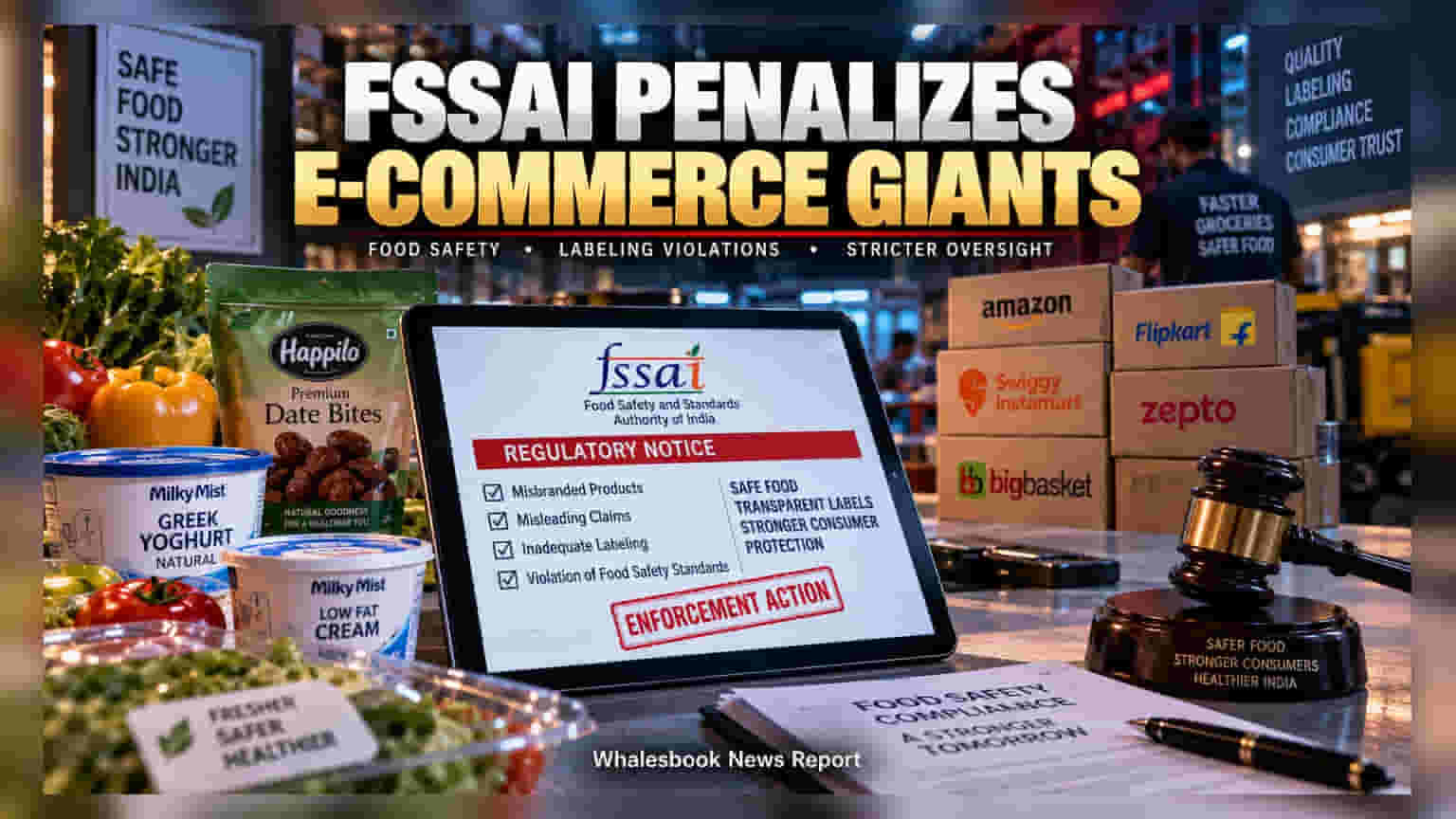
The FSSAI has initiated penal proceedings against major platforms including Amazon, Flipkart, Swiggy Instamart, Zepto, and BigBasket for alleged sales of misbranded and non-compliant food products. This regulatory crackdown forces a pivot toward stricter vendor vetting in the fast-growing quick-commerce sector. Investors should monitor how these firms manage compliance costs and potential inventory disruptions.
The Food Safety and Standards Authority of India (FSSAI) has launched formal enforcement actions against some of the country’s largest e-commerce and quick-commerce entities. The regulator is scrutinizing Amazon, Flipkart, Swiggy Instamart, Zepto, and Tata-owned BigBasket for alleged violations of the Food Safety and Standards Act, 2006. The central issue involves the sale of products that the regulator claims were either misbranded or failed to meet labeling and safety standards.
Regulatory Scrutiny on Intermediaries
This move highlights a significant shift in how regulators are treating digital marketplaces. Historically, these platforms have functioned as intermediaries, but the FSSAI is now holding them directly accountable for the quality and information of products listed on their platforms. The regulator has flagged specific items, including Happilo Premium Date Bites and various Milky Mist dairy products such as Greek Yoghurt and low-fat cream, citing misleading nutritional claims and inadequate product disclosures.
The regulatory pressure is not just limited to the brands themselves but extends to the platforms facilitating their rapid delivery. The FSSAI noted that these marketplaces failed to verify the legitimacy of these listings before making them available to consumers. For platforms, this means the previous model of rapid inventory onboarding must now be balanced with a more rigorous quality assurance and vetting process to avoid legal repercussions.
Investor Implications and Operational Risks
For investors, the immediate concern lies in the potential for operational friction. Quick-commerce companies, which rely on the speed of delivery as a core business advantage, now face the risk of temporary product delisting or the removal of high-selling SKUs that do not meet strict documentation requirements. If platforms are required to implement more detailed verification processes, it could lead to higher compliance costs and slower inventory turnover in the short term.
Furthermore, the sector has been operating under intense growth pressure, often prioritizing market share over backend audit strength. This FSSAI action serves as a strong signal that the "growth-at-any-cost" phase is facing regulatory headwinds. As these platforms navigate these legal challenges, investors should track whether the companies can scale their compliance and verification capabilities without sacrificing their delivery speed or customer experience.
The next important monitorable will be how these companies respond to the penal proceedings and whether they implement new technological solutions to automate food safety compliance. Future audits by State Food and Drug Administrations (FDAs) will likely be more frequent, and any further findings of non-compliance could lead to financial penalties, which would impact the margins of these highly competitive delivery businesses.