

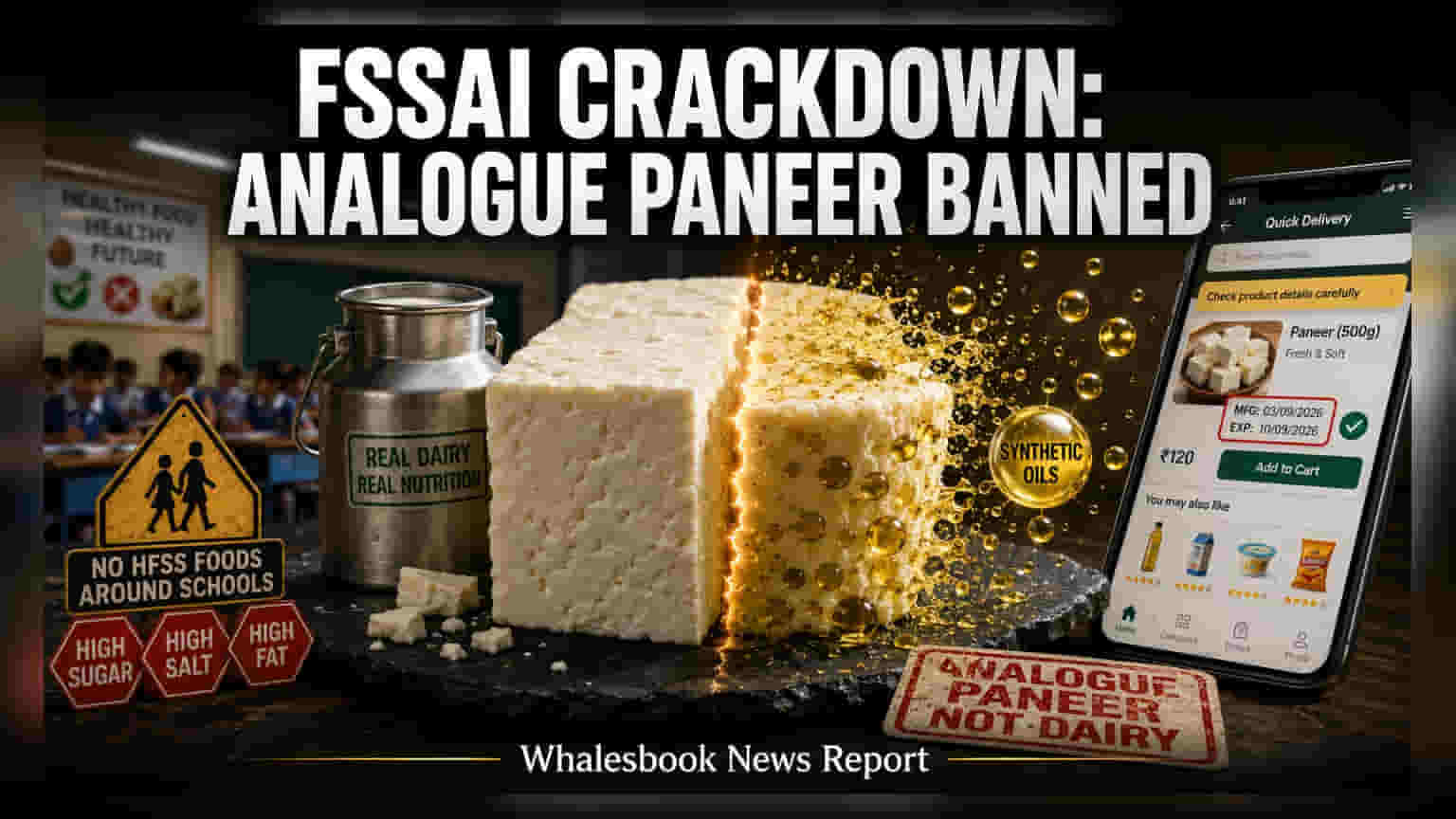
The Food Safety and Standards Authority of India (FSSAI) is working on a nationwide ban of 'analogue paneer' while planning to restrict high-fat and sugary food sales near schools. These regulatory changes aim to improve public health standards, potentially increasing compliance costs for food businesses while favoring organized dairy players over unorganized suppliers.
The Food Safety and Standards Authority of India (FSSAI) is taking steps toward a unified national policy to prohibit the production and sale of analogue paneer. This synthetic product, often made by replacing milk solids with vegetable fats to mimic real dairy, has faced bans in several states including Maharashtra, Punjab, and Gujarat. By centralizing these regulations, the authority aims to eliminate the marketing of such products as dairy, which could shift market share toward organized dairy manufacturers who adhere to traditional milk-based standards.
Impact on the Dairy and Food Industry
The regulatory shift is expected to impact the competitive landscape within the dairy sector. Organized dairy companies, which rely on genuine milk sourcing, may benefit as the unorganized market for cheaper, synthetic alternatives faces stricter oversight. Companies that have invested in building robust milk-processing infrastructure and cold chains are better positioned to comply with these stricter standards. Conversely, small-scale producers and cloud kitchens that heavily utilize analogue products for cost reduction may face significant operational disruptions and the need to adjust their supply chains.
New Restrictions on School Food Environments
Beyond dairy, the regulator is drafting norms to limit the availability of foods high in fat, sugar, and salt (HFSS) within the immediate vicinity of schools. This initiative, part of a broader push to address childhood health, aligns with the implementation of front-of-pack 'red hexagonal' warning labels. These labels are designed to alert consumers to the nutritional content of packaged goods. FMCG companies and snack manufacturers may need to reformulate products or adjust their distribution strategies to meet these evolving safety benchmarks.
Transparency in Digital Commerce
FSSAI is also increasing its focus on the quick-commerce sector, directing platforms to improve the visibility of manufacturing and expiration dates on their digital interfaces. This push for transparency follows rising consumer reliance on apps for daily grocery and food delivery. Some major delivery platforms, such as Zomato, have already begun taking proactive steps by delisting products containing synthetic or analogue dairy, signaling a broader industry trend toward stricter compliance to avoid regulatory friction.
What Investors Should Monitor
For investors, the key monitorable is the pace of implementation for these new standards. Increased compliance requirements often translate into higher operating costs for food companies, particularly those in the snack and unorganized dairy segments. While the organized dairy sector may see long-term benefits from higher entry barriers and better product quality, investors should track whether individual companies can maintain profit margins while navigating these regulatory changes. The final impact will depend on how effectively the industry manages the transition to cleaner, more transparent labeling and ingredient sourcing.