

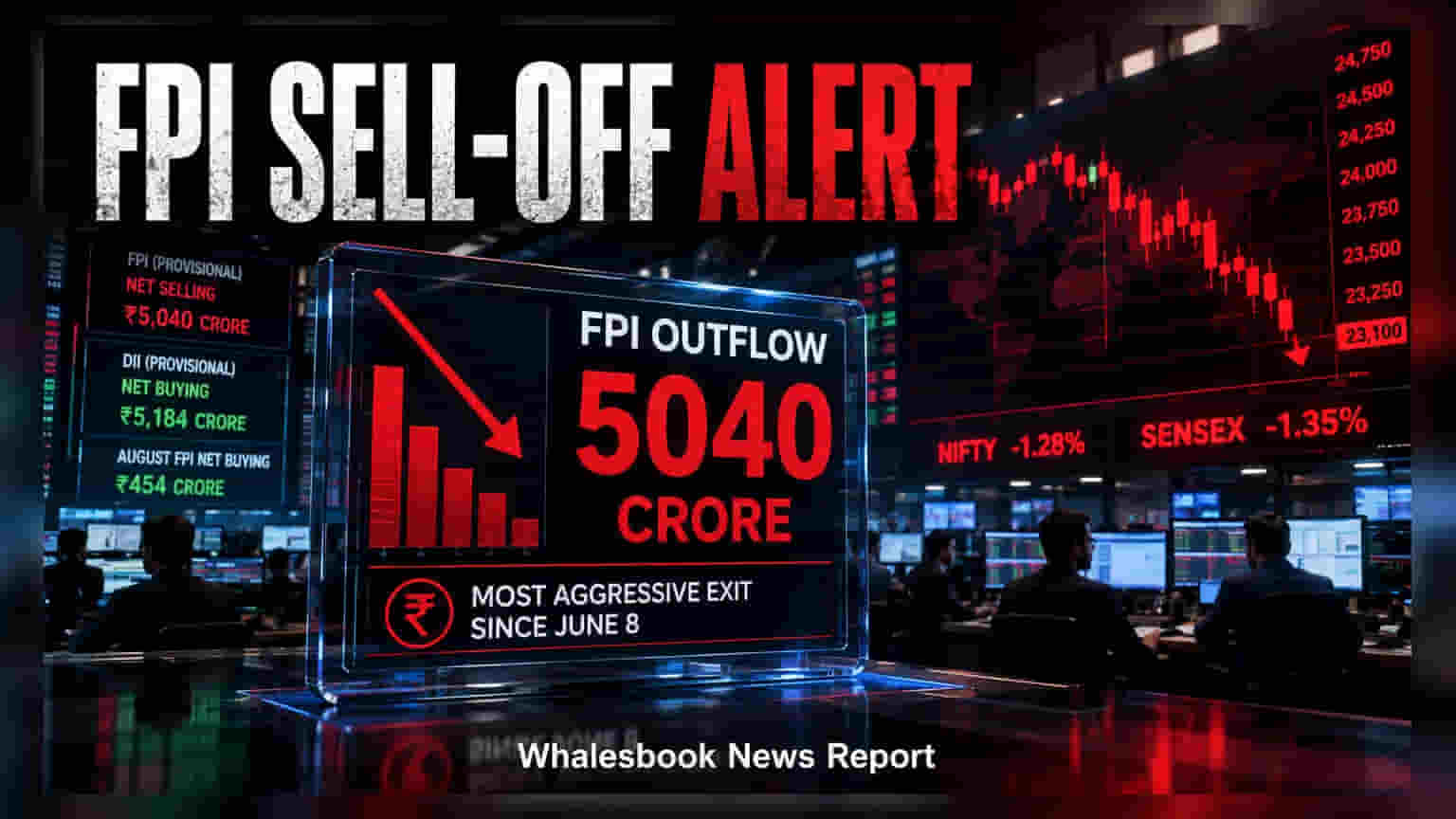
Foreign Portfolio Investors (FPIs) offloaded ₹5,040 crore on August 28, 2026, marking their largest daily withdrawal in months. Domestic institutional support acted as a key buffer against this heavy selling, which was partly driven by large private equity block deals.
On August 28, 2026, the Indian stock market witnessed a major divergence between foreign and domestic investors. FPIs offloaded a provisional ₹5,040 crore in a single trading session, marking their most aggressive exit since June 8. This massive selling wiped out almost all the net inflows FPIs had accumulated during August, leaving the month's net buying at a very thin ₹454 crore.
Despite the heavy FPI outflow, the market remained resilient because Domestic Institutional Investors (DIIs) stepped in to absorb the supply. DIIs purchased equities worth ₹5,184 crore on the same day. This tug-of-war—where local institutions provide liquidity to counter foreign selling—has become the dominant trend in the current market cycle.
Much of the Friday sell-off was concentrated in two specific transactions, rather than broad-based panic selling. The Government of Singapore divested a 3.01% stake in Ather Energy, totaling ₹1,758 crore, while Alpha Wave Ventures sold a 1.7% stake in Lenskart Solutions for ₹1,857 crore. These two block deals alone accounted for approximately ₹3,615 crore of the day's total outflow. Understanding that this selling was linked to specific private equity exits helps investors distinguish between targeted divestments and general market withdrawal.
While DIIs have successfully supported the market so far, investors should remain cautious about the broader risks. The FPI selling trend is partly driven by concerns over elevated crude oil prices and global geopolitical tensions. These factors create uncertainty about inflation, which may restrict the Reserve Bank of India (RBI) from cutting interest rates. Furthermore, the market is currently facing a heavy supply of new shares from promoters and private equity players, which totaled nearly ₹58,000 crore in August. If DII liquidity shows signs of slowing down, the market could become more fragile to such heavy outflows. Moving forward, the key monitorable for investors will be whether domestic institutional buying can remain this strong in the face of continued foreign outflows and rising global uncertainty.